Post Views: 23



Fitness for heart surgery isn’t judged from a single number or one clinical test. Surgeons look at how the heart itself is functioning alongside how well the lungs and kidneys are holding up, since surgery puts strain on all three. General physical condition, prior medical history, and results from several clinical evaluations all feed into that final call together. It’s a structured process built around evidence, not an impression formed in one consultation.
According to Dr. Vishal Khullar, a leading Cardiac Surgeon in Mumbai, “Fitness for surgery isn’t about age or how a patient looks in the waiting room. It’s about what the heart, lungs, and kidneys can actually tolerate under stress. That’s what the workup is really measuring.”
Preoperative cardiac risk assessment pulls information from several directions at once.
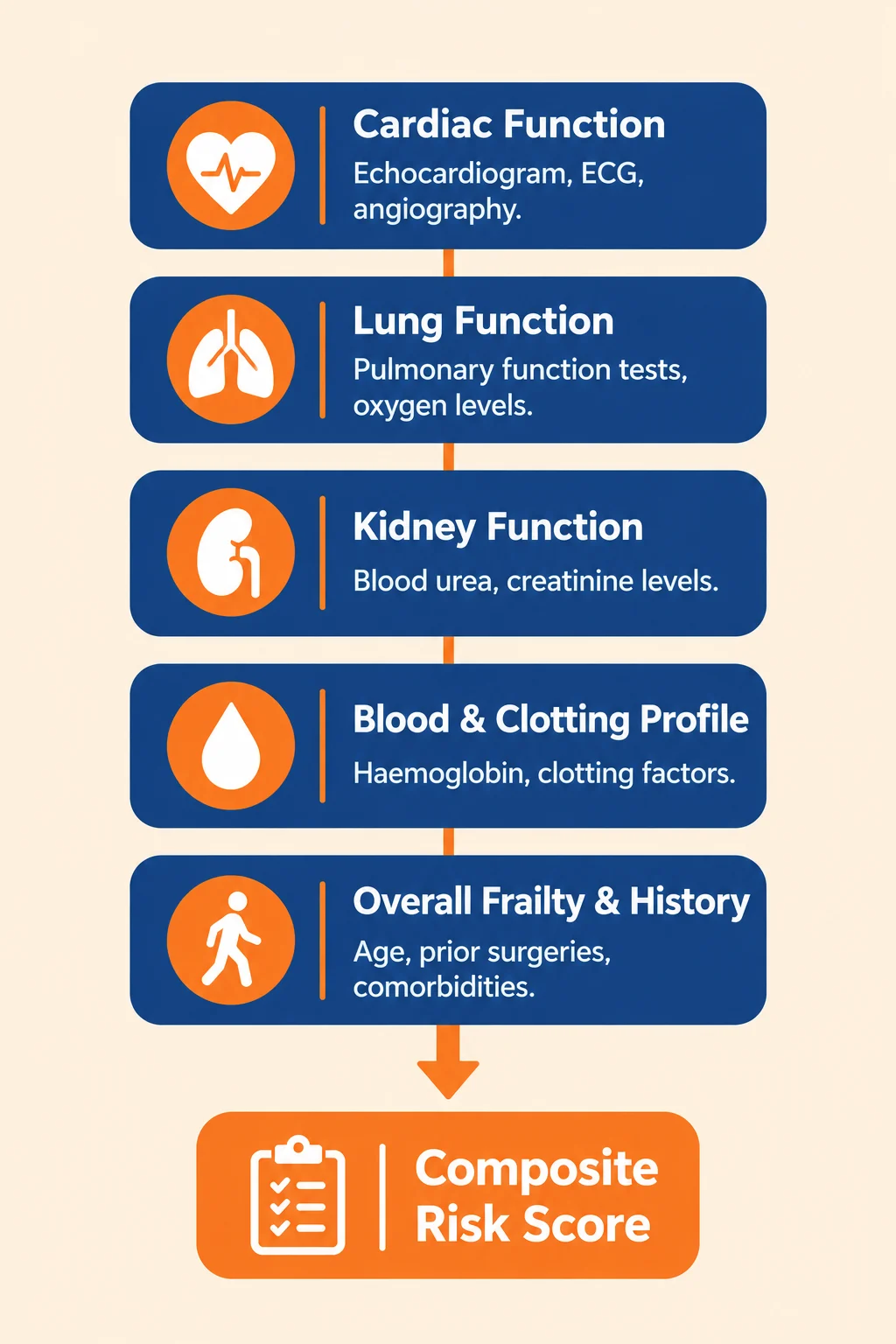
These five categories rarely get judged in isolation. What actually decides fitness is how a scoring system, most commonly the STS score, combines all five into one composite number that places a patient into a low, moderate, or high risk band. That band shapes everything from anaesthesia planning to how much monitoring a patient gets afterward. And a patient can score high on one category while still qualifying overall, because it’s the combined picture that counts, not any single flagged result.
A broader look at how these findings shape surgical planning across procedures sits on the treatments and expertise page.
Not sure if your current health status clears you for heart surgery?
Not every test carries equal weight in that final decision.
Cardiac Function: Ejection fraction and coronary artery status carry the heaviest weight of all. A weak pump changes the surgical plan more than almost anything else on the list.
Organ Reserve: Kidney and lung function decide how well a patient tolerates bypass and anaesthesia. Poor reserve here often means a more cautious, staged approach.
Composite Risk Scores: Tools like the STS score turn several individual findings into one number doctors can act on. It’s a guide, not a verdict carved in stone.
Frailty and Overall History: Age matters less than how a patient’s body has actually held up over time. Diabetes, prior strokes, and previous surgeries all shift the picture more than a birth year does.
Common misconceptions about who actually qualifies for surgery get addressed in our post on bypass surgery myths.
Dr. Vishal Khullar is a Cardiovascular and Thoracic Surgeon with over 30 years of experience and more than 7,000 cardiac procedures, including preoperative risk evaluation for both routine and high-risk surgical candidates. His training includes time at Cleveland Clinic and a role as Senior Associate Consultant at Mayo Clinic in the US, with rigorous preoperative screening built into both. His assessments factor in the specific surgery planned, with anaesthesiologists and intensivists involved early in borderline cases.
Disclaimer: This blog is for general informational purposes only and is not a substitute for professional medical advice, diagnosis, or treatment; please consult a qualified doctor for any health concerns.