Views: 10



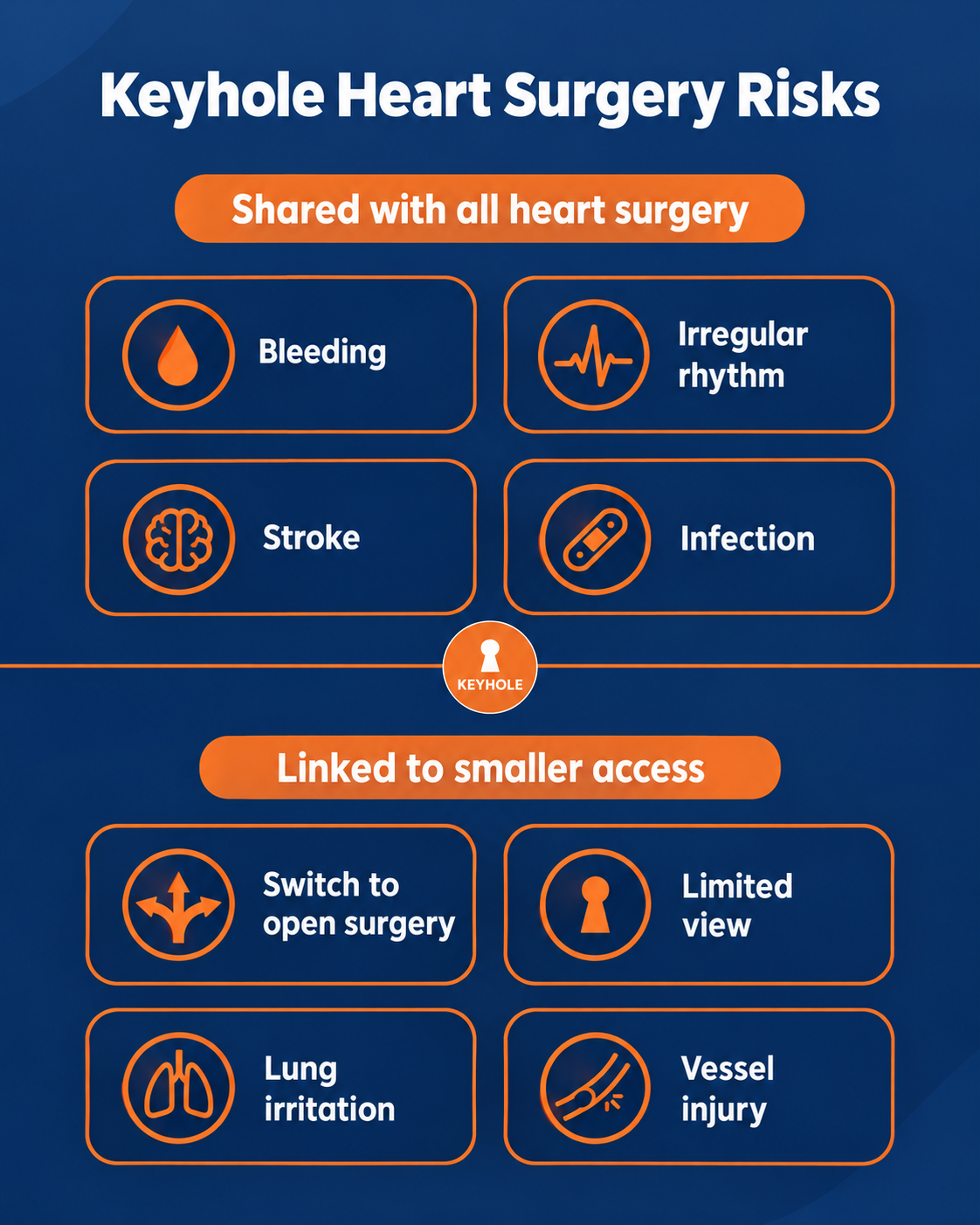
Keyhole heart surgery, also called minimally invasive cardiac surgery, carries the usual hazards of any heart operation, such as bleeding, infection and rhythm problems. It adds a few of its own, because the surgeon works through smaller openings with a restricted view. Blood loss and wound infection tend to be lower than with open heart surgery. But it isn’t risk free, and some of its challenges are technical ones the open approach doesn’t face.
According to Dr. Vishal Khullar, a Cardiothoracic Surgeon in Mumbai, “Smaller incisions don’t mean a smaller operation. The heart is repaired the same way, only through less room, so choosing the right patient matters as much as the technique.”
Most people hear “keyhole” and assume “minor”. Some risks are shared with every heart operation, and a few come from the smaller opening.
Bypass operations can also be done through smaller openings in selected patients, as outlined on our heart bypass surgery page.
Want to know which risks apply to your condition? Speak with a cardiac surgeon?
Keyhole surgery changes the access, not the goal of the operation.
|
Feature |
Keyhole Heart Surgery |
Open Heart Surgery |
|
Access |
Small cuts between the ribs, or a partial breastbone cut |
Full cut through the breastbone (sternotomy) |
|
Blood loss |
Usually lower |
Usually higher |
|
Wound infection |
Lower rates |
Higher rates, mainly at the incision |
|
Operating time |
Often longer |
Often shorter |
|
Suitability |
Selected patients and procedures |
Wide range, including complex cases |
Quicker recovery, often: The breastbone usually stays intact or is only partly cut, so there’s less pain with breathing and coughing. Many patients return to light activity sooner. But “often” isn’t “always”.
Surgery time: Keyhole heart surgery usually lasts about three to five hours, depending on the procedure. It can run longer than the open version of the same operation, because the surgeon works through less room.
Where open surgery is still preferred: Complex combined operations, emergencies, repeat surgery, and anatomy that doesn’t allow safe access. Not every patient qualifies.
Is it serious: Yes. It’s still major surgery under general anesthesia, often with a heart lung machine. A smaller scar doesn’t mean a smaller risk.
Recovery time also depends on the operation itself, and our guide on hospital stay after valve surgery sets out typical timelines.
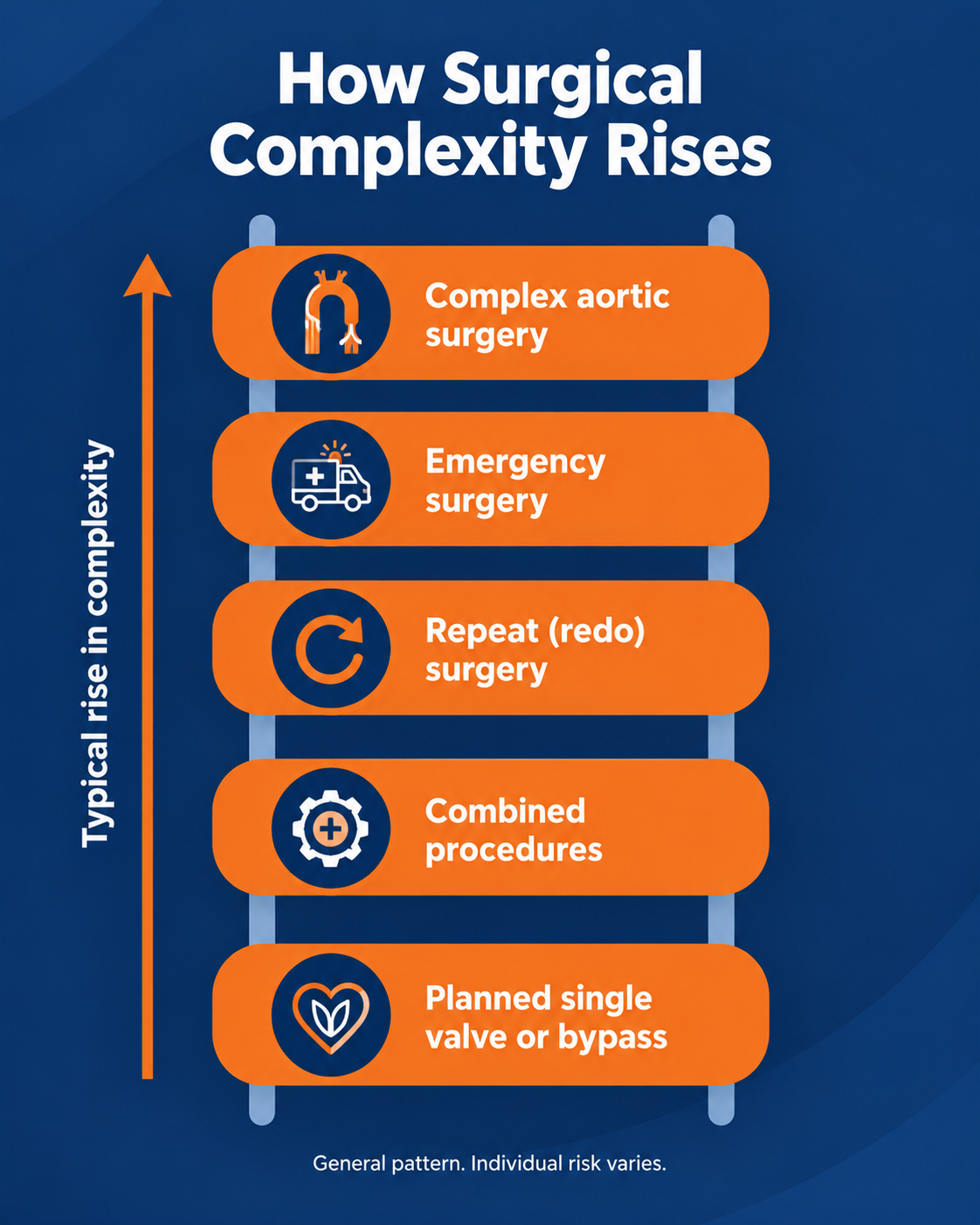
Risk isn’t one fixed number. It shifts with the operation, the patient and the situation, and the general pattern is shown below.
Patient health: Age, weak pumping function, diabetes, kidney disease and lung disease all push risk up. A fit 55 year old and a frail 80 year old are different cases.
Anatomy: Narrow groin vessels, a heavily calcified aorta or scar tissue from earlier chest surgery can rule keyhole access out. Imaging settles this before surgery, not on the day.
Urgency: Planned surgery gives the team time to optimise health first. Emergency surgery doesn’t. Risk climbs.
Team experience: Keyhole techniques have a learning curve, and results improve with volume. How often a team performs them matters.
Repeat operations add scar tissue and often favour open access, so planning is more detailed. You can read more about redo cardiac surgery.
Keyhole heart surgery trades a smaller wound for less working room. It reduces the physical toll of the wound, but it can bring a switch to a full incision, longer operating time and access related injuries. Whether it suits a patient depends on the condition, the anatomy and the surgical team’s experience, so options should be discussed with a cardiac surgeon.
Disclaimer: This blog is for educational and informational purposes only and should not be considered professional advice.

