Views: 20



A tissue valve is generally expected to last about 10 to 15 years, and plenty of patients get more out of it. Bioprosthetic heart valves don’t run on one clock, though. Age at surgery counts most, followed by general health and how regularly the valve is checked, so the bioprosthetic valve lifespan differs from person to person. In younger patients, a tissue valve usually wears out earlier. Older patients may never need a second one. So the number is an estimate, not a deadline.
According to Dr. Vishal Khullar, a Cardiac Surgeon in Mumbai, “A tissue valve doesn’t fail overnight. It wears slowly, and regular echocardiograms usually show the change long before symptoms do.”
The figure most people hear is 10 to 15 years, though actual results vary quite a bit.
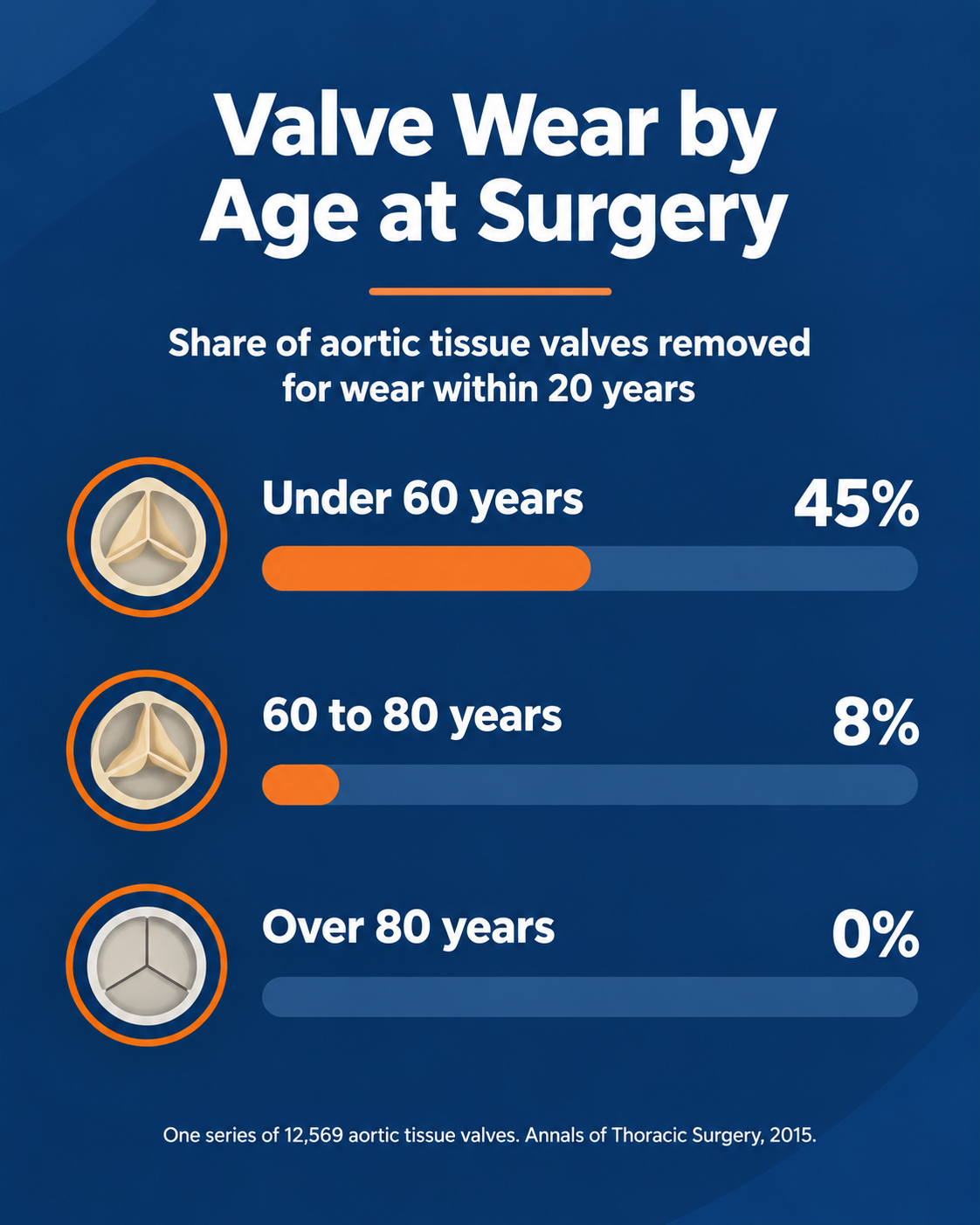
The usual range: Typically quoted as 10 to 15 years, though many bioprosthetic valves last considerably longer. In a large review of aortic tissue valves, only about 2 percent had been removed for wear at 10 years.
Can it reach 20 years: Often, yes. In that same review, about 15 percent of valves overall had been removed for wear by 20 years. For patients aged 60 to 80 it was about 8 percent.
Age at surgery: The strongest predictor. The chart shows how wide the gap is. In patients under 60, the choice is debated because wear tends to appear earlier.
Follow up habits: Regular echocardiograms help spot changes early, often well before symptoms show up. Missed follow up is the avoidable risk, and it’s worth keeping your other health conditions under control too.
Valve options for the aorta are outlined on our aortic valve replacement page.
Wondering whether a tissue or mechanical valve suits your age and health?
Neither valve is better for everyone. Each trades one problem for another.
|
Feature |
Bioprosthetic (Tissue) Valve |
Mechanical Valve |
|
Typical lifespan |
Around 10 to 20 years, shorter in younger patients |
Typically lasts a lifetime |
|
Blood thinners |
Usually not lifelong |
Lifelong |
|
Clotting risk |
Lower |
Higher without thinners |
|
Wear and tear |
Tissue degenerates over time |
Very durable material |
|
Commonly chosen for |
Older patients, or those who can’t take thinners |
Younger patients |
Main disadvantage of a bioprosthetic valve: Tissue doesn’t last forever. With time it can stiffen, calcify or tear, a change known as structural valve deterioration, and the valve may need to be replaced.
What a metal valve involves: A daily warfarin tablet for life, periodic blood tests to keep the dose right, and extra care about bleeding. Tissue valves usually spare you that.
Why age shifts the choice: For older patients a tissue valve often makes sense, since it may well outlast them. A 45 year old faces a tougher call: take medication now, or plan on another operation later.
Planning for a second valve: One large study found it reasonable for young patients to have an early tissue valve if they want to avoid blood thinners, as long as they accept routine imaging checks and a planned reoperation.
When the patient’s own valve can be saved, repair avoids the choice altogether, as our guide on the annuloplasty ring explains.
There’s no fixed limit, but each repeat operation is more demanding than the last. And many patients never face one at all.
Patient health: Age, weak pumping function, diabetes, kidney disease and lung disease all push risk up. A fit 55 year old and a frail 80 year old are different cases.
Anatomy: Narrow groin vessels, a heavily calcified aorta or scar tissue from earlier chest surgery can rule keyhole access out. Imaging settles this before surgery, not on the day.
Urgency: Planned surgery gives the team time to optimise health first. Emergency surgery doesn’t. Risk climbs.
Team experience: Keyhole techniques have a learning curve, and results improve with volume. How often a team performs them matters.
Repeat operations add scar tissue and often favour open access, so planning is more detailed. You can read more about redo cardiac surgery.
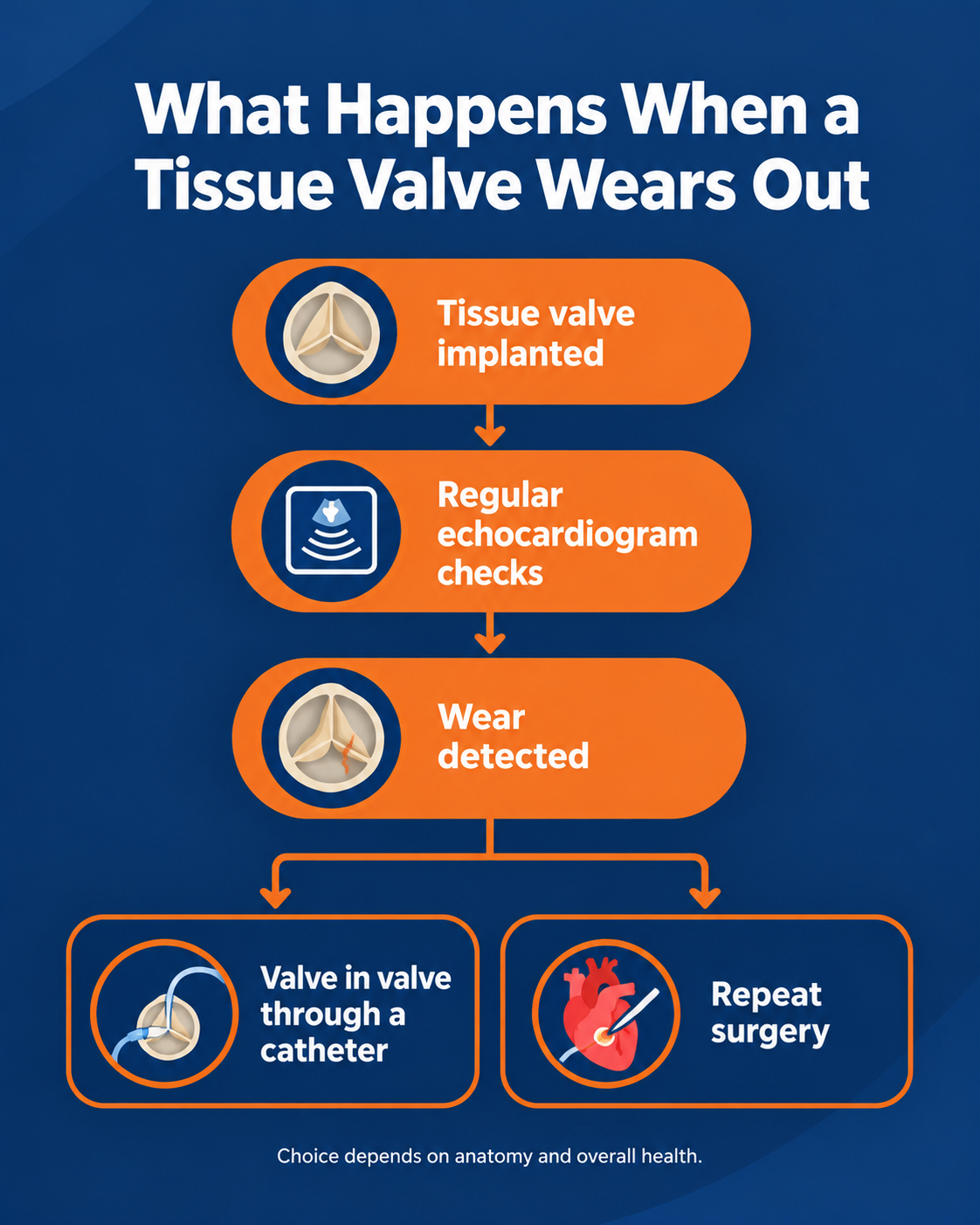
A bioprosthetic heart valve generally lasts 10 to 15 years, and some pass 20. Age at surgery is the biggest factor. The trade off is gradual wear against freedom from lifelong blood thinners. Regular echocardiograms, valve in valve procedures and repeat surgery mean a worn valve can usually be managed. A cardiac surgeon can help match the choice to your age and health.
Disclaimer: This blog is for educational and informational purposes only and should not be considered professional advice.