Views: 25



Hybrid coronary revascularization is bypass and stenting working as a team. A surgeon makes a small cut on the left side of the chest and joins the left internal mammary artery to the left anterior descending artery, which supplies the front of the heart. A cardiologist then uses percutaneous coronary intervention (PCI) to place drug-eluting stents in the remaining blocked arteries. Two procedures, one plan. It suits a narrow group of patients, so knowing who qualifies matters.
According to Dr. Vishal Khullar, a Cardiac Surgeon in Mumbai, “Not every blocked artery needs the same fix. The artery on the front of the heart usually responds well to a surgical graft, while smaller branches often do well with stents. Matching the method to each blockage is the whole idea behind a hybrid plan.”
In plain terms, revascularization restores blood supply to the heart muscle, and a hybrid revascularization procedure does it with a graft and stents together.
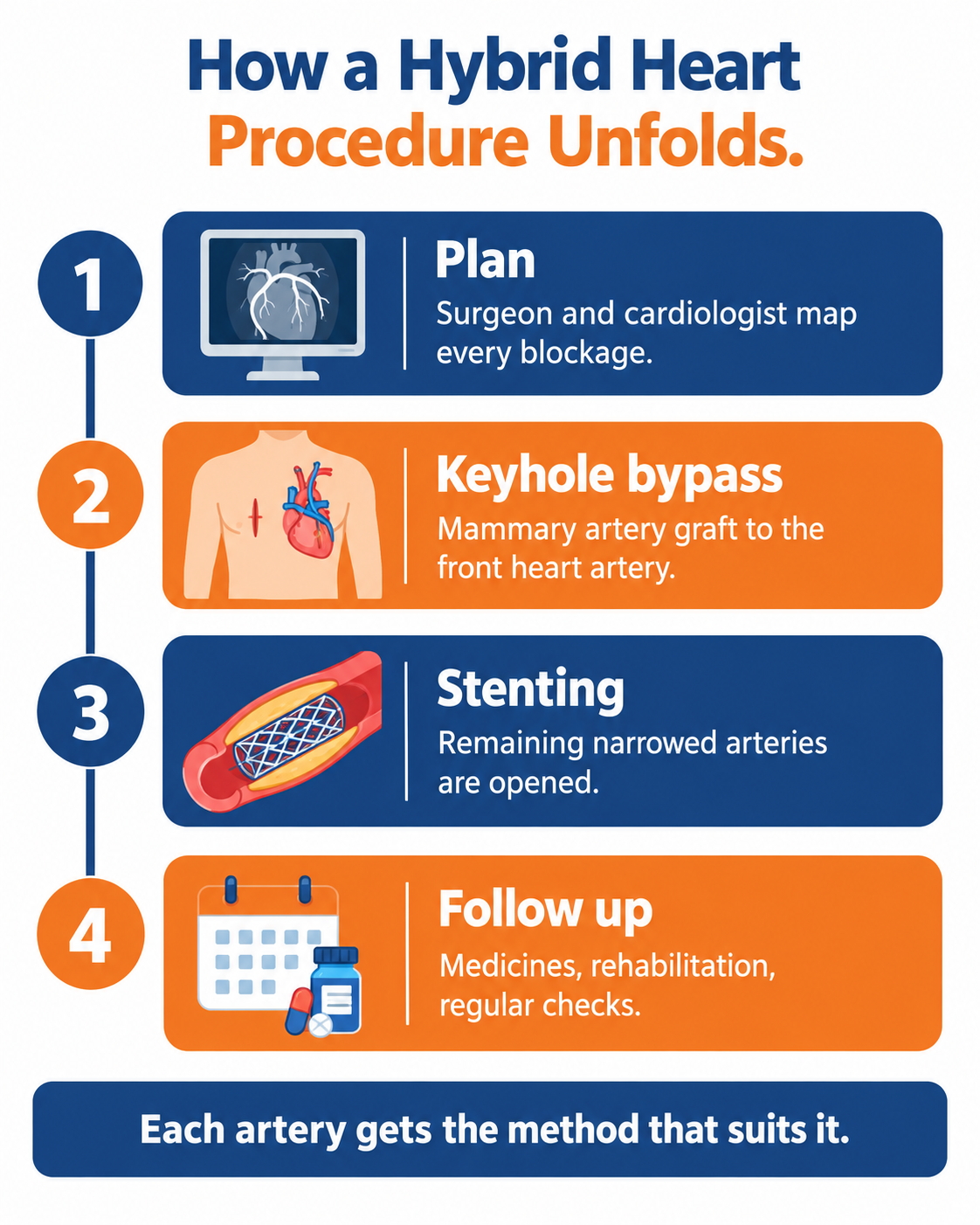
Keyhole bypass: Through a small cut on the left chest, the surgeon joins the left internal mammary artery to the left anterior descending artery. A heart lung machine is often not needed.
Stenting: Drug-eluting stents then go into the other narrowed arteries using a thin catheter inserted through an artery in the wrist or groin. Some people call this stenting half hybrid PCI.
Timing: Both parts can happen on one day in a hybrid operating room, or a few days apart. Staging is the more common route.
Why a graft goes to the front artery: The left anterior descending artery supplies blood to a large portion of the heart’s pumping muscle, and a bypass graft their has shown greater long-term durability than a stent. One trial in single vessel disease found 10 percent needed a repeat procedure after keyhole bypass, against 32 percent after stenting.
Hybrid CABG surgery sits within heart bypass surgery as one possible route, and the pattern of blockages decides whether it’s the right one.
Could hybrid coronary revascularization be an option for you?
Suitability depends on two things: where the blockages are, and whether your body could safely cope with a full chest opening.
|
Feature |
Hybrid approach |
Conventional CABG |
PCI alone |
|
Incision |
Small left chest cut |
Full breastbone opening |
None, wrist or groin access |
|
Heart lung machine |
Usually not needed |
Often used |
Not needed |
|
Best suited for |
Front artery plus other stent friendly blockages |
Widespread or complex disease |
Simpler blockages in fewer arteries |
|
Long term evidence |
Small trials, similar early results |
Largest body of evidence |
Strong for simpler disease |
Suited cases: The usual match is front artery disease plus at least one more vessel, with the other blockages easy to stent and a low to intermediate SYNTAX score.
Higher surgical risk: Some people carry extra risk from a full chest incision: a calcified aorta, a past stroke, kidney disease or a high chance of wound infection. For them, a smaller incision may offer significant benefits.
Poorer fit: Hybrid care may be unsuitable in emergencies, unstable circulation, after earlier chest surgery, in severe obesity, or when the front artery runs deep inside heart muscle. Other options are usually chosen.
Evidence so far: Research shows that hybrid revascularization may help some patients, but more evidence is needed. An experienced cardiac team can determine if it is suitable.
Learn how bypass grafts restore blood flow in this guide to coronary artery bypass surgery.
Recovery moves through four stages, from the hospital ward to long term follow up. Knowing the order helps you plan for each one.
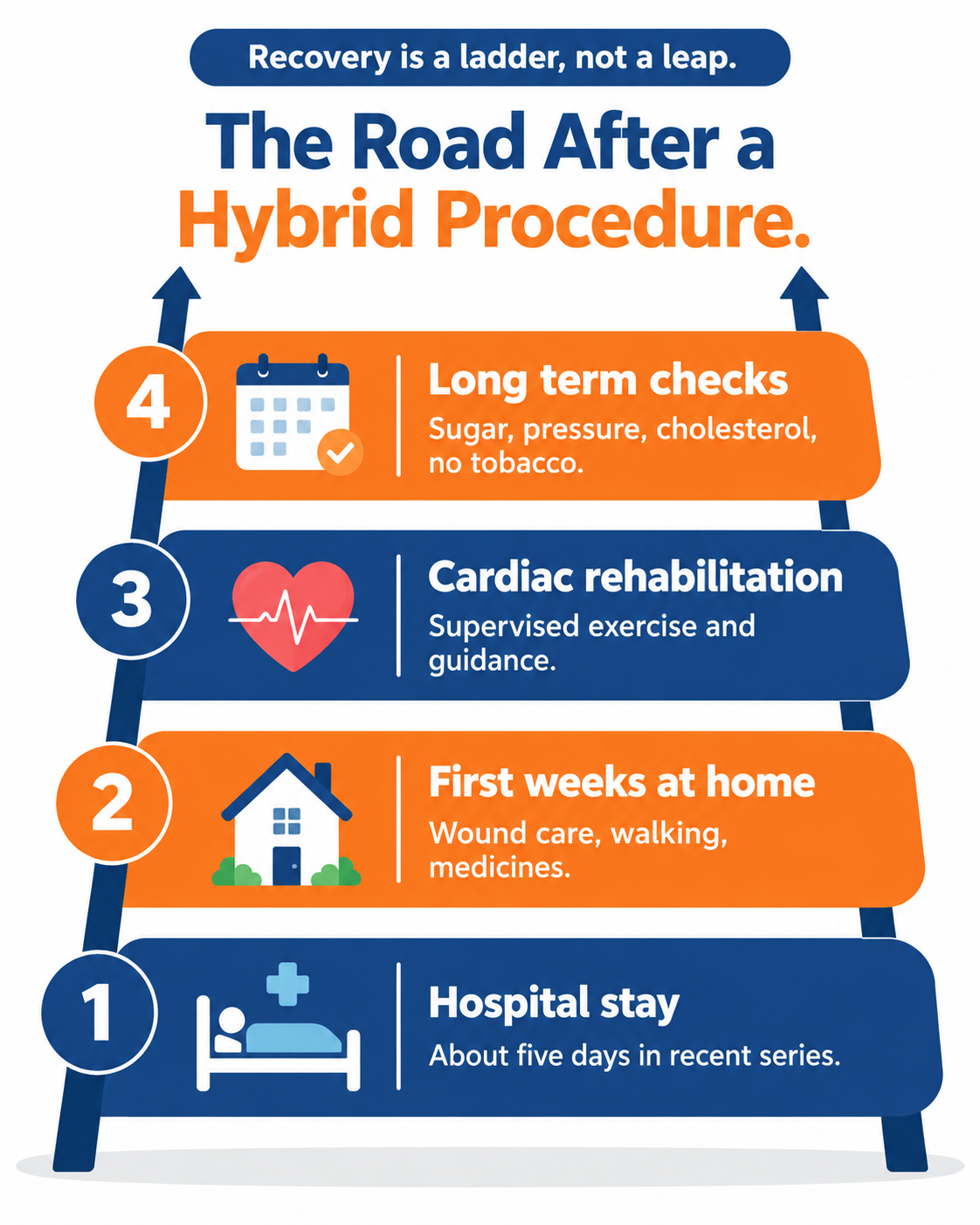
Hospital stay: Recent series report about five days in hospital. Bleeding, infection and a clot inside a stent are the main early risks. In 2 to 10 percent of cases across studies, the surgeon has to switch to a full chest incision during the operation.
First weeks at home: Wound care and gentle walking come first. Antiplatelet tablets protect the new stents, and your doctors decide how long you take them. Don’t stop them on your own.
Cardiac rehabilitation: Supervised exercise sessions, with guidance on diet and medicines, help the heart regain strength.
Long term checks: Regular reviews keep watch on the new blood flow. Blood sugar, blood pressure and cholesterol need to stay in range, and tobacco should be avoided.
Recovery varies from person to person, so a clear aftercare plan matters nearly as much as the procedure. A separate guide to bypass surgery recovery covers the steps in detail.
This hybrid approach pairs a bypass to the front artery with stents for other blockages. It suits a small group of patients with front artery disease plus stent friendly vessels, or a higher risk from open surgery. Early results look comparable with conventional bypass, though trials remain small. A heart team decides case by case.
Disclaimer: This blog is for educational and informational purposes only and should not be considered professional advice.