Post Views: 21



A tight aortic valve doesn’t mean surgery straight away, not the day it shows up on a scan.
What matters more is how far it’s progressed, and whether the heart muscle has started struggling under the load. Once things turn severe, breathlessness, chest tightness, a heart that’s clearly tiring, valve replacement moves from maybe to the actual plan. The valve number on paper rarely decides the timing on its own. Symptoms usually do.
According to Dr. Vishal Khullar, a leading Cardiac Surgeon in Mumbai, “Patients often ask why we don’t operate the moment stenosis gets labeled severe. Fair question. But the valve reading alone rarely tells the full story. Symptoms, strain on the heart, how well it’s still pumping, that combination is what actually starts the clock.”
Not every case of aortic stenosis needs an operation right away. A handful of markers change that quickly.
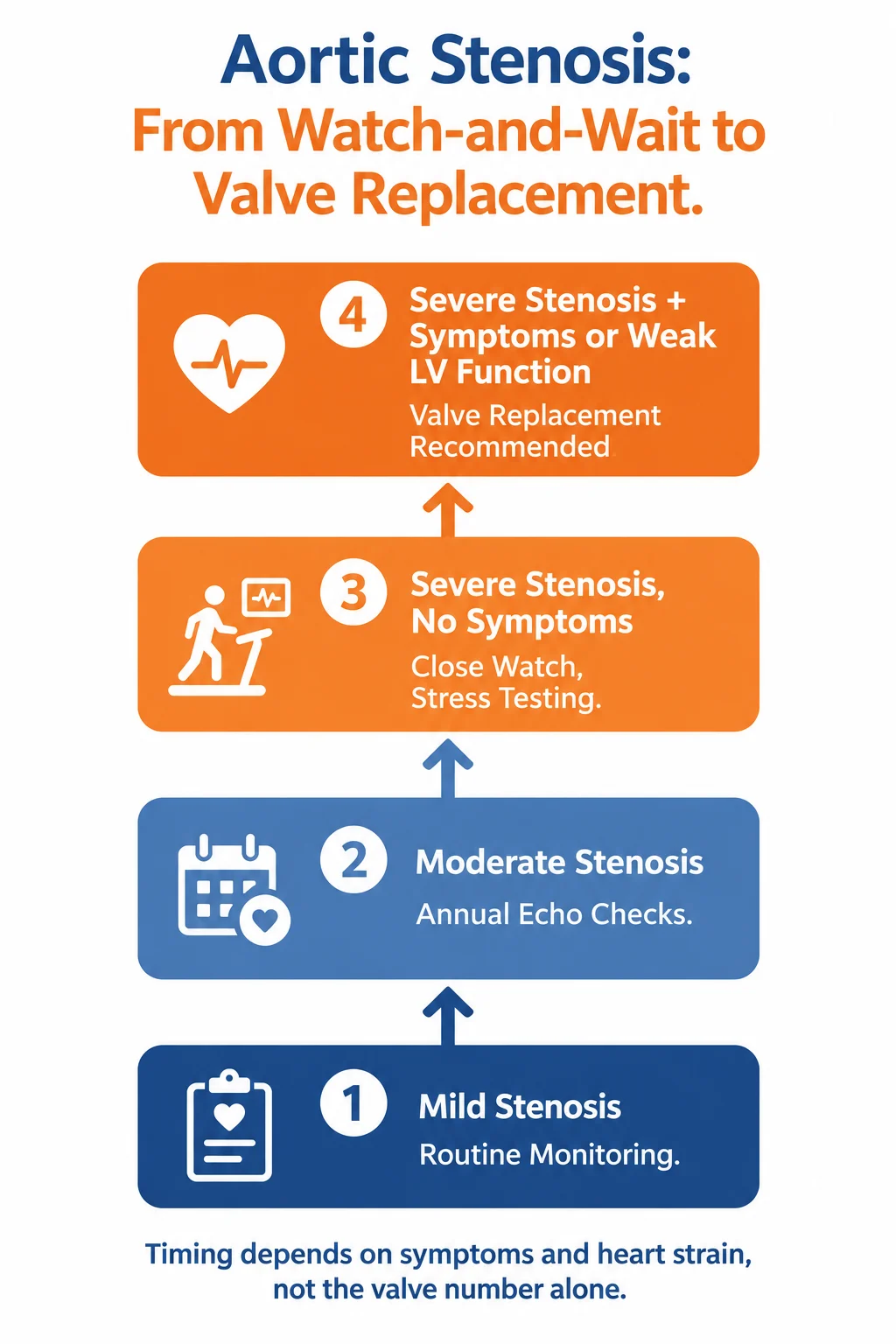
Doctors don’t just go by a general sense of tight or severe. Specific numbers matter more. An aortic valve area under 1 cm², a pressure gradient past 40 mmHg, or a jet speed above 4 m/s on echo usually confirms severe disease. Throw in an ejection fraction dropping below 50 percent, or a positive stress test in someone who insists they feel fine, and surgery starts looking necessary even without classic symptoms. Rarely does one test decide this alone. It’s the pattern, echo findings, symptoms, and how the heart muscle is actually holding up.
Catching these numbers early tends to shape how well aortic valve replacement surgery eventually goes.
Noticed breathlessness or fatigue creeping into daily tasks? Get the valve checked before it decides for you.
Once replacement becomes the plan, the next call is usually which route suits the patient.
Surgical AVR (SAVR): Traditional open heart surgery. The damaged valve comes out, a mechanical or tissue valve goes in. Still a go to option for younger patients with lower surgical risk.
TAVR: The new valve travels in through an artery via catheter. No chest incision required. Works well for older patients or anyone carrying higher surgical risk.
Picking between them: Age, valve anatomy, and overall risk weigh in far more than personal preference. Neither wins outright across the board.
Life after the swap: Follow up echocardiograms track how the new valve behaves over time. Some valve types call for blood thinners for a stretch afterward.
Anyone weighing SAVR against TAVR might find our breakdown on TAVR vs Surgical AVR worth a read before deciding.
Dr. Vishal Khullar is a Cardiovascular and Thoracic Surgeon with over 30 years of experience and more than 7,000 cardiac procedures, with valve disease central to his practice. His training includes time at Cleveland Clinic and a role as Senior Associate Consultant at Mayo Clinic in the US, where he took on complex valve reconstructions and redo cases. His approach to aortic stenosis weighs age, anatomy, and risk, with imaging specialists involved through assessment and surgery, so the SAVR versus TAVR decision is made on evidence.
Disclaimer: This blog is for general informational purposes only and is not a substitute for professional medical advice, diagnosis, or treatment; please consult a qualified doctor for any health concerns.