Post Views: 20



Three blocked coronary arteries rarely act the same way twice. Some people feel crushing chest pain the moment they push themselves, others just tire faster than before, no obvious pain at all. Confirming Triple Vessel Disease comes down mainly to one test, a cardiac angiogram, and from there the path splits into medicines, angioplasty, or bypass surgery depending on how far things have progressed. How it’s diagnosed ends up shaping almost every decision that follows.
According to Dr. Vishal Khullar, a leading Cardiothoracic Surgeon in Mumbai, “Three vessel disease gets missed more than people think, mild symptoms, a normal looking ECG, until an angiogram tells the real story. How the blockages spread across all three arteries decides the next step far more than how bad the chest pain feels.”
Getting to a diagnosis isn’t a single step. It builds gradually, test by test, until doctors have a clear read on all three arteries.
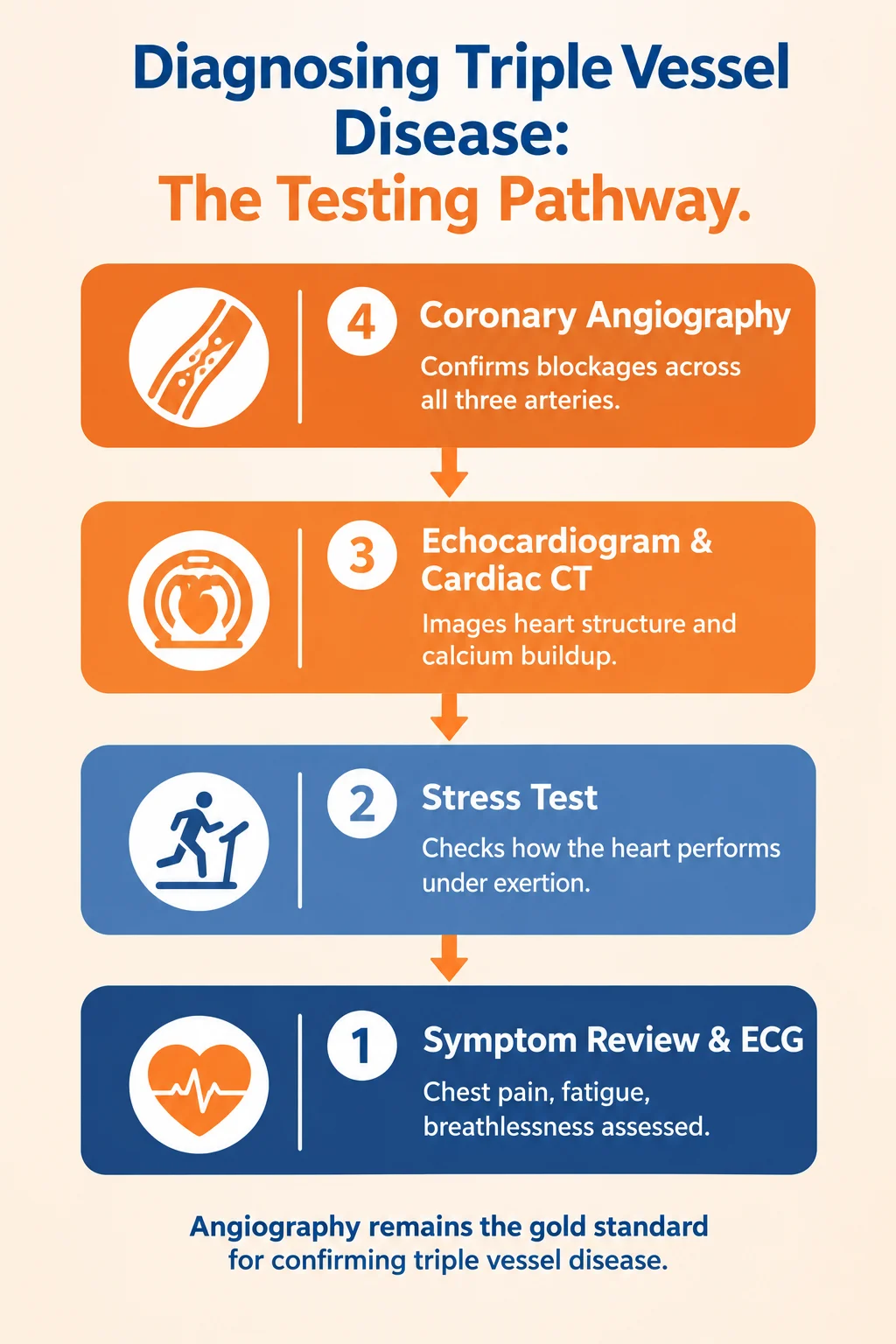
None of these tests work on their own. An ECG or stress test can raise a flag, but the angiogram is what actually maps which arteries are narrowed and by how much. In lower risk patients, doctors sometimes start with a cardiac CT instead, mainly to sidestep an invasive test until it’s truly needed. Once the angiogram is done, there’s also a scoring system called SYNTAX, used to quantify just how complex and spread out the blockages are. That number usually matters more than raw symptoms in deciding what happens next.
Catching the full picture early changes how bypass surgery gets planned, assuming surgery ends up being the route chosen.
Chest tightness that flares up with exertion and fades at rest? An angiogram is what actually confirms what’s going on.
Once all three arteries are confirmed blocked, treatment usually comes down to a short list of real choices.
Coronary artery bypass grafting (CABG): Still the default for most triple vessel cases, particularly when diabetes or weaker heart function is in the picture. One operation, and grafts reroute blood past all three blockages at once.
Percutaneous coronary intervention (PCI): Stents go in through a catheter, no open surgery at all. Fits certain patients well, though results across three vessels don’t hold up quite as long as bypass.
Medical management alone: Medication, lifestyle shifts, close monitoring, mainly for patients who can’t safely go through surgery. Rarely enough once the disease has turned severe.
Choosing between CABG and PCI: A heart team looks at SYNTAX score, diabetes, and surgical risk together, not in isolation. Neither route wins for every patient.
Exactly how CABG restores blood flow, and what that means for long term heart attack risk, gets covered in our piece on restoring blood flow.
Dr. Vishal Khullar is a Cardiovascular and Thoracic Surgeon with over 30 years of experience and more than 7,000 cardiac procedures, including complex, multi-vessel coronary bypass surgery. His training includes time at Cleveland Clinic and a role as Senior Associate Consultant at Mayo Clinic in the US, where he took on high-risk bypass cases. His approach to triple vessel disease weighs SYNTAX scoring, diabetes, and long-term graft durability, with interventional cardiologists involved so PCI remains an option when it fits.
Disclaimer: This blog is for general informational purposes only and is not a substitute for professional medical advice, diagnosis, or treatment; please consult a qualified doctor for any health concerns.