Post Views: 22



Cardiac allograft vasculopathy is a slow, ongoing thickening of the artery walls inside a transplanted heart. It isn’t the same as a sudden rejection episode. This is a quieter, longer process that builds up over months and years. Two forces drive it together, the immune system reacting to donor tissue it still recognises as foreign, and the everyday wear that comes from repeated small injuries to the vessel lining. Both push the artery walls to thicken gradually, narrowing the space blood actually flows through.
According to Dr. Vishal Khullar, a leading Heart Transplant Surgeon in Mumbai, “CAV isn’t one event. It’s an accumulation. Every immune flare, every small injury to the vessel lining, adds a little more thickening. By the time it’s visible on angiography, it’s usually been building for years.”
Several distinct mechanisms feed into cardiac allograft vasculopathy at once.
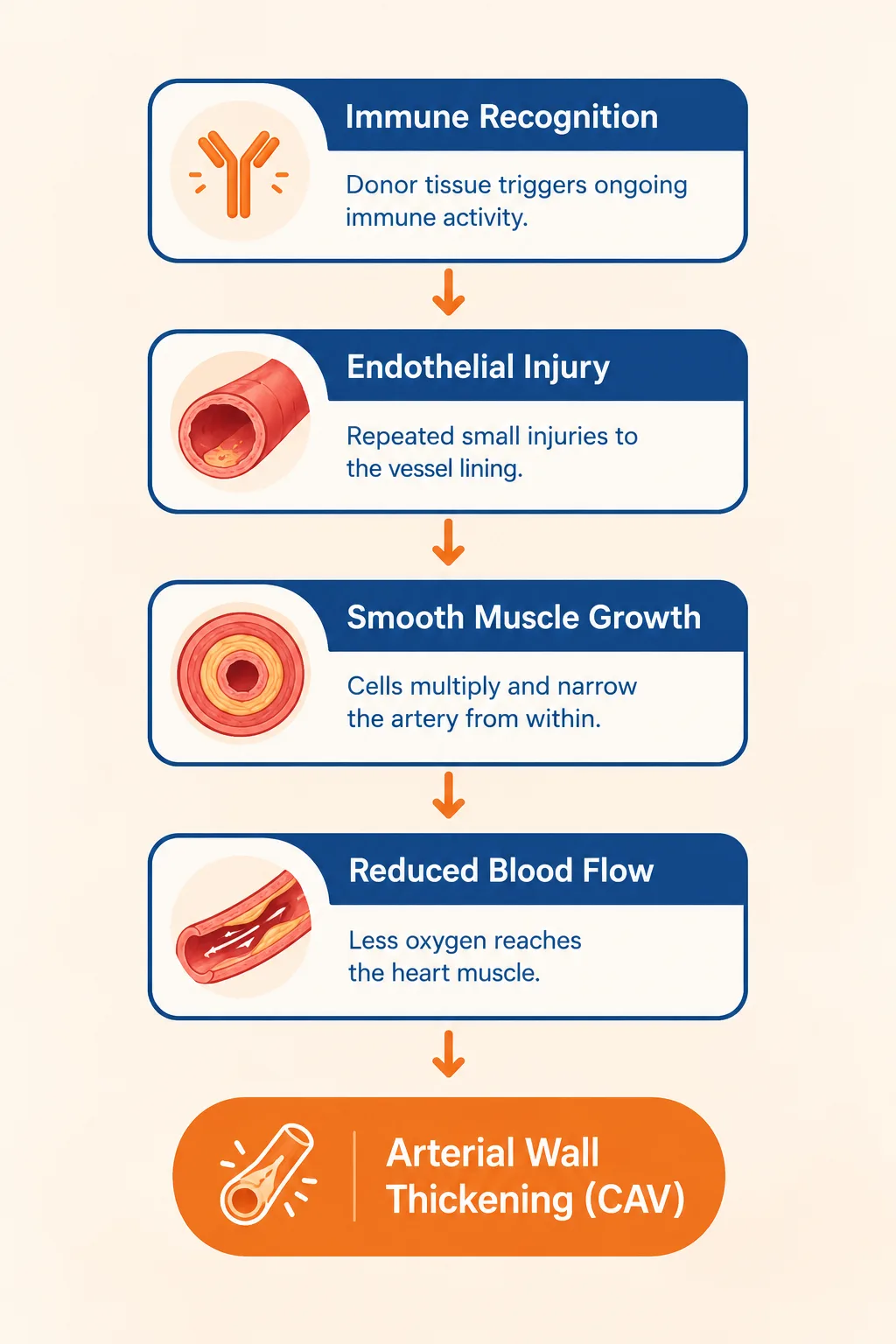
That sequence rarely runs in isolation from other risk factors. Cytomegalovirus infection, high cholesterol, and how the donor heart was preserved before implantation all speed up or slow down how fast this thickening progresses. Some recipients develop noticeable CAV within a year. Others go a decade with barely any change on repeat imaging. Genetics plays a role here too, though not one doctors can fully predict yet.
The broader surveillance and management plan built around transplant recipients sits on the heart transplant page.
Chest tightness that flares up with exertion and fades at rest? An angiogram is what actually confirms what’s going on.
Symptoms alone rarely give this condition away. Detection depends on watching the arteries directly.
Silent Progression: A transplanted heart has no nerve connections to the brain, so the chest pain that normally signals blocked arteries just doesn’t happen here. Patients can have significant CAV and feel completely fine.
Routine Angiography: Coronary angiography, often paired with intravascular ultrasound, gets scheduled at set intervals after transplant. This is how CAV actually gets caught before a major event occurs.
Immunosuppression Adjustment: Switching or adjusting anti-rejection drugs can slow the thickening process in some patients. It doesn’t reverse existing damage, though.
Advanced Intervention: Stenting can open a narrowed segment temporarily. When CAV becomes widespread and diffuse, retransplantation eventually becomes the only durable option.
Families weighing the financial side of a transplant often start with our breakdown of heart transplant cost.
Dr. Vishal Khullar is a Cardiovascular and Thoracic Surgeon with over 30 years of experience managing long-term follow-up for heart transplant recipients. His training includes time at Cleveland Clinic and a role as Senior Associate Consultant at Mayo Clinic in the US, both involving close work with post-transplant surveillance protocols. Every recipient under his care follows a structured angiography and biopsy schedule, with immunosuppression adjusted individually and retransplantation evaluation available when needed.
Disclaimer: This blog is for general informational purposes only and is not a substitute for professional medical advice, diagnosis, or treatment; please consult a qualified doctor for any health concerns.