Post Views: 46



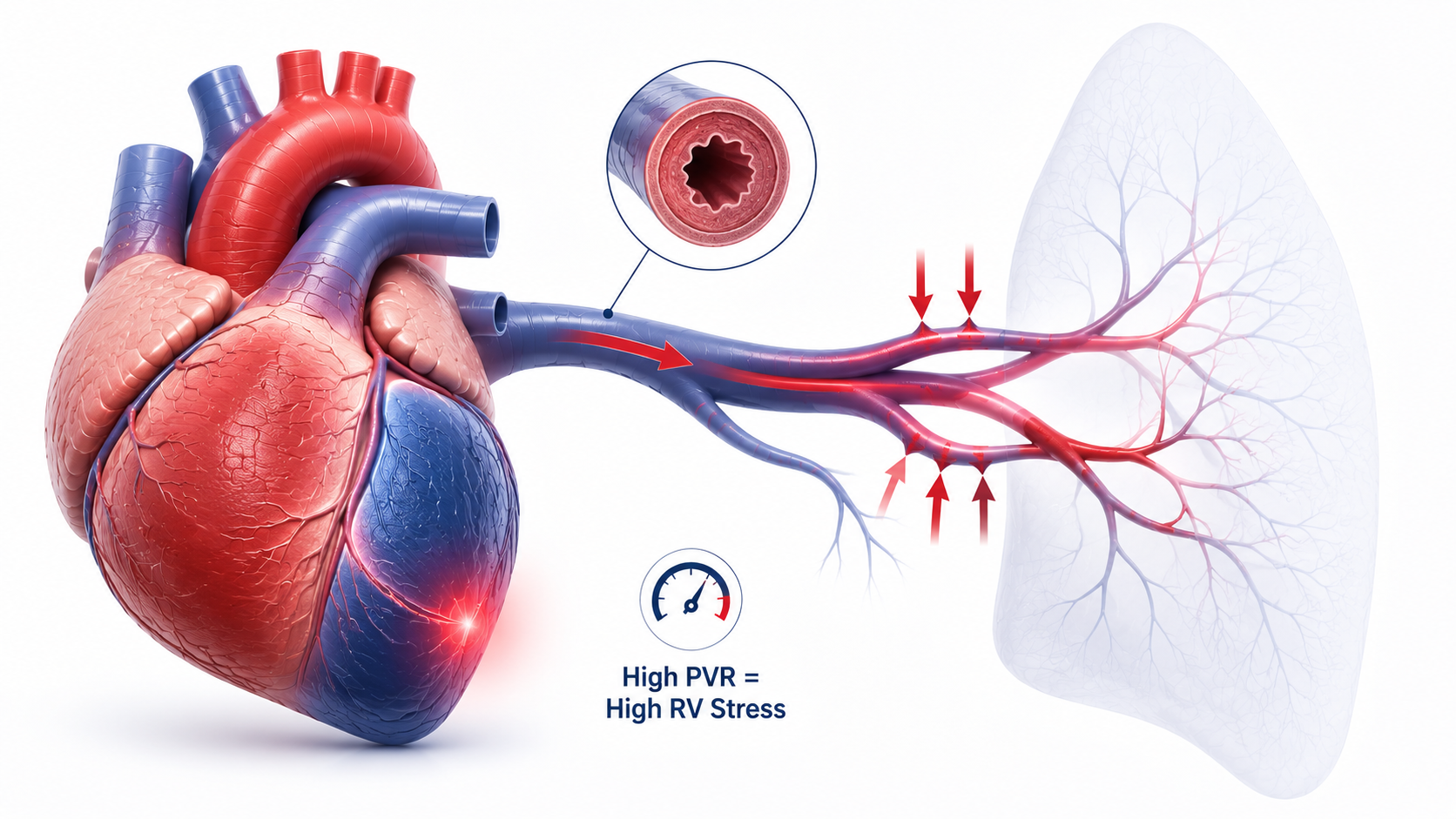
A PVR above 4 Wood units is one of the biggest red flags in heart transplant evaluation. Why? Because it forces a brand-new right ventricle to pump against resistance it was never built to handle. That’s the core problem behind right heart failure after transplant. It’s also why surgeons check for it long before anyone gets near an operating room.
Dr. Vishal Khullar has walked several high-risk patients through exactly this scenario. One recent case: a 26-year-old with severe dilated cardiomyopathy, PVR sitting at 6.5 Wood units going into evaluation
According to Dr. Vishal Khullar: “Right heart failure after transplant isn’t something you treat after it happens. You plan against it from the moment you see the numbers on right heart catheterization. PVR tells you how hard that new right ventricle is going to have to work on day one, and honestly, that shapes almost every decision after.“
The right ventricle just isn’t built like the left. It’s thin-walled. Low-pressure. Designed to move blood gently into the lungs, not fight resistance tooth and nail.
Now drop a donor heart into someone who’s had pulmonary hypertension for years. That RV suddenly faces afterload it’s simply never trained for. And it’s not just the resistance, add in donor brain death physiology, the trauma of surgery itself, cardioplegia, ischemia-reperfusion injury. The ventricle’s already starting the race a bit behind.
High resistance meets a stunned muscle. That combination is what tips patients into acute right heart failure (RHF), often within hours of coming off bypass.
Most centers draw the line at 4 Wood units. Cross it, and the odds of postoperative RV trouble climb noticeably.
Pediatric data paints a pretty stark picture. Kids with a pre-transplant PVR above 6 Wood units have shown right ventricular failure rates as high as 75%. Compare that to roughly 20% in kids whose PVR stayed normal. Adult outcomes follow a similar trend: higher PVR, worse early results, fairly consistently.
Here’s the thing though, a PVR above 6 doesn’t automatically slam the door shut on transplant. What actually matters more is whether that number can come down.
Concerned About Transplant Candidacy?
Elevated PVR doesn’t always mean transplant is off the table. Get a specialist opinion on your specific case.
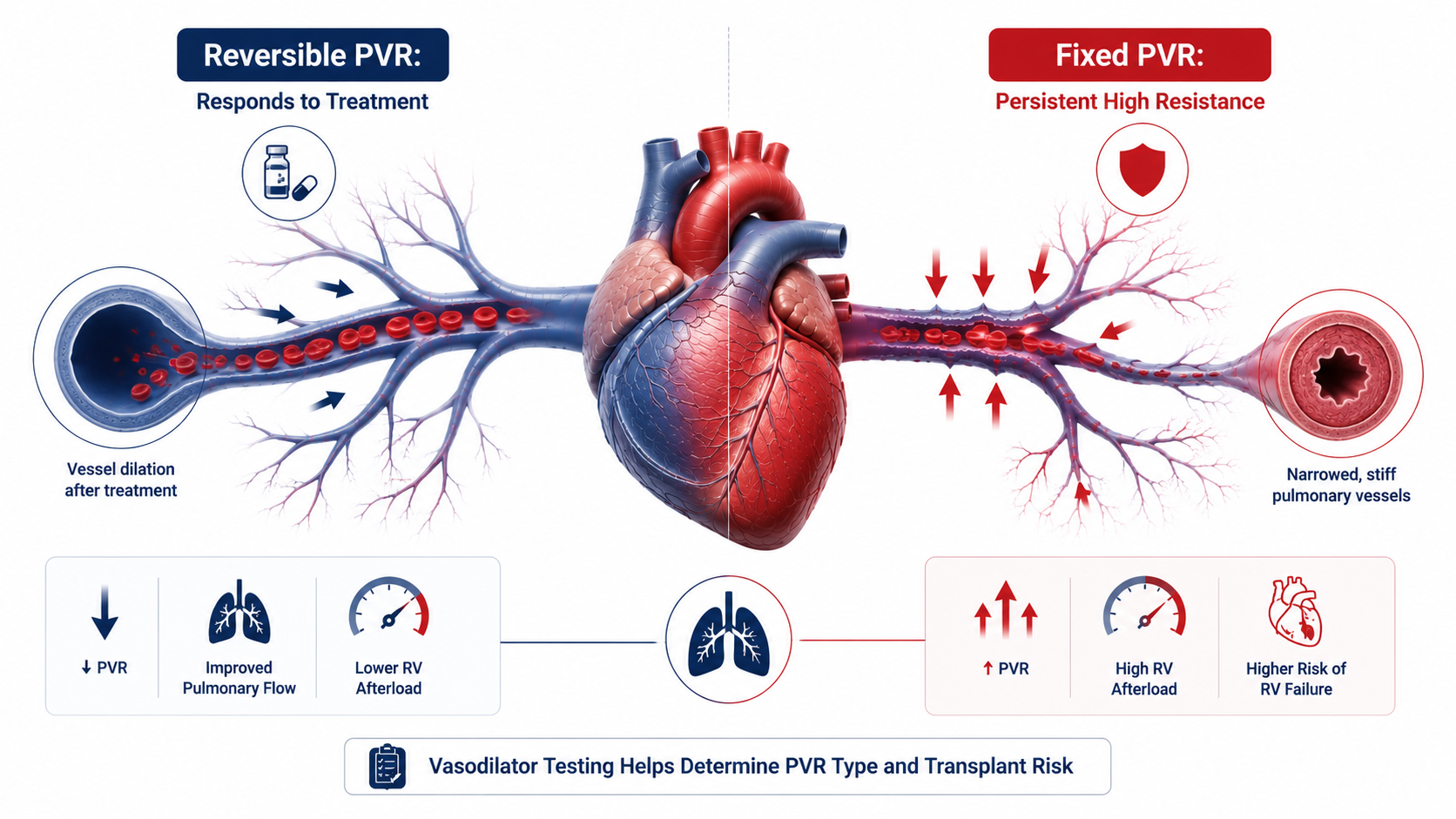
Not all elevated resistance behaves the same way. Take years of high left-sided pressure backing up into the lung circulation, that kind often normalizes once a healthy new heart takes over the pumping. Structural remodeling of the pulmonary vessels themselves? Different story entirely. That kind tends to stick around no matter what you do.
So how do doctors tell the two apart before surgery even happens? Vasodilator or inotrope challenge testing, run during right heart catheterization. A drug like intravenous Milrinone or NitricOxide gets administered, then the PVR is measured a second time.
Drop below 4 Wood units with the drug on board? That’s reversible resistance, still elevated risk, sure, but manageable. Stay high despite the challenge, and now the picture gets a lot more concerning.
This is exactly what played out in the 26-year-old case mentioned earlier. PVR fell from 6.5 to under 4 with Milrinone on board. That confirmed reversibility. It also gave the team enough confidence to list him for transplant, even starting from what looked like an alarming baseline number.
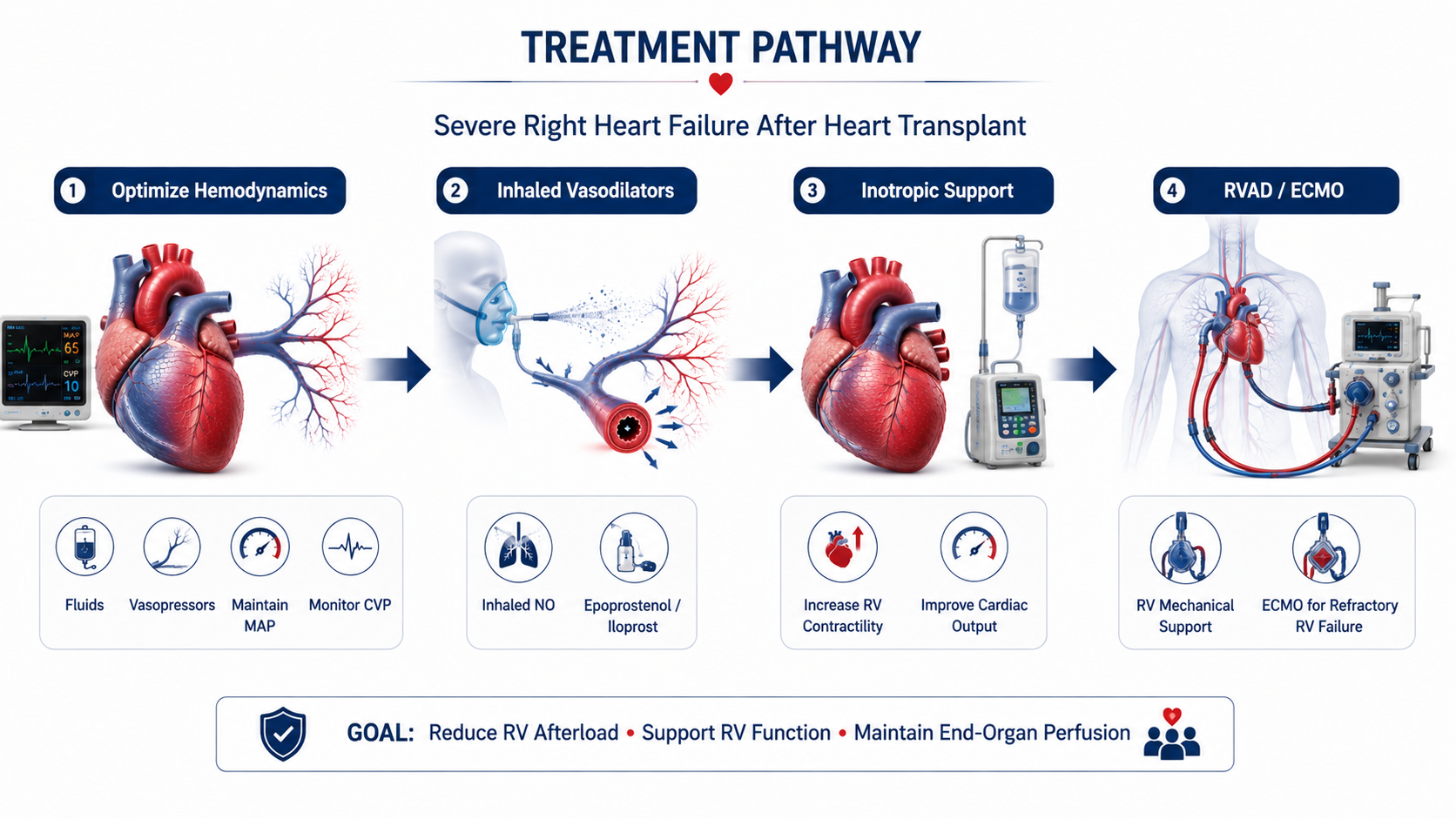
There’s no single fix here. Managing right heart failure is a layered approach, starting well before the incision and running straight through recovery. It really comes down to three goals.
|
Intervention |
What It Does |
|
Inhaled nitric oxide (iNO) |
Selectively dilates pulmonary vessels, lowering PVR without dropping systemic blood pressure |
|
Milrinone / inodilators |
Improves RV contractility while also easing pulmonary pressures |
|
Inhaled prostacyclins |
Alternative pulmonary vasodilator; current evidence suggests similar efficacy to iNO |
|
RVAD (right ventricular assist device) |
Mechanically supports the RV when drug therapy isn’t cutting it |
|
ECMO |
Reserved for the most severe, refractory cases |
Inhaled nitric oxide gets used a lot in this setting, and honestly, for good reason. It’s been studied specifically for post-transplant RV failure in patients who already had pulmonary hypertension going in. It targets the lungs directly, barely touches the rest of the body, which makes it a natural first choice for most teams.
Sometimes medication just doesn’t cut it. That’s when mechanical support steps in. A temporary RVAD can offload the struggling ventricle while it recovers. In some documented cases, this kind of support has even reversed pulmonary vascular resistance doctors had assumed was permanent going in, which says a lot about how much recovery capacity the RV actually has if you give it a chance.
ECMO sits at the very end of the line, for the toughest, most refractory cases. It buys time, no doubt about that. But it comes with real tradeoffs too: bleeding risk, infection risk. So the goal is always weaning off it as early as the RV allows, not a moment later.
None of this works without watching closely, though. Intraoperative transesophageal echocardiography (TEE) lets the team check biventricular function right after implantation. That way they know almost immediately whether the RV is managing fine on minimal support, or whether it needs help, fast.
Want to see how a case like this actually plays out, start to finish? Check out this transplant case study.
Facing a High-Risk Transplant Decision?
PVR, donor matching, and surgical technique all factor into outcomes. Talk to a specialist about your options.
Elevated PVR remains one of the clearest warning signs for right heart failure after a heart transplant. But it’s not a hard stop, far from it. What actually decides the outcome is whether that resistance can be reversed, how closely the surgical team watches and supports the RV in those first critical hours, and how fast they escalate if medication alone isn’t working.
At Dr. Vishal Khullar’s practice, high-risk transplant candidates go through thorough hemodynamic evaluation, reversibility testing included, before any transplant decision gets made. Learn more about our heart transplant program, or check out a related post on heart transplant logistics and donor heart transport to see what happens once a donor organ gets accepted.
Disclaimer: This blog is for general informational purposes only and is not a substitute for professional medical advice, diagnosis, or treatment; please consult a qualified doctor for any health concerns.