Post Views: 15



Two different doctors, both focused on the same organ, but the path each one takes looks nothing alike. One relies on medication, imaging, and catheter-based procedures to manage heart conditions. The other steps in when the problem needs a surgical solution. Knowing which one to see, and when, changes how a heart condition actually gets treated.
According to Dr. Vishal Khullar, a leading Cardiac Surgeon in Mumbai, “Cardiologists and surgeons aren’t competing specialties, they’re two halves of the same care team. I only get involved once medicine and catheter options have been weighed and surgery becomes the better route.”
Both start out training in cardiology. Where they go from there is what sets them apart.
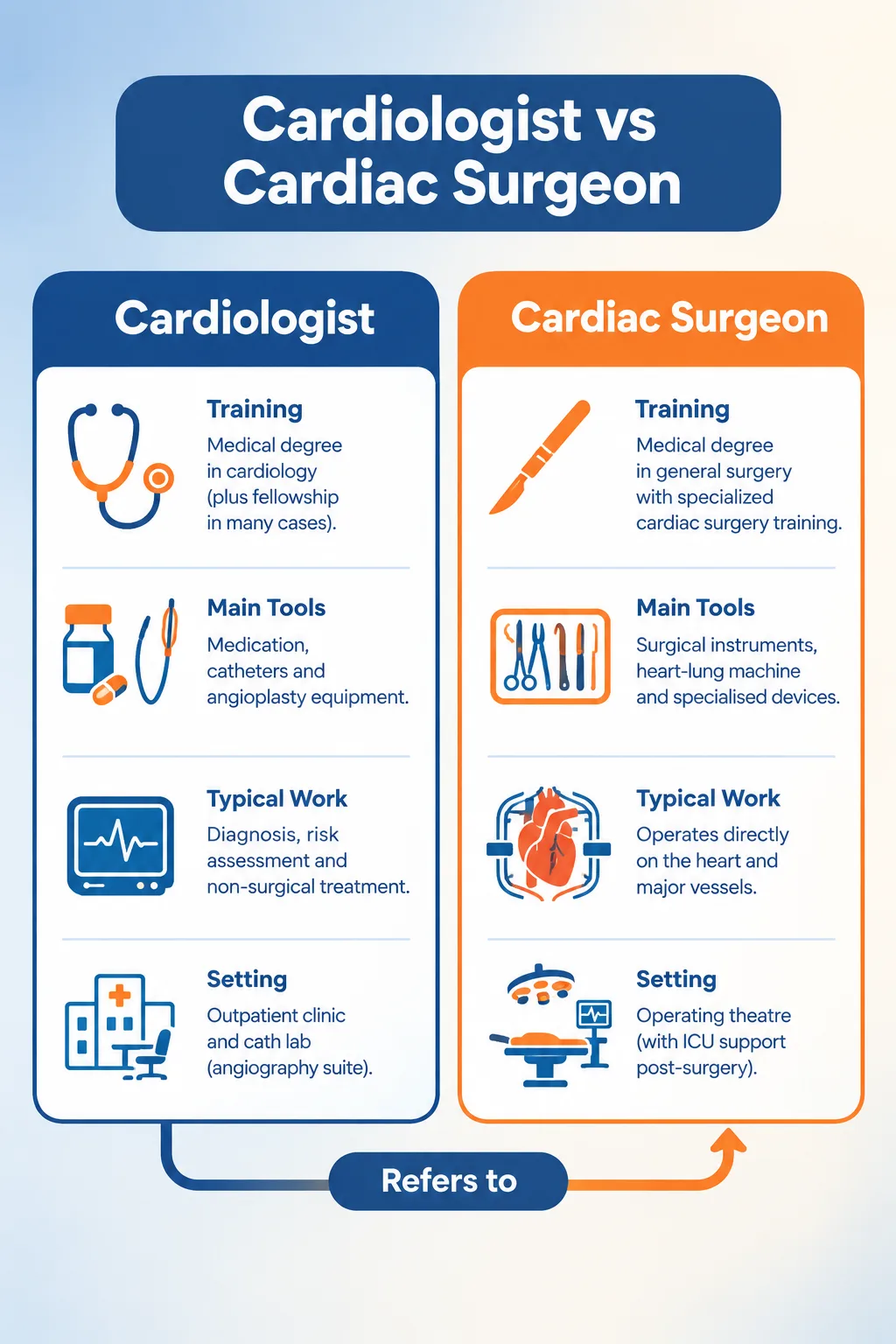
The overlap between the two matters as much as the differences. A cardiologist often refers a patient to a cardiac surgeon once medication and catheter-based options run their course, and the two frequently sit on the same heart team reviewing a single patient’s case together. Neither specialty works well in isolation, most complex heart conditions move between both hands before treatment is done.
For a look at the surgical side of that handoff, see heart bypass surgery, one of the more common procedures a cardiac surgeon takes on.
Not sure if your case calls for a cardiologist or a surgeon? A consultation sorts out which specialist actually fits.
The handoff isn’t random. Certain findings point straight toward surgery.
|
Condition / Situation |
Cardiologist’s Role |
Cardiac Surgeon’s Role |
|
Blocked coronary arteries |
Manages with medication or stenting for one or two blockages |
Takes over with bypass surgery once several arteries are involved |
|
Valve disease |
Manages symptoms with medication; performs TAVR when the anatomy allows |
Repairs or replaces the valve when TAVR isn’t suitable |
|
Structural or congenital defects |
Monitors and manages medically where possible |
Performs surgical correction when a catheter-based fix isn’t possible |
|
Advanced heart failure |
Manages with medication and devices |
Evaluates the patient for an LVAD or heart transplant once medical options are exhausted |
Blocked arteries beyond stenting: Stents work fine for one or two blockages. Once several arteries are involved, bypass surgery usually takes over.
Valve disease that’s progressed: Medication can help manage symptoms, but it cannot correct severe valve disease. If the patient’s anatomy rules out TAVR, valve repair or replacement may be considered.
Structural or congenital defects: Some defects, present from birth or developed later, just aren’t fixable with a catheter. In such cases, surgery may offer an appropriate solution.
Heart failure that’s exhausted medical options: Once medication and devices stop being enough, a cardiac surgeon may evaluate the patient for an LVAD or a heart transplant.
That same cardiologist-to-surgeon handoff plays out clearly in valve disease. Our comparison of TAVR vs open surgery shows exactly how that decision gets made.
Dr. Vishal Khullar has spent over 30 years as a practicing cardiac surgeon, with training at Cleveland Clinic and Mayo Clinic in the US. He works closely with cardiologists on cases that cross into surgical territory, including joint heart-team reviews for complex decisions. That combination of surgical training and multidisciplinary collaboration shapes how each case gets evaluated.
Disclaimer: This blog is for general informational purposes only and is not a substitute for professional medical advice, diagnosis, or treatment; please consult a qualified doctor for any health concerns.