Post Views: 17



Open heart surgery. That’s what a heart transplant actually is, swapping out a heart that’s failed for one that hasn’t. Four to eight hours in theatre, give or take, depending on how the case unfolds. But the surgery itself is only part of the story. Work starts well before the donor heart shows up, and once it’s in the room, everything follows a set order. Here’s that order, laid out step by step.
According to Dr. Vishal Khullar, an experienced Heart Transplant Surgeon in Mumbai, “Every heart transplant surgery procedure runs through the same core sequence. But no two cases actually play out the same. Donor heart condition, recipient anatomy, timing, it all shapes how the surgery goes on the day.”
Long before anyone makes an incision, the heart transplant surgery procedure is already underway.
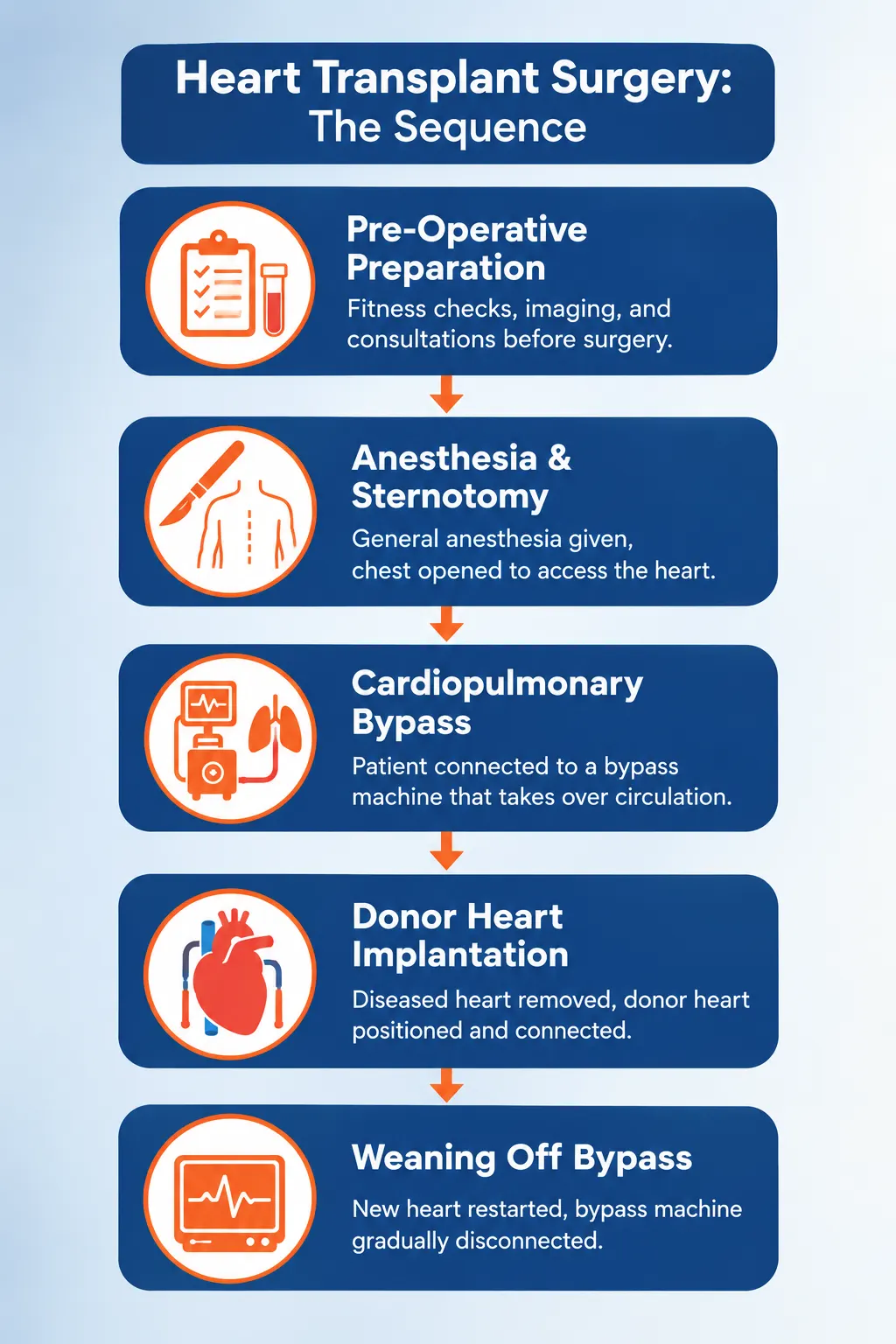
None of this happens in isolation, each step waits on the one before it. The patient’s own heart stays put until the team has actually confirmed the donor organ looks sound on the table. Makes sense, a heart that’s spent hours in transit needs one last check before anyone commits to taking out what’s already working. Once the new heart is in and warming up, it often needs a jolt to get its rhythm going properly. Not a failure. Just how a reperfused heart tends to behave.
The surgical steps themselves sit inside a much larger care plan. More on heart transplant surgery here.
Wondering what your own heart transplant surgery would actually involve?
Surgery’s just the opening stretch. The real work starts in recovery.
ICU monitoring: First 24 to 48 hours, straight into intensive care. Heart rate, blood pressure, how well the new heart’s pumping on its own, all watched constantly.
Rejection watch: Biopsies check whether the immune system’s attacking the donor heart. Frequent at first, months of them, then it tapers down to periodic checks for life.
Immunosuppressant medication: These drugs keep the body from rejecting the new heart, and they’re lifelong. Skip a dose and you’re gambling with the graft. Not worth it.
Hospital stay: One to two weeks is typical before discharge. Longer if anything complicates the picture along the way.
Recovery doesn’t stop at discharge either. Our guide on recovery after transplant covers what the weeks and months at home actually look like.
Dr. Vishal Khullar has performed and been part of more than 300 heart and lung transplants. He gained extensive experience through his training and work at Cleveland Clinic and Mayo Clinic in the US. He was the first cardiovascular surgeon from the Indian subcontinent to hold the Senior Associate Consultant position at Mayo Clinic, a role that speaks to the depth of his transplant experience. With over 7,000 cardiac procedures behind him, patients get a surgeon whose experience shows in the details that matter most, from harvest timing to implantation technique.
Disclaimer: This blog is for general informational purposes only and is not a substitute for professional medical advice, diagnosis, or treatment; please consult a qualified doctor for any health concerns.