Views: 14



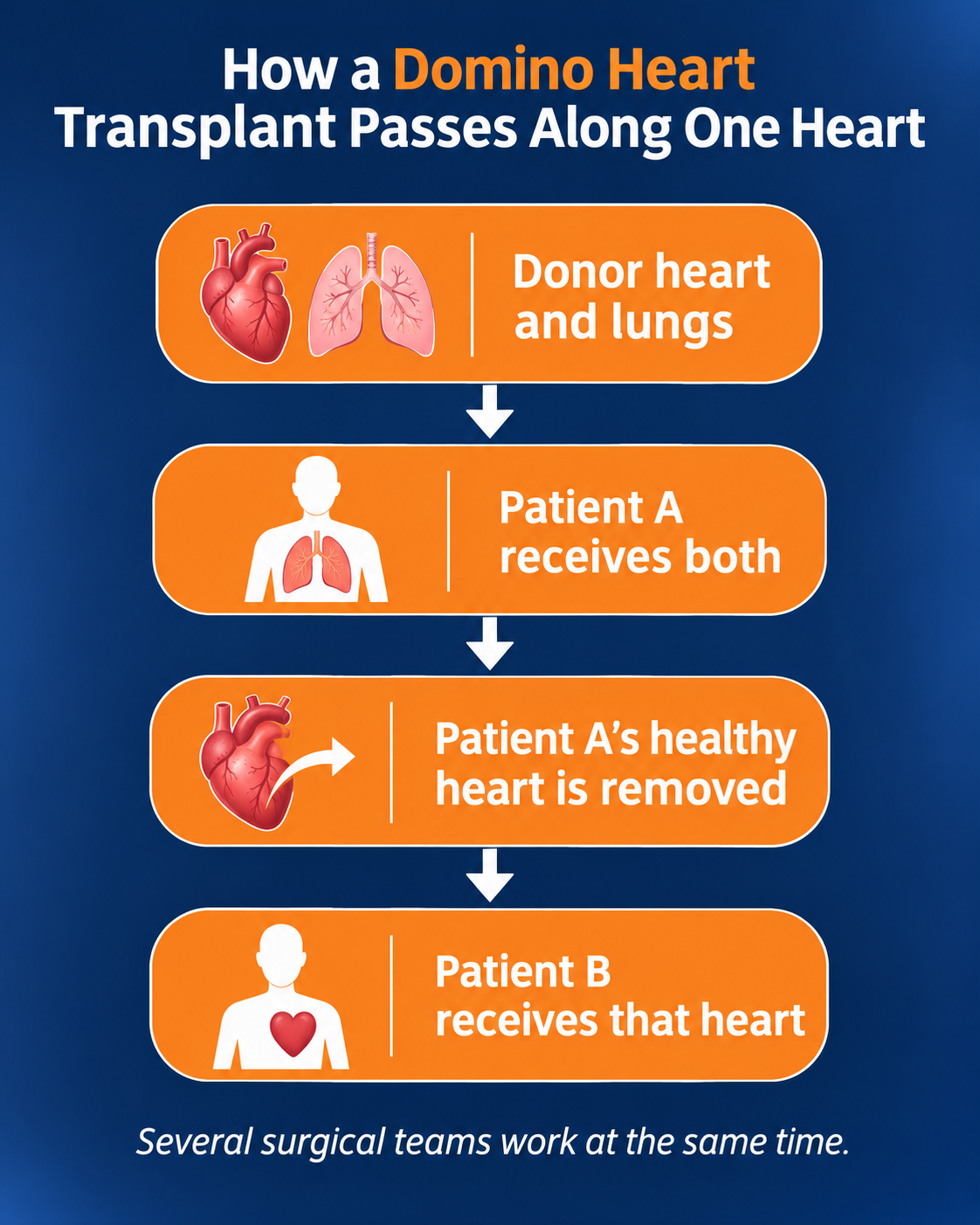
A domino heart transplant involves two patients. One patient, usually someone with severe lung disease, receives a donor heart and lungs together, and their own heart, if it is healthy enough, is then transplanted into a second patient who needs a heart transplant. It’s done to make the most of scarce donor organs, and sometimes because a standard transplant wouldn’t suit one of the two patients well. Here’s why surgeons choose it.
According to Dr. Vishal Khullar, a Heart Transplant Surgeon in Mumbai, “In a domino transplant, one patient’s healthy heart becomes another patient’s second chance. Careful matching is what makes it work.”
Two patients, one chain of operations, and a lot of timing.
The standard operation is explained on our heart transplant page.
Wondering who actually benefits from a domino heart transplant?
The main difference is where the heart comes from.
|
Feature |
Domino Heart Transplant |
Standard Heart Transplant |
|
Source of the heart |
A heart lung recipient’s own heart |
A deceased donor |
|
Operations involved |
Two, closely coordinated |
One |
|
Who the heart helps |
A second patient on the waiting list |
The patient being operated on |
|
Who may benefit |
Includes some patients standard listing may exclude |
Patients who meet usual listing criteria |
|
Main drawback |
Early risk slightly higher |
Depends on the recipient |
Why not just use a standard transplant? The first patient’s lungs need replacing too, so the heart goes in with them. Their own healthy heart would otherwise be removed and not used.
Who can benefit: Some patients have high pressure in the blood vessels of the lungs, which can rule them out of a standard list. A domino heart may suit them.
The early risk: In a review of 131 domino transplants at one center, 30 day mortality was 13%, slightly above standard transplants, though later attrition stayed low.
What stays the same: Matching on blood group and size still applies, and so do lifelong medicines and regular checks to watch for rejection.
To see where this fits among other options, read about heart transplant types.
Figures like these describe groups, not individuals. Age, health and regular follow up can shift them a lot.
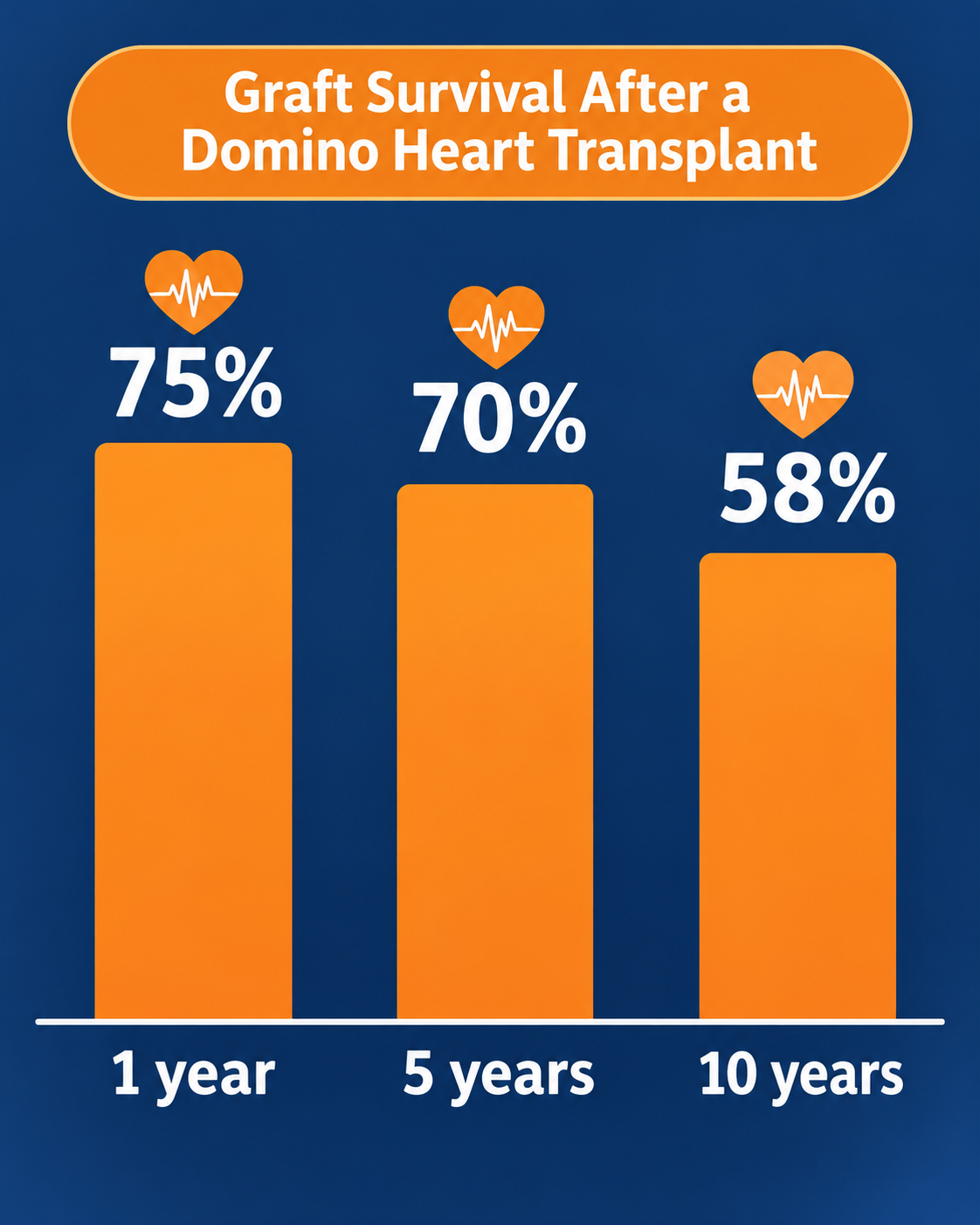
Domino results: Graft survival ran at 75% after one year, 70% after five and 58% after ten. Care has changed since those patients were treated, so these are a guide, not a promise.
Can you live 30 years? Rarely, but yes. One report from Berlin and Hannover described 10 patients alive more than 31 years after their heart transplant.
Does it shorten lifespan? Compared with a healthy heart, yes. Registry median survival is 12 years, and about 21% of patients are alive at 20 years.
What limits survival: Narrowing of the heart’s own arteries, called cardiac allograft vasculopathy, is the main one. Kidney problems and cancer also turn up in long survivors, and regular follow up helps catch them.
Our guide to heart transplant survival goes into life expectancy in more detail. Planning with the transplant team matters more than any single number.
A domino heart transplant passes a healthy heart from a heart lung recipient to a second patient. It stretches scarce donor organs and can help patients who are hard to match. Early risk is slightly higher, though results in selected patients are reasonable, and long term survival after any heart transplant varies. Plans should be discussed with a transplant surgeon.
Disclaimer: This blog is for educational and informational purposes only and should not be considered professional advice.

