Post Views: 25



Heart transplant may provide a new lease on life for patients suffering from advanced heart failure. But one question often comes first: how long can you live after a heart transplant? There is no single answer. Many recipients live for over 10 years, while some survive for 20 years or longer depending on the patient’s age, overall condition, donor-heart function and long-term follow-up.
As per Dr. Vishal Khullar, a renowned heart surgeon in Mumbai, India, heart transplant survival rate does not depend only on the surgery but also on the health of the patient, kidney and liver function, rejection risk, infections, medications adherence and regular monitoring.
Dr. Vishal Khullar has managed thousands of complex cases with cardiac conditions and performed more than 7,000 heart surgeries in his practice. With 30+ years of experience, he specialises in heart transplantation, complicated cardiac procedures and mechanical circulatory support.
This blog post will give you information about the heart transplant survival rate, life expectancy and other aspects.
A donor heart does not come with a fixed lifespan. Heart transplant survival rate can vary according to:
Dr. Vishal Khullar highlights that the condition in which a patient enters transplantation can influence recovery as much as the operation itself. Early referral may allow patients to reach surgery before severe damage develops in other organs.
International transplant data show that survival has improved considerably over the past several decades. ISHLT data have reported median adult heart-transplant survival of around 12 years, increasing to almost 15 years among patients who survive the first year.
A long-term European cohort reported the following survival:
|
Time After Transplant |
Reported Survival |
|
1 year |
88% |
|
5 years |
80% |
|
10 years |
70% |
|
20 years |
40% |
These figures should not be treated as a prediction for an individual patient. They came from a specific transplant cohort, and outcomes can vary by era, centre and patient characteristics.
Survival statistics provide perspective, not a personal deadline. Connect with an expert for an assessment based on individual health factors.
Does the outlook change after the first few years? Let’s understand what happens over time.
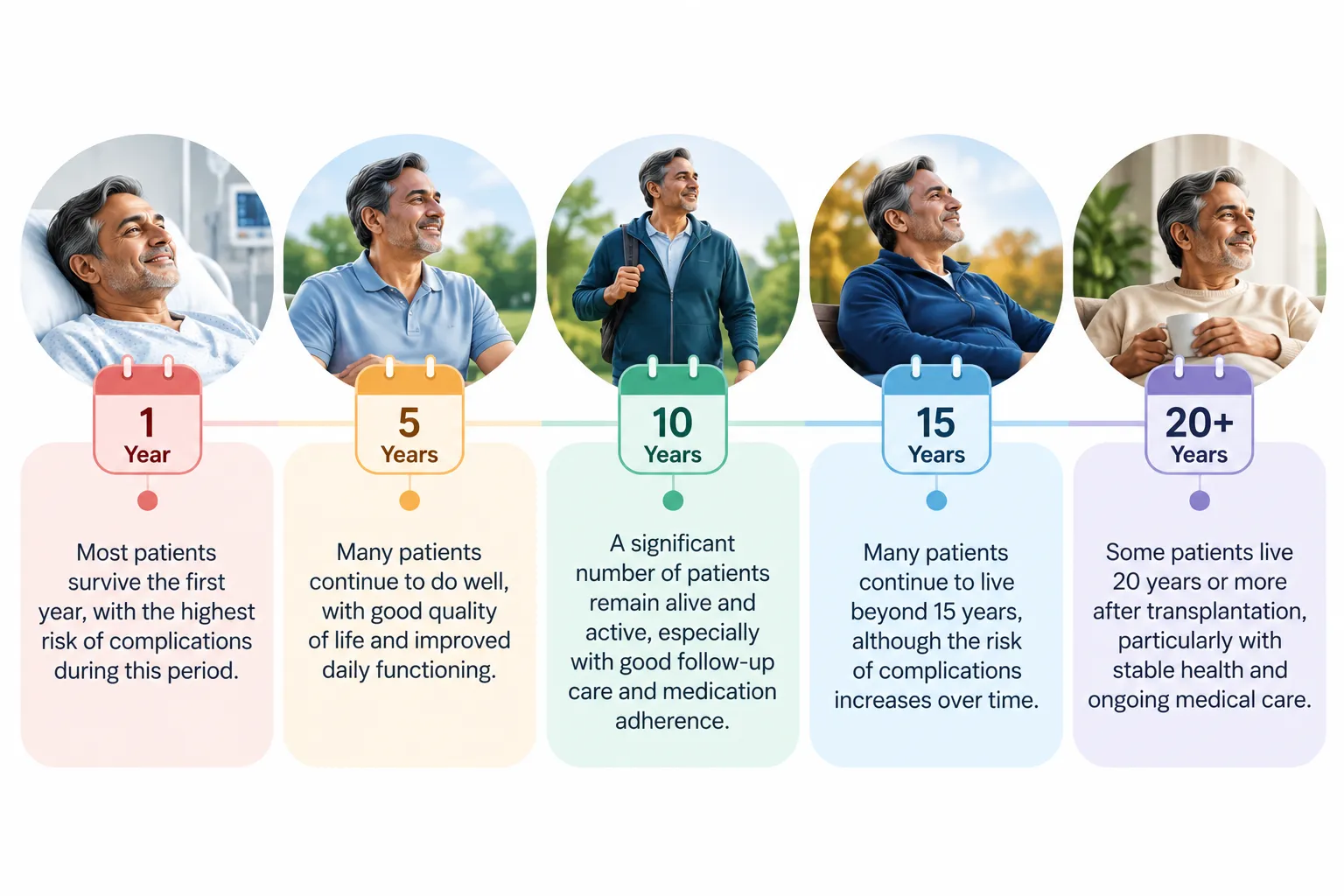
The early post-transplantation phase comes with many surgical, rejection, and infection risks. Patients who recover well in the first year have a better long-term outlook.
ISHLT data illustrate this clearly. The overall median survival has been reported at about 12 years, whereas patients who have already survived the first year have shown median survival approaching 15 years.
Some patients live 20 years or longer with the same donor heart. Long-term survival is highly dependent on the management of complications.
What can shorten the life of a transplanted heart? Let’s discuss the major concerns.
Several complications can influence heart transplant life expectancy:
Many complications can be detected before major symptoms develop, which makes scheduled follow-up especially important.
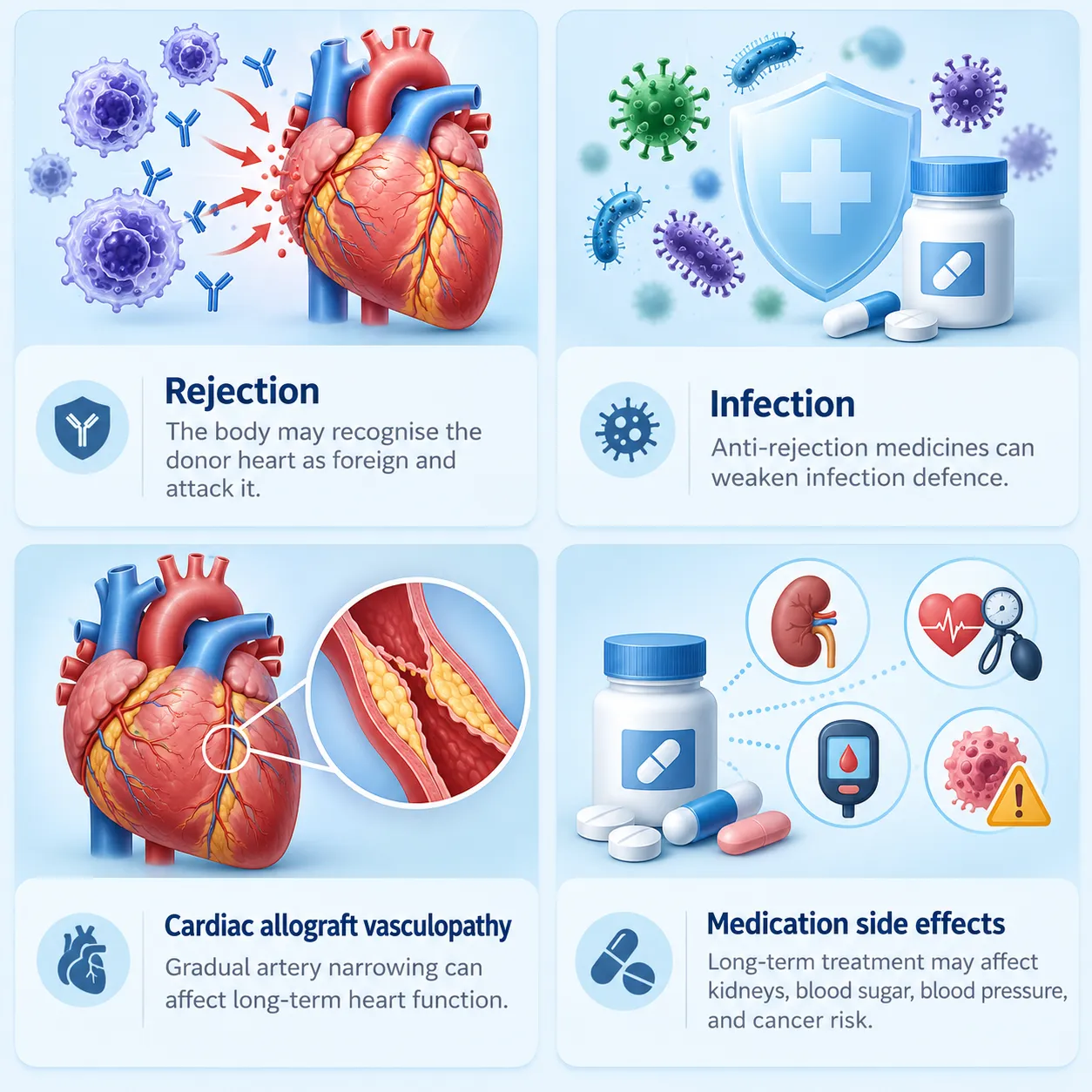
Does age determine how long someone can live after transplant? Let’s explore its role.
It is important to note that age is not the sole determinant; there are other factors taken into account. Young recipients usually have fewer comorbidities and can live longer. Older adults can also benefit from transplants and enjoy long lives if carefully selected.
In addition to age, physical fitness, health of the kidneys and lungs, frailty, diabetes, previous surgeries and other illnesses are also considered by the doctors.
Monitoring may include:
The frequency of testing is usually highest during the early months and gradually changes as the patient becomes stable.
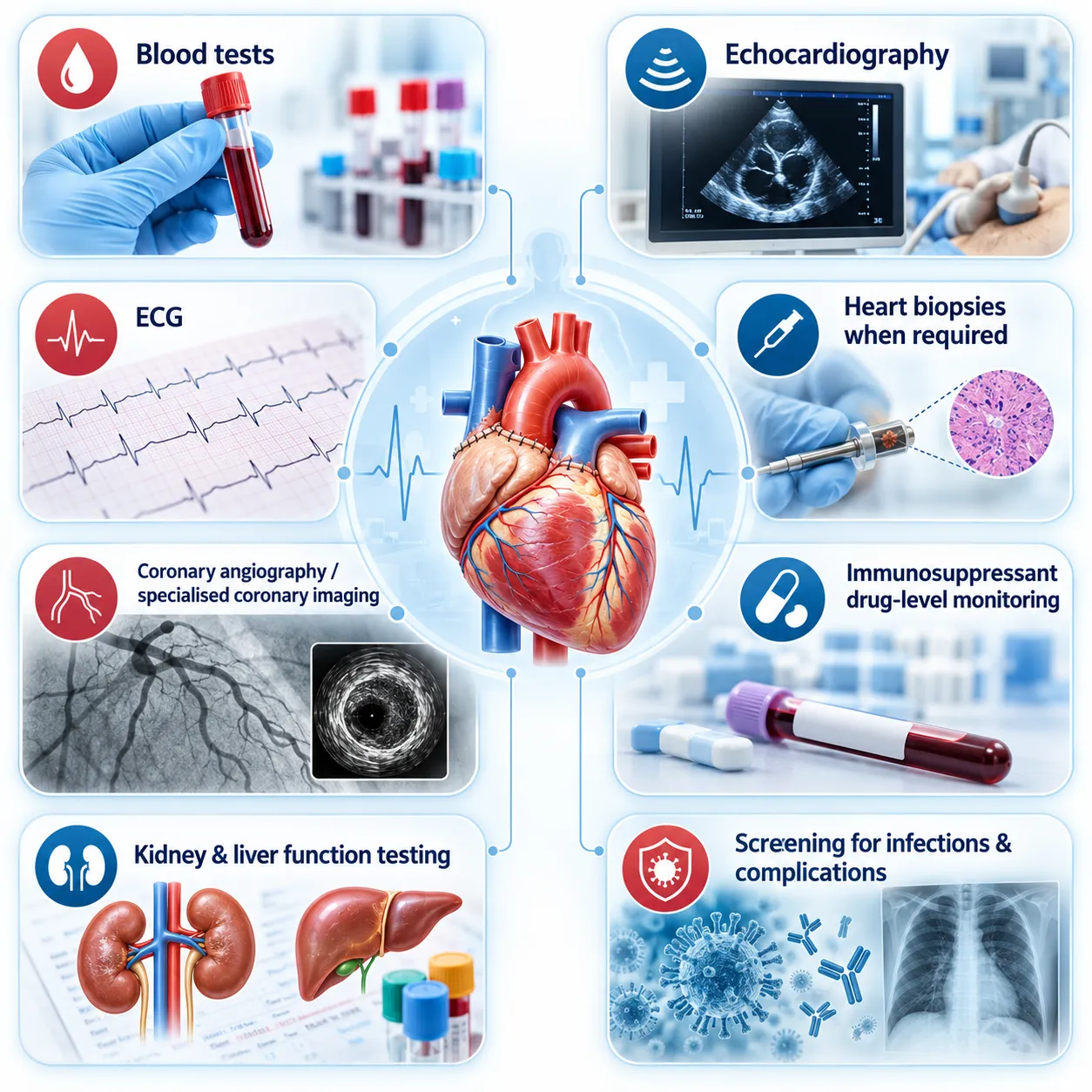
Graft failure may develop because of severe rejection, cardiac allograft vasculopathy or other complications.
Treatment depends on the cause and may include medication, interventions or temporary mechanical support. In carefully selected patients, retransplantation, or a second heart transplant, may be considered.
Second-transplant life expectancy varies considerably and depends on the reason for graft failure, age, organ function and overall health.
Can everyday habits influence long-term survival? Let’s discuss what patients can control.
Important steps include:
Medication should never be stopped or adjusted without guidance from the transplant team.
How long does heart transplant recovery take? Let’s look at the usual stages.
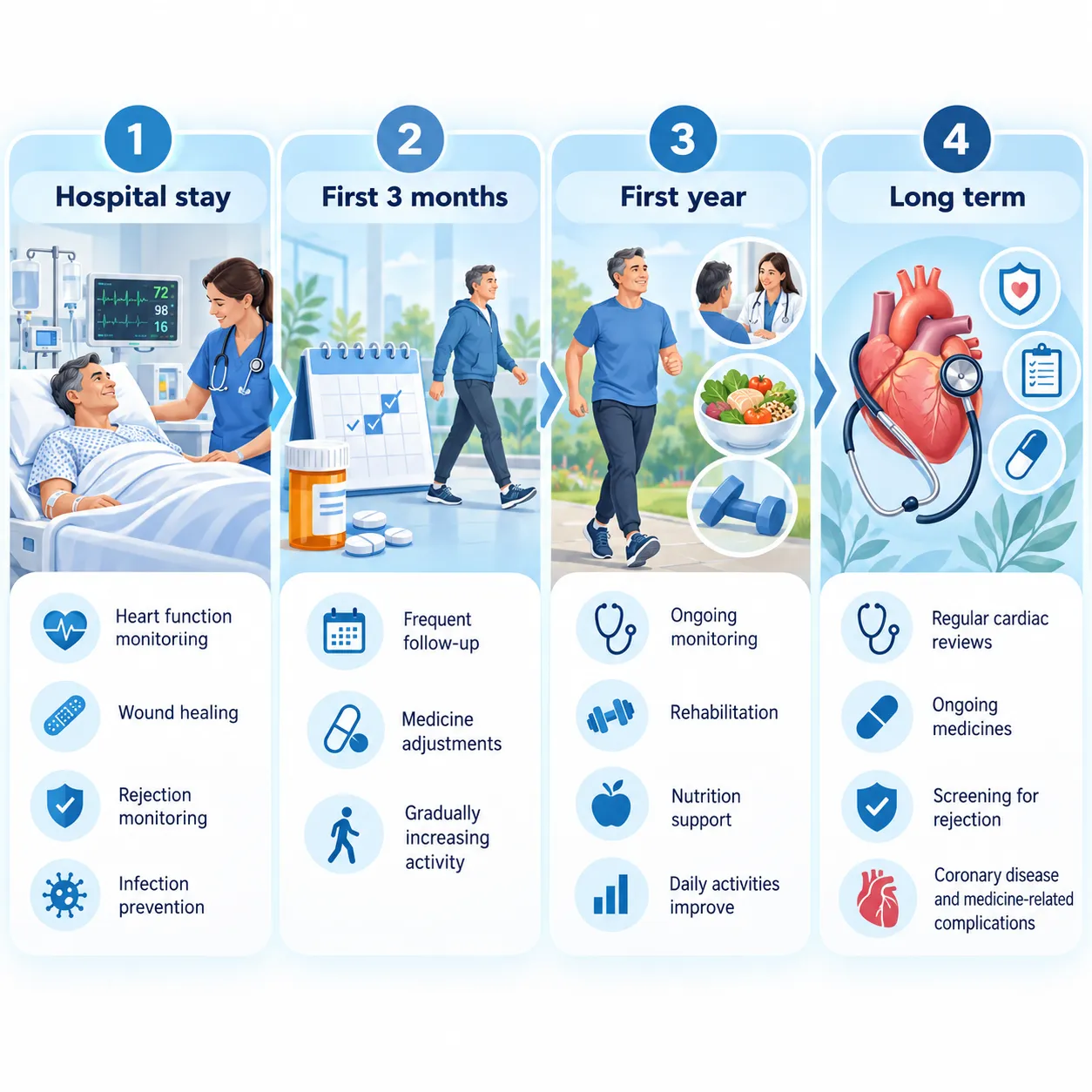
Recovery differs from person to person, particularly after prolonged illness before transplantation.
A heart surgeon may be consulted when a patient develops:
Dr. Vishal Khullar, a well-known cardiac surgeon in Mumbai, India, evaluates advanced cardiac conditions to determine whether transplantation, mechanical support or another surgical approach may be appropriate.
There is no fixed expiry date for a transplanted heart. Many patients live beyond a decade, and some live for 20 years or longer. Heart transplant survival rates have also improved as surgery, immunosuppressive treatment and post-transplant monitoring have advanced.
Dr. Vishal Khullar’s approach focuses on careful patient selection, surgical planning and long-term assessment because survival after transplantation depends on much more than the operation alone.
A transplant can offer years of additional life to appropriately selected patients with advanced heart failure. Reach out to understand individual eligibility and expected outcomes.
Disclaimer: The information shared in this content is for educational purposes and not for promotional use