Views: 8



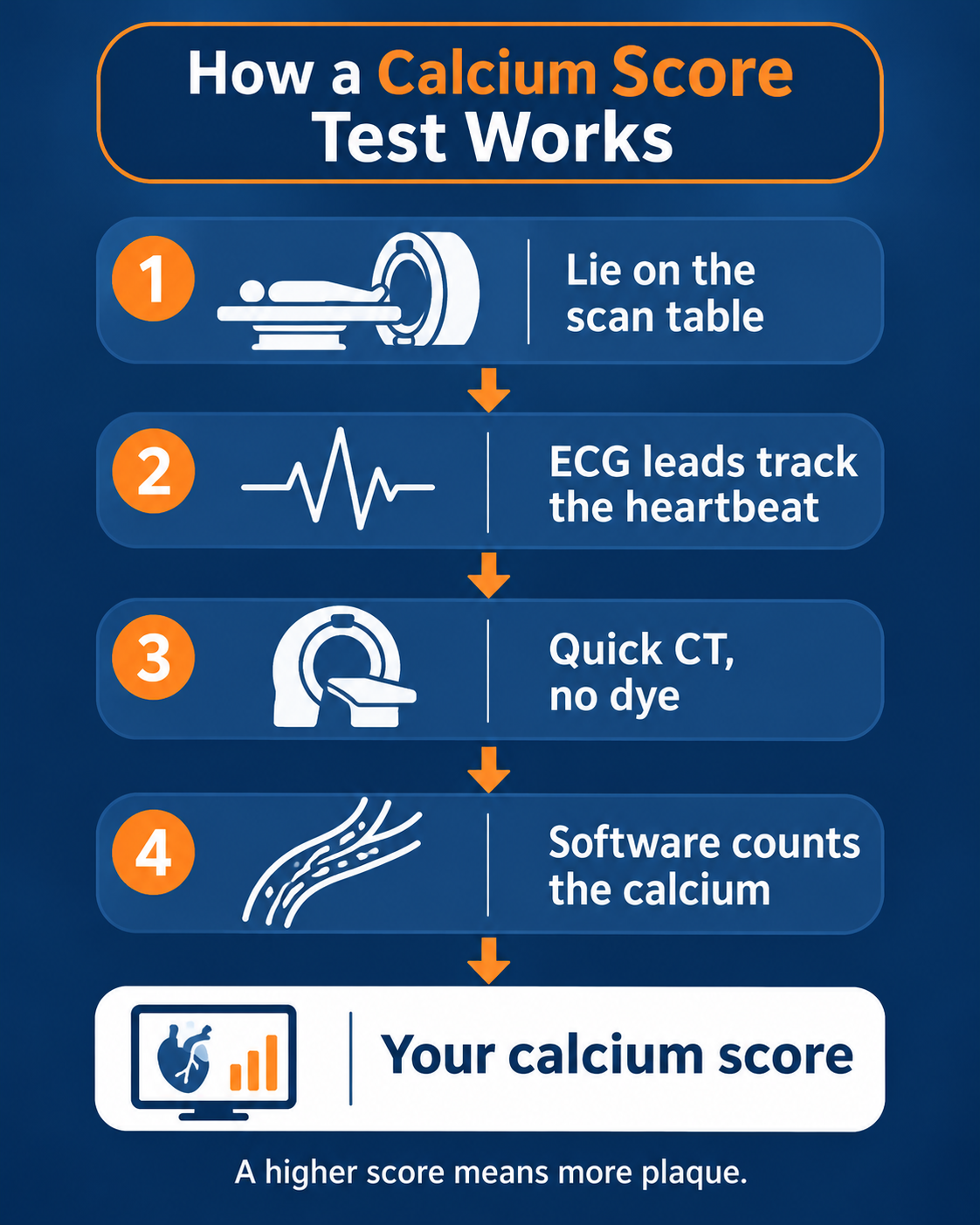
Coronary artery calcium scoring is a short CT test of the arteries that feed your heart. It counts the calcium sitting in the plaque on their walls, and no dye is needed. You get one number, your coronary artery calcium score. The higher it is, the more plaque you have. Doctors use it to size up heart risk, and to plan ahead if a stent or an operation could be needed.
According to Dr. Vishal Khullar, a Cardiac Surgeon in Mumbai, “Think of a calcium score as a count of how much plaque has built up in the arteries. It doesn’t tell us how narrow an artery is. We read the number alongside symptoms and other tests.”
Often, yes. But mostly for people who feel fine and sit somewhere in the middle on risk.
Intermediate risk adults: If your chance of heart disease over the next 10 years is between 10% and 20%, guidelines back the scan. The number can settle a borderline call.
Adults with diabetes: Those aged 40 and older with no symptoms are another group named in the guidance.
Low risk adults: The scan is generally not advised when 10 year risk is under 10%. Your cardiologist decides based on your full picture.
What the test is like: It’s fast. There’s no dye. An ECG times the machine to your heartbeat, which keeps the pictures sharp.
If the scan does show blocked arteries, heart bypass surgery is one of the treatment options.
Have a question about your calcium score or this scan?
A score of 130 isn’t zero. It isn’t the top band either. It falls in the moderate range.
|
Agatston score |
What it suggests |
|
0 |
No identifiable disease |
|
1 to 99 |
Mild disease |
|
100 to 399 |
Moderate disease |
|
400 and above |
Severe disease |
Where 130 falls: In the 100 to 399 band, so a moderate build up. On its own it’s not good or bad. It’s a signal worth acting on.
Why it counts: A higher calcium score indicates more plaque buildup in the coronary arteries and a greater risk of heart disease. It can help doctors decide whether statins are needed and set an appropriate LDL cholesterol target.
When to worry: 400 or more is labelled severe, and above 1,000 goes with advanced blockage. Whatever your score, chest pain or breathlessness on effort needs attention.
A score of zero: Your risk of a heart event over the next 10 to 15 years is very low. Doctors call this the power of zero. Still, tell your doctor about any new symptoms.
If a high number worries you, our post on how a heart attack differs from cardiac arrest, helps explain how the two conditions differ.
Not by itself. A calcium score shows how much plaque has built up in the arteries. It can’t show how narrow the arteries have become.
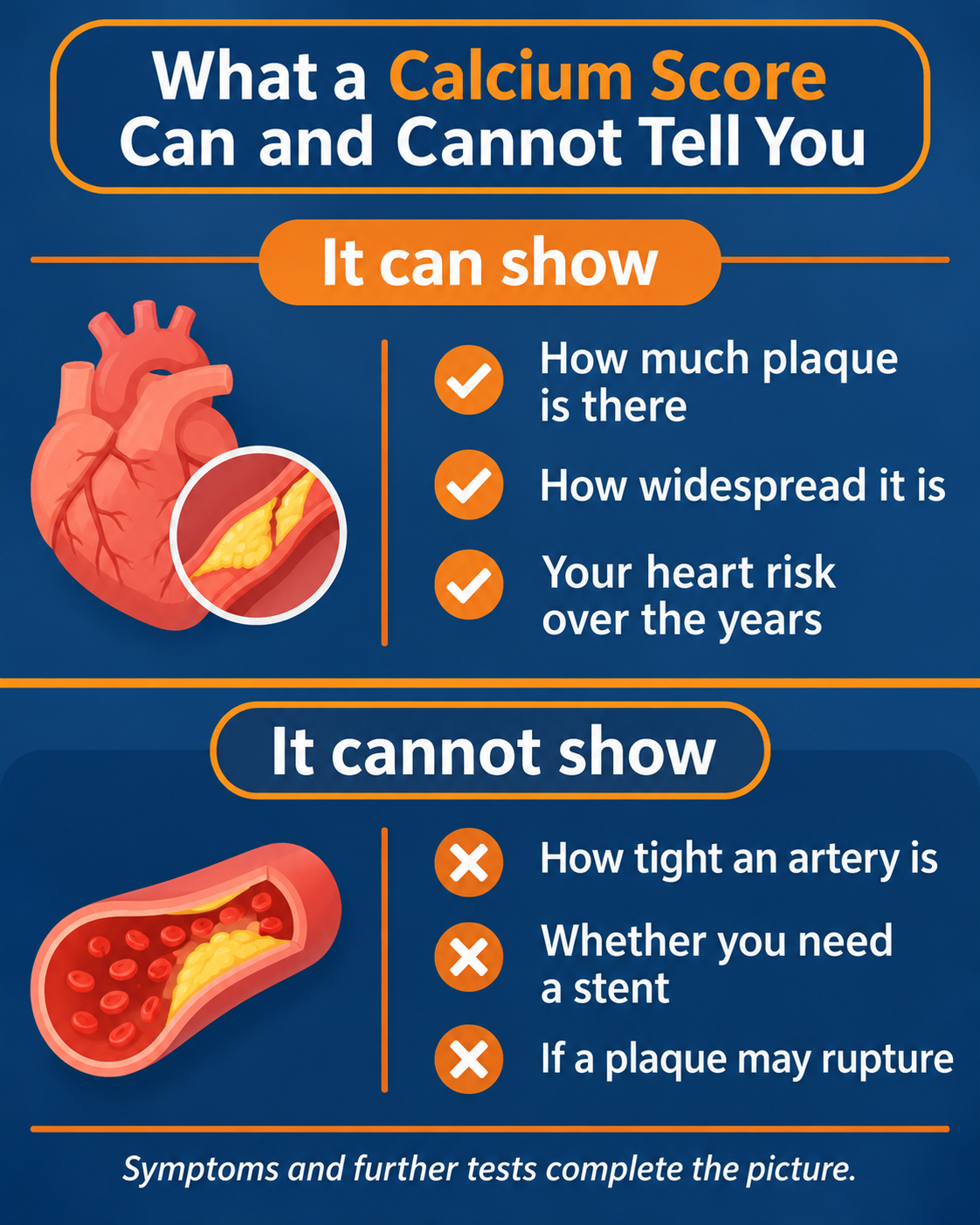
Score versus blockage: Calcium shows how far the build up has spread. It doesn’t show how narrow the artery is, because arteries can stretch to make room for plaque. A heavy load can still leave a wide channel.
What decides a stent: Symptoms such as chest pain, plus tests that show narrowing, like CT angiography or an angiogram. The score is one clue among several.
Why calcium matters before a procedure: Stenting gets harder when there’s a lot of calcium, and extra tools may be needed to open the artery. That’s one thing doctors weigh when choosing between a stent and bypass.
Medicines often come first: For high calcium scores, treatment often focuses on medicines and lifestyle changes. That means cholesterol lowering, aspirin if bleeding risk is low, control of blood pressure and sugar, plus diet and exercise.
To see how the heart is supported during an operation, read our guide to cardiopulmonary bypass.
The scan counts calcium. It doesn’t measure blockage. Cardiologists mainly use it for people with no symptoms at intermediate risk, or those over 40 with diabetes. A score of 130 is moderate and deserves a doctor’s review. A high score alone doesn’t mean a stent. Symptoms and further tests decide that.
Disclaimer: This blog is for educational and informational purposes only and should not be considered professional advice.

