

This website is being reviewed and updated in line with the National Medical Commission (NMC) guidelines on ethical advertising and public communication by registered medical practitioners.

Tricuspid Valve Endocarditis: What Are the Warning Signs?

Tricuspid valve endocarditis starts when bacteria get into the blood and attach to the tricuspid valve, which separates the heart’s right atrium and right ventricle. In the beginning you might just feel off, maybe with a temperature that comes and goes. But the infection can spread. Small pieces of it, called vegetations, break off and travel to the lungs. The earlier it’s caught, the better the chances of preventing complications.

According to Dr. Vishal Khullar, a Cardiac Surgeon in Mumbai, “A fever that lingers, especially with a new cough, should never be brushed off in someone with a risk factor. Early testing makes a real difference.”

What Are the First Signs You Might Notice?

Most people think it’s a bad flu. Sometimes it takes a few days to show. Sometimes weeks.
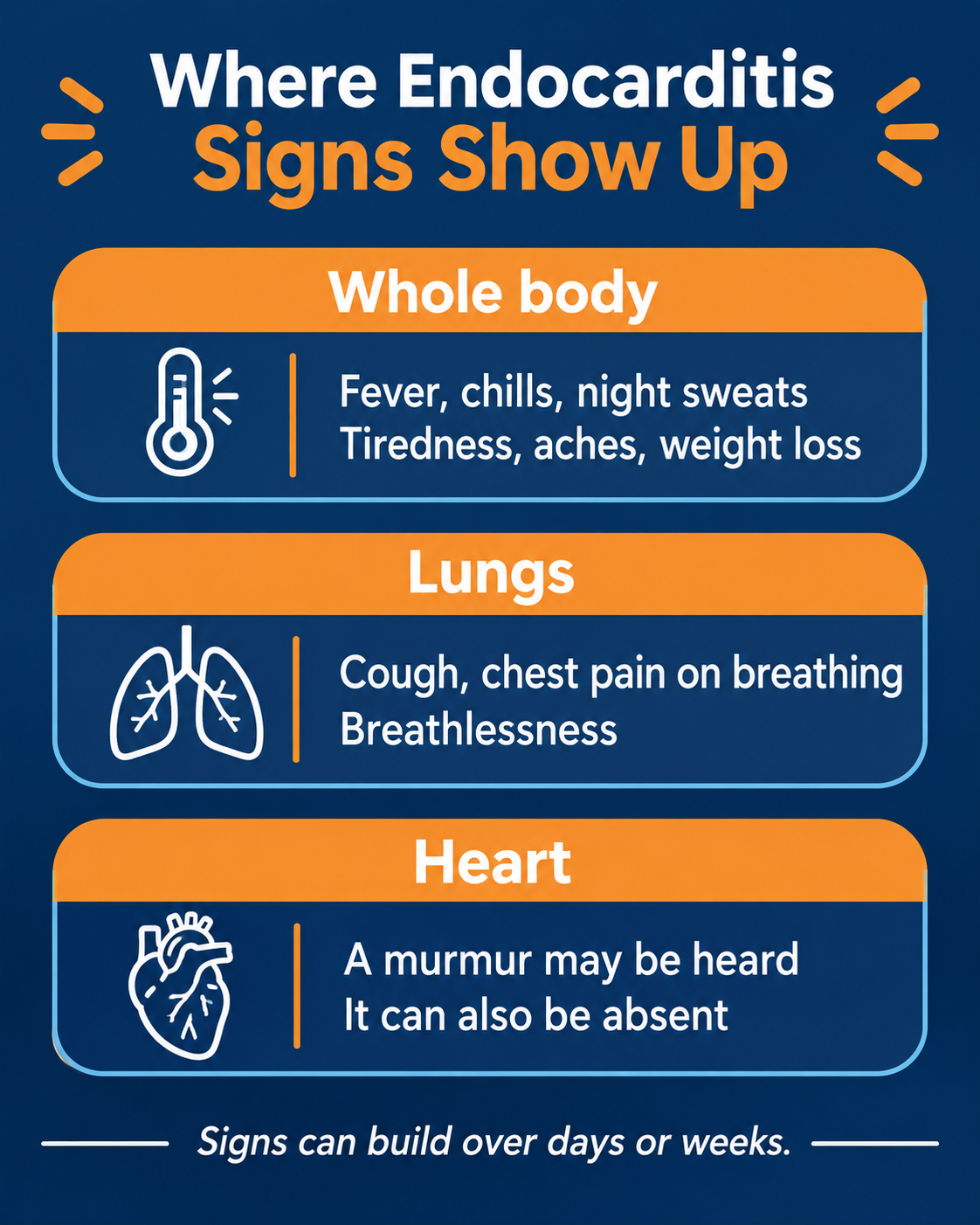
Three category cards showing where endocarditis signs appear: whole body with high temperature, chills, night sweats and weight loss, lungs with cough, chest pain and shortness of breath, and heart with a murmur that may or may not be heard.
  • Fever and chills: It comes and goes. You feel hot, then fine, then hot again. Shaking chills and night sweats that soak the bed are common. Most people notice this first.
  • Heavy tiredness: You’re worn out, and rest doesn’t help. There may be headaches, sore joints, a poor appetite and some weight loss.
  • Chest and lung symptoms: This part is specific to the tricuspid valve. Bits of infection get carried to the lungs. Then a cough can start. Breathing in may hurt, and you can get short of breath. Some people bring up blood. Chest infections that keep coming back are another clue.
  • A murmur, or none: Doctors may hear a heart murmur, but it’s absent in up to half of patients. A normal exam doesn’t rule anything out.

Damaged valves sometimes need an operation, as outlined on our valve repair surgery page.

Is a recurring fever worth getting checked?

Who Gets Tricuspid Endocarditis, and Why?

The tricuspid valve is the first valve that blood meets after it returns from the veins. So any germ in the bloodstream reaches it first.

Risk factor

Why it matters

Injecting drugs

Germs from the skin or dirty equipment go straight into a vein

A damaged or artificial valve

Bacteria find it easier to stick to a rough or foreign surface

Pacemaker leads or long term lines

Germs can settle on a wire or tube left in a vein

Congenital heart disease or earlier endocarditis

An already weak valve is easier to infect

Being male or over 50

It is seen more often in these groups


Most common cause: Injecting drugs. Skin germs or shared, unclean equipment can carry bacteria into the vein, and the valve is where they land.

The usual germ: Staphylococcus aureus, which lives on the skin, turns up most often. Other bacteria can cause it, and rarely a fungus does.

Devices and lines: Pacemaker or defibrillator leads, dialysis catheters and central lines can all be a landing spot for bacteria, especially if they remain in place for extended periods.

Existing heart problems: A damaged valve, an artificial valve or a congenital heart condition raises the risk. So does a past episode of endocarditis.

Sometimes a leaking valve can be repaired instead of replaced. Our page on the annuloplasty ring explains one way.

How Can You Tell It's Getting Worse?

Blood cultures and an echocardiogram (an ultrasound of the heart) confirm the diagnosis. Doctors then repeat the scans. Certain changes mean the valve itself is being damaged.
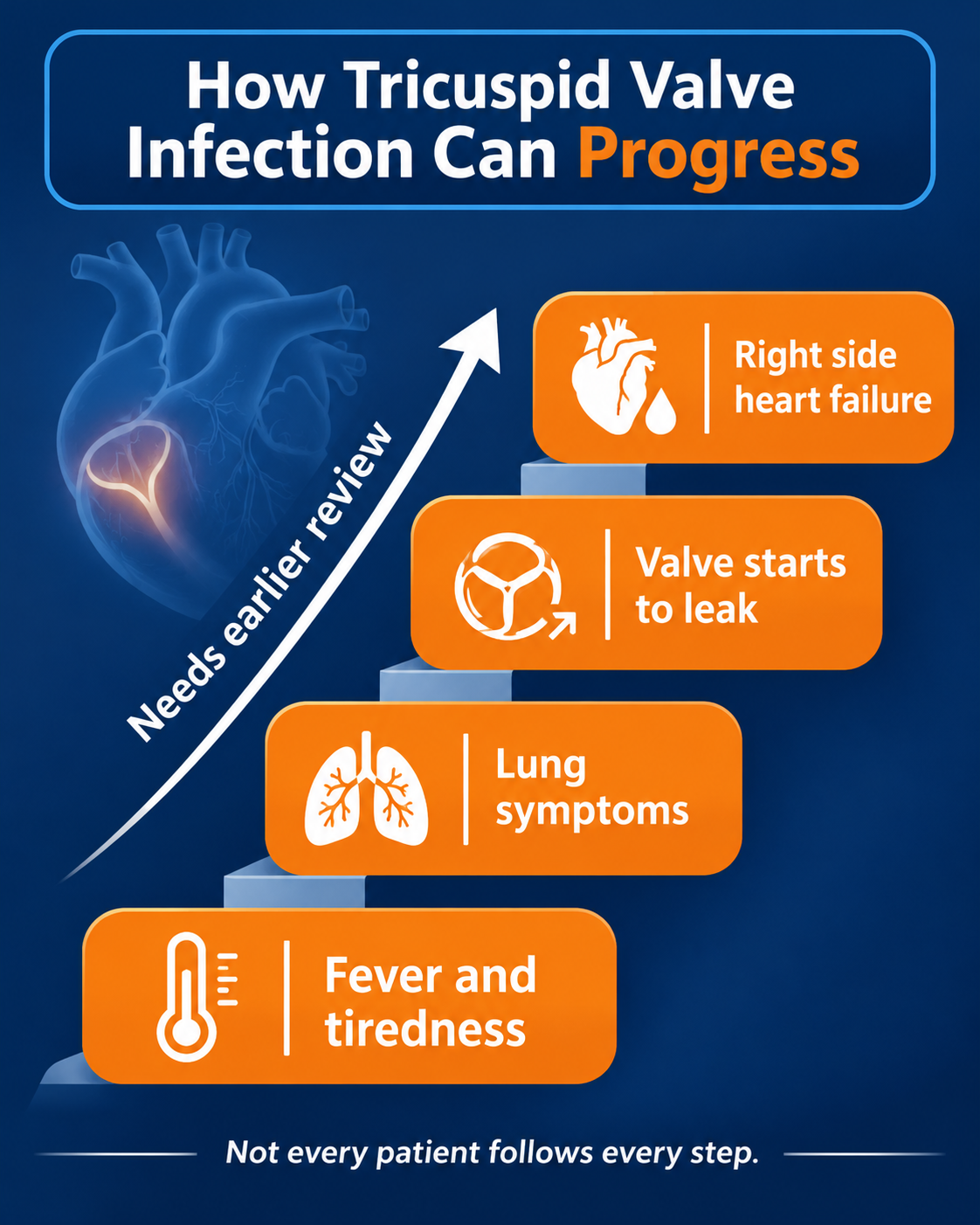
Four rung ladder showing how tricuspid valve infection can progress: early general symptoms, lung symptoms, valve starts to leak, and right side heart failure.
  • Swelling and fluid: A badly leaking valve puts the right side of the heart under strain. You may see swollen ankles or legs, a bloated belly and neck veins that bulge.
  • Trouble breathing that returns: More shortness of breath, or chest infections that keep coming back, can mean more infected pieces are reaching the lungs.
  • Infection that won’t clear: If the temperature is still up after 7 days of treatment, and continue to show bacterial growth, medicine alone isn’t enough.
  • Treatment and surgery: Antibiotics come first, usually for 4 to 6 weeks. That’s the core of tricuspid endocarditis treatment. Around half of people with endocarditis need surgery, and it’s considered for large vegetations with repeated lung emboli, infection that won’t clear, or a severe leak causing heart failure.

Recovery after valve operations is covered in our guide to valve surgery recovery. If you have a risk factor and symptoms that hang around, don’t wait for them to pass. See a doctor.

Key Takeaways

Vague symptoms that won’t go away are how tricuspid valve endocarditis often begins, and lung symptoms come next. Drug injection is the main cause, but damaged valves and devices in the veins add risk too. Swollen legs, breathlessness that comes back, or symptoms that carry on despite treatment are signs the valve is getting worse. Notice any of these? Speak to a doctor soon.

FAQs

What are the early warning signs of endocarditis?

Fevers that keep returning, chills, sweating at night, and unusual tiredness.

What is the most common cause of tricuspid endocarditis?

Injecting drugs. The most common bacteria responsible is Staphylococcus aureus.

How do you know if your tricuspid valve is getting worse?

Puffy legs, difficulty breathing, or a temperature that stays up despite antibiotics.

Who is most at risk for endocarditis?

Anyone who injects drugs, or has a damaged valve, artificial valve or vein device.

Refrences

  1. NHS, Endocarditis: https://www.nhs.uk/conditions/endocarditis/
  2. NCBI Bookshelf (NIH), Tricuspid Valve Endocarditis (StatPearls): https://www.ncbi.nlm.nih.gov/books/NBK538423/

Disclaimer: This blog is for educational and informational purposes only and should not be considered professional advice.

Book Online Consultation Book An Appointment
Powered by Joinchat
Call Now Button