
Homograft vs Mechanical Valve in Destructive Aortic Valve Infective Endocarditis in Mumbai

No single valve is the best choice for every patient with destructive aortic valve infective endocarditis. A homograft is often preferred when the infection has caused extensive aortic root destruction, abscesses, or severe tissue loss because it allows complex reconstruction using donated human tissue. A mechanical valve is a durable option for selected patients after complete removal of infected tissue, particularly when long-term anticoagulation is appropriate. Current research shows that both options can provide good long-term outcomes when used in the right clinical setting. The final decision depends on the extent of infection, the condition of the aortic root, patient age, kidney function, bleeding risk, and the ability to take lifelong blood thinners. The primary goal is complete eradication of infection followed by durable reconstruction tailored to the patient’s anatomy.

According to Dr. Vishal Khullar:Complete surgical debridement remains the cornerstone of successful surgery in destructive aortic root infective endocarditis. Valve selection should always be individualized based on the extent of infection, the patient’s anatomy, and long-term clinical considerations.

What Is Destructive Aortic Valve Infective Endocarditis?

3d3f677e Ede8 48cf A1ea 5f494600509b

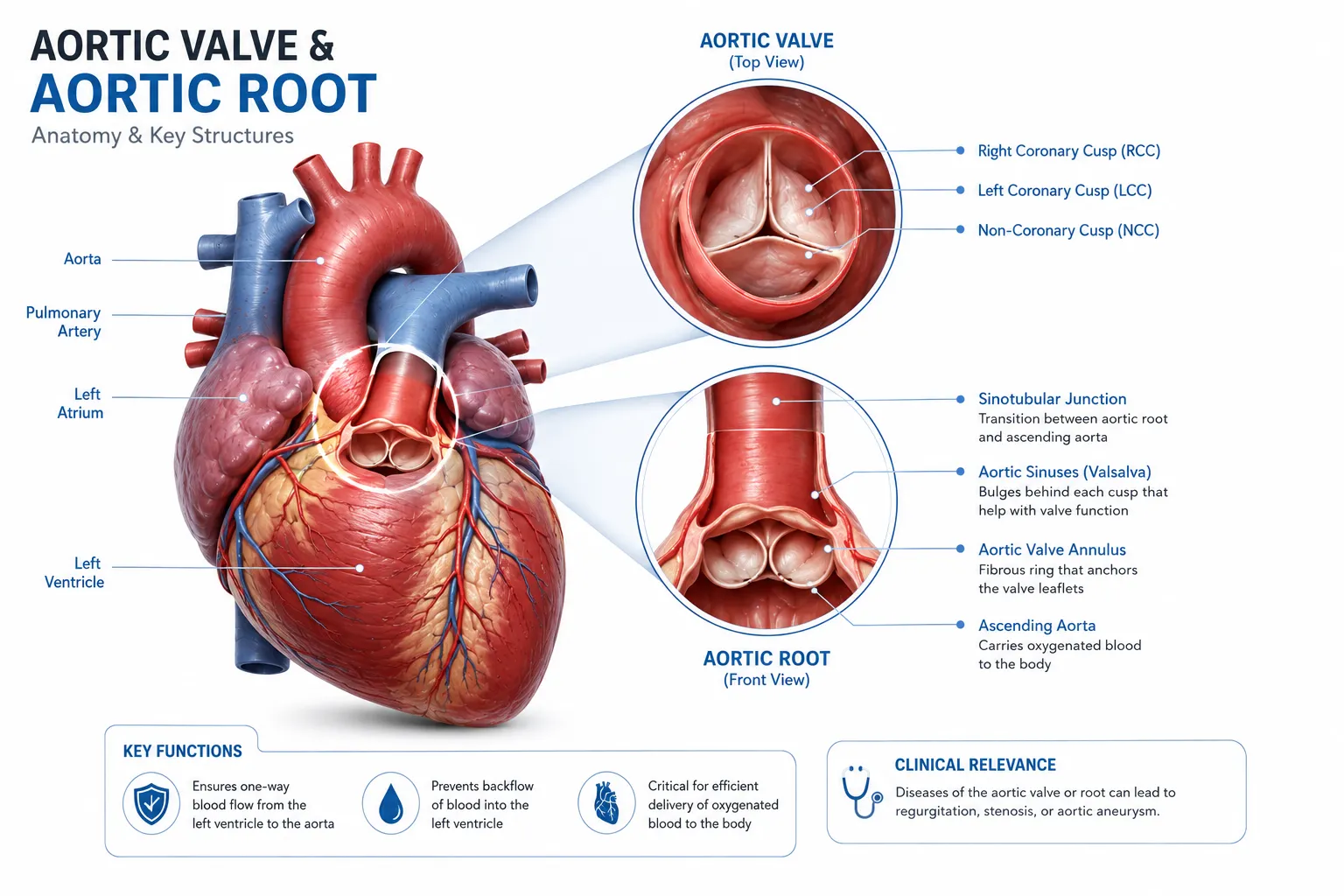
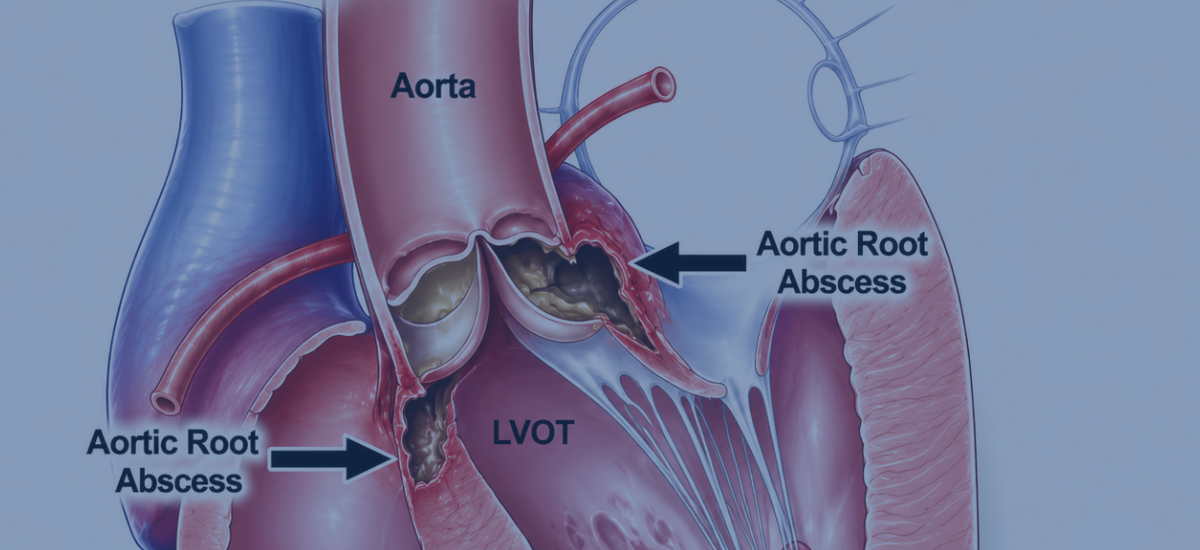
Infective endocarditis is an infection of the heart’s inner lining, usually involving a valve. Sometimes it doesn’t stay put. When infection spreads past the valve leaflets into the surrounding aortic root (the part of the aorta that supports the valve), doctors call it destructive or complex aortic valve endocarditis.

This spread can form an aortic root abscess: a pocket of infected, pus-filled tissue within the root wall. It can also create a fistula, an abnormal channel between heart chambers, or cause dehiscence, where valve tissue pulls away from surrounding structures. Infection involving a previously implanted valve is called prosthetic valve endocarditis. It tends to be more destructive than infection of a native valve.

Why is this so dangerous? Because the damage doesn’t stay confined to one spot. Destructive endocarditis can cause uncontrolled infection, heart failure from valve destruction, heart block from damage to the heart’s electrical pathways, and embolization, where infected material breaks off and travels to the brain or other organs. Read more about presentation and warning signs in this overview of Infective Endocarditis Symptoms.

Why Surgery and Valve Replacement Are Required

Antibiotics work well for endocarditis confined to the valve leaflets. They stop working once infection destroys the root, forms an abscess, or damages the conduction system.

At that point, no medication can rebuild what’s been destroyed. Surgery removes infected tissue, drains any abscess, and reconstructs the aortic root. Learn more under Aortic Root Replacement.

Guidelines from the American Heart Association (AHA), European Society of Cardiology (ESC), and Society of Thoracic Surgeons (STS) generally recommend surgery when there’s heart failure from valve dysfunction, infection that antibiotics can’t control, an abscess or fistula, or embolic events from mobile vegetations.

Timing matters here. Delaying surgery when these findings are present is linked to worse outcomes, though surgeons weigh the exact timing against a patient’s neurological status and hemodynamic stability. Patients with prior heart surgery face a technically harder operation, falling under Redo Cardiac Surgery.

Not sure whether your case needs surgery, or which type?

Contact Dr. Vishal Khullar for a clinical evaluation based on your echocardiogram and infection status.

What Is a Homograft Valve in Aortic Root Endocarditis?

Chatgpt Image Aug 4 2026 At 10 53 17 Am

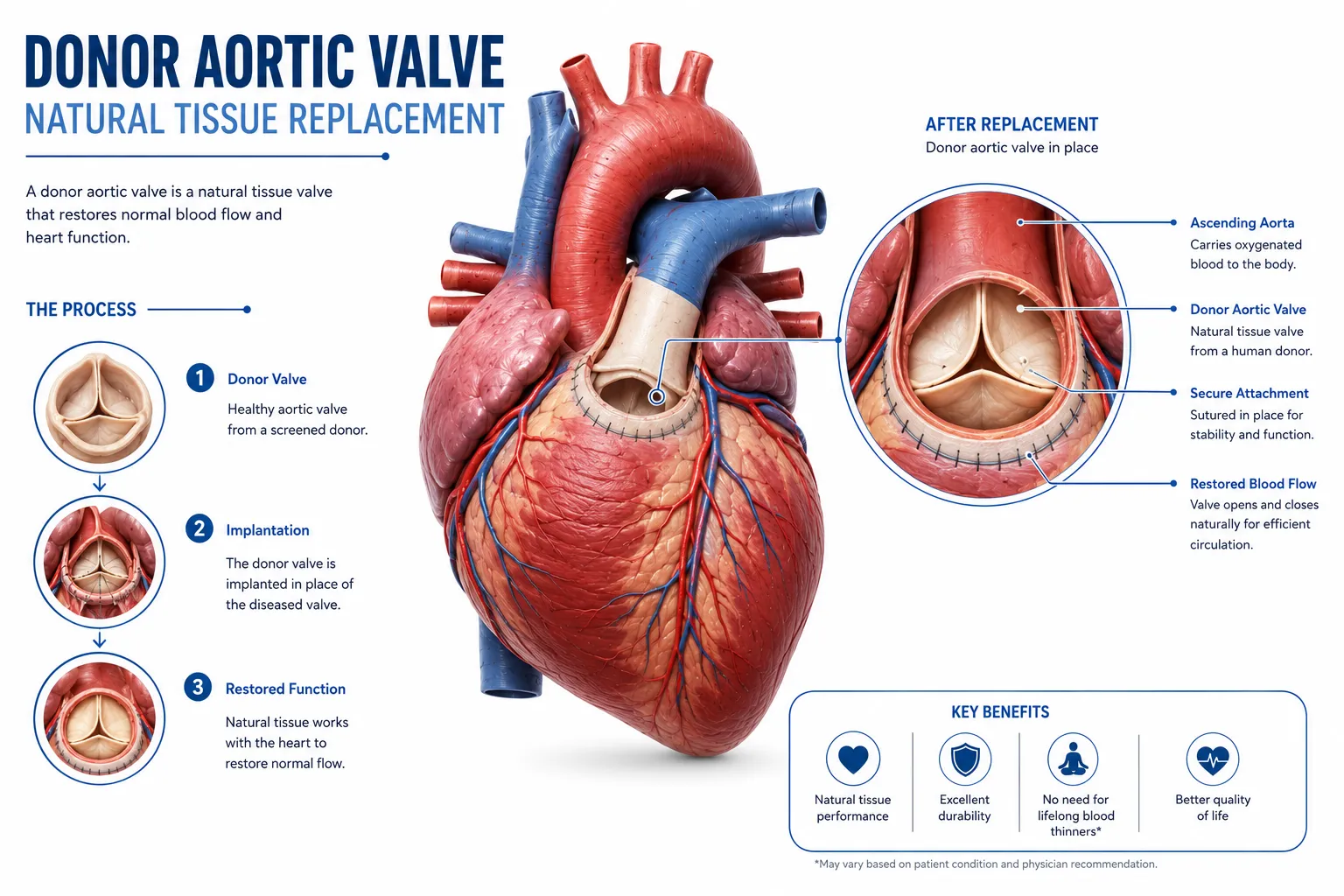
A homograft, also called an allograft, is donor aortic valve and root tissue, cryopreserved after screening and processing. Surgeons implant it as a full root replacement, connecting the coronary arteries directly into the graft.

Surgeons have long favored homografts in infected fields for two reasons. Donor tissue is thought to resist reinfection better than synthetic material. Its pliability also makes it easier to reconstruct badly damaged or oddly shaped root anatomy. This approach is covered in more depth under Aortic Valve Repair & Replacement Surgery.

Homografts aren’t without drawbacks. Donor tissue availability is limited, implantation is technically demanding, and the tissue can degenerate structurally over time, sometimes requiring reoperation. A related case involving root reconstruction for structural valve disease appears in this Bicuspid Aortic Valve with Aneurysm case study.

What Is a Mechanical Valve Conduit in This Setting?

Chatgpt Image Aug 4 2026 At 11 20 19 Am

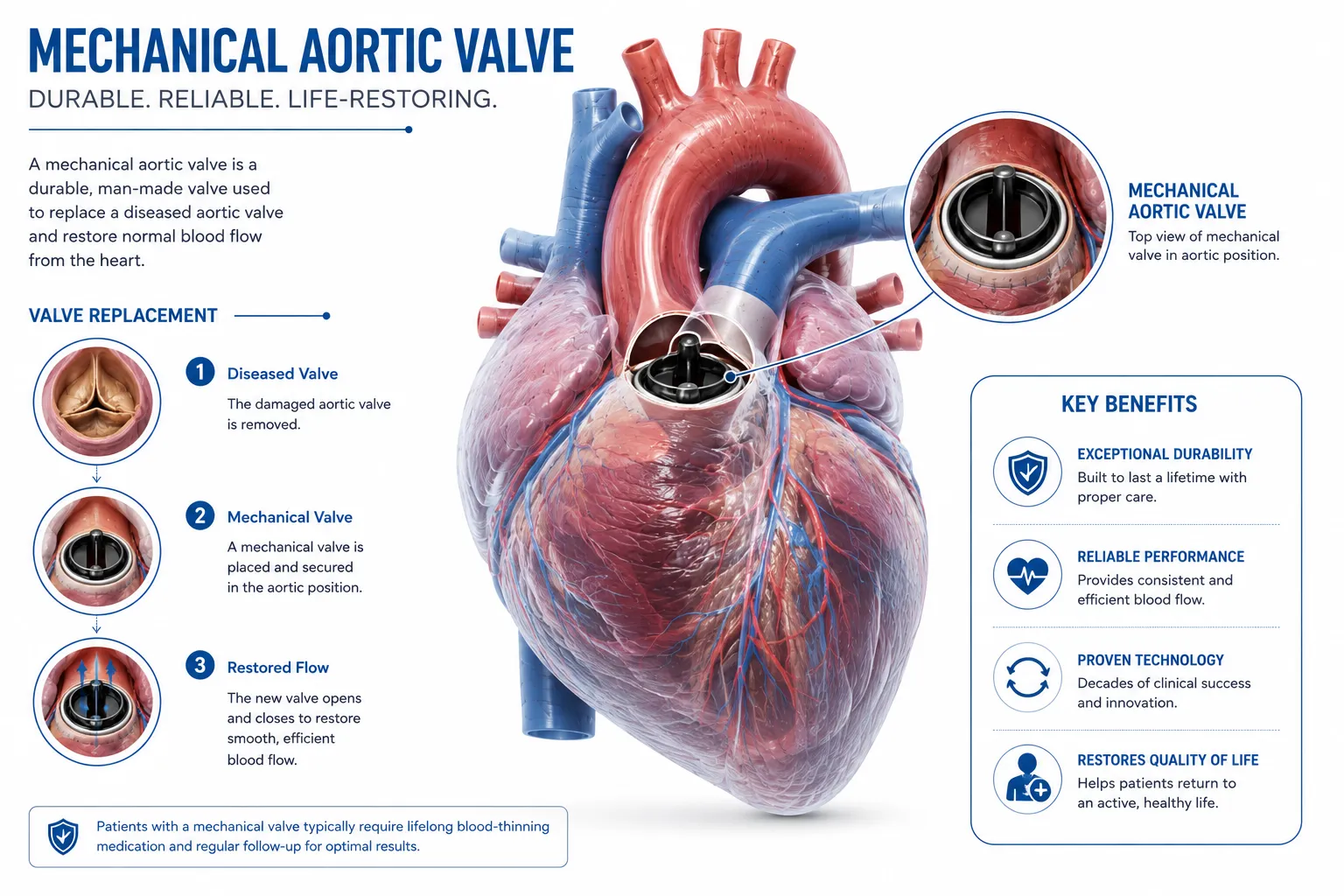
A mechanical valve conduit pairs a mechanical prosthetic valve with a synthetic (Dacron) tube graft, implanted as one unit to replace both the valve and the root. The valve itself is made of pyrolytic carbon and other durable synthetic materials.

Surgeons lean toward mechanical conduits for younger patients with good kidney function who can safely manage lifelong anticoagulation. That means blood-thinning medication, usually warfarin, requiring regular monitoring of the International Normalized Ratio, or INR.

The upside is durability. Mechanical components don’t degenerate the way biological tissue does. The downside is the anticoagulation requirement itself: a continuous bleeding risk that makes this option less suitable for patients planning pregnancy, those with poor access to INR monitoring, or anyone with a high bleeding tendency. See how age influences valve selection more broadly in Mechanical vs Tissue Heart Valves by Age.

Homograft vs Mechanical Valve: How Do Outcomes Compare?

Outcome

Homograft

Mechanical Valve Conduit

Early (operative) mortality

Reported as higher in some single-center series of complex root cases

Reported as lower in the same series, though patient selection differed

Long-term survival

Similar to conventional prostheses in most meta-analyses; worse than mechanical in some single-center, risk-adjusted data

Comparable or favorable in the same risk-adjusted data

Reinfection risk

Not significantly different from conventional prostheses across pooled cohort data

Not significantly different from homografts across pooled cohort data

Reoperation risk

Some analyses suggest higher reoperation risk, from limited data

Generally lower structural reoperation risk

Need for blood thinners

Not required (unless for another indication)

Required lifelong, with regular INR monitoring

Best suited for

Extensive, irregular root destruction; patients unable to tolerate anticoagulation

Younger patients with good renal function who can manage anticoagulation reliably

These aren’t fixed rules. A patient’s specific anatomy and other health conditions can tip the balance either way. Surgeons apply similar reasoning when weighing valve options elsewhere in the heart, as described under Mitral Valve Repair & Replacement Surgery and Tricuspid Valve Repair & Replacement.

What Does the Clinical Evidence Say About Valve Choice?

Evidence Snapshot 1

 Study: Systematic review and meta-analysis of homografts versus valves and valved conduits for extensive aortic valve endocarditis.
Journal: The Annals of Thoracic Surgery.
Study type: Meta-analysis of cohort studies. Population: 11 studies, 810 episodes of complex aortic valve endocarditis.
Evidence summary: The analysis found no statistically significant difference in overall mortality between homografts and conventional valves or conduits, and reinfection rates were also not significantly different between the two approaches.
Patient takeaway: Neither valve type showed a clear survival or infection-prevention edge over the other, at least across pooled data.

Evidence Snapshot 2 

Study: Comparative effectiveness of mechanical valves and homografts in complex aortic endocarditis, a single-institution cohort.
Journal: Peer-reviewed cardiothoracic surgery literature
Study type: Retrospective cohort with risk adjustment. Population: Patients treated for active complex aortic endocarditis at one institution between 2003 and 2017, grouped by mechanical valve, bioprosthesis, or homograft.
Evidence summary: In this cohort, risk-adjusted operative mortality was lowest with mechanical valves and highest with homografts, and long-term survival after root replacement was worse with homografts compared with mechanical valve conduits.
Patient takeaway: Mechanical valves held up at least as well as homografts here, and by some measures did better. Keep in mind this reflects one center’s experience, and the patient groups differed in ways the researchers tried to adjust for statistically.

Evidence Snapshot 3

Study: Homograft versus conventional prosthesis for surgical management of aortic valve infective endocarditis.
Journal: Peer-reviewed cardiothoracic surgery literature.
Study type: Systematic review and meta-analysis. Population: Pooled unmatched and matched cohort studies of aortic valve endocarditis.
Evidence summary: Long-term all-cause mortality and recurrent endocarditis rates were not significantly different between homografts and conventional prostheses, though there was a signal toward increased reoperation with homografts based on limited data.
Patient takeaway: Survival and infection protection look similar between the two. Homografts may need reoperation somewhat more often, but this needs confirmation in larger studies.

Which Valve Is Right for Me in Mumbai?

There’s no single “best” valve here. The right choice depends on several factors working together:

  • Extent of root destruction. Irregular, extensive damage may favor a homograft’s pliability.
  • Native versus prosthetic valve endocarditis. Prosthetic infection often behaves differently and can shift graft choice.
  • Infecting organism. Some organisms cause more aggressive tissue destruction than others.
  • Age and life expectancy. Younger patients may benefit from a mechanical valve’s durability, if anticoagulation is manageable.
  • Kidney function and bleeding risk. Poor kidney function or high bleeding risk can make anticoagulation unsafe.
  • Pregnancy plans. Mechanical valves and anticoagulation carry specific risks during pregnancy.
  • Access to INR monitoring. Reliable, regular blood testing is essential with a mechanical valve.

Patients weighing durability against anticoagulation burden more broadly will recognize similar reasoning in TAVR vs Surgical AVR decisions, even though TAVR itself isn’t typically used in active destructive endocarditis.

Weighing your own options?

A second opinion from a surgeon experienced in root reconstruction can help clarify which valve fits your anatomy and lifestyle. Contact Dr. Vishal Khullar to discuss your case.

What Are the Typical Costs of Homograft vs Mechanical Valve Surgery in Mumbai?

Costs here aren’t fixed figures. They shift with the hospital, ICU needs, and how complex the individual case turns out to be.

Cost Driver

Homograft Root Replacement

Mechanical Valve Conduit

Graft/valve procurement

Cryopreserved donor tissue procurement and processing add cost and depend on availability

Standard manufactured mechanical valve and graft, generally more consistently available

Surgical complexity

Often technically demanding due to tissue handling; may extend operating time

Complexity depends on extent of root destruction; conduit implantation is a well-established technique

ICU stay

Influenced by overall clinical severity, not valve type specifically

Influenced by overall clinical severity, not valve type specifically

Hospital stay

Similar range, driven mainly by infection control and recovery, not valve choice

Similar range, driven mainly by infection control and recovery, not valve choice

Reoperation likelihood

Potential long-term cost if structural degeneration or reinfection requires reoperation

Lower structural reoperation likelihood, but reoperation risk exists with any prosthesis

Long-term monitoring

No anticoagulation monitoring required

Lifelong INR testing and anticoagulation management add ongoing cost

For more on how these variables add up, see Valve Replacement Surgery Cost in Mumbai.

What Is the Recovery and Follow-Up After Valve Replacement for Destructive Endocarditis?

Timeframe

What Typically Happens

Week 1

ICU-based recovery, pain control, ventilator weaning, early mobilization, and close monitoring for residual or recurrent infection

Weeks 2 to 6

Wound healing, structured physical rehabilitation, continued antibiotics as prescribed, and INR stabilization if a mechanical valve was implanted

Months 2 to 3

Gradual return to daily activities and, where appropriate, work; cardiology follow-up with echocardiography to check valve function

Long-term

Lifelong cardiology follow-up, endocarditis-prevention precautions before dental or surgical procedures, and ongoing anticoagulation management for mechanical valve recipients

Frequently Asked Questions

Is a homograft more resistant to infection than a mechanical valve?

Doctors long believed homografts resisted reinfection better, since they’re living human tissue. Several meta-analyses have since found no statistically significant difference in reinfection rates between homografts and mechanical or other conventional prostheses.

Will I need lifelong blood thinners after surgery?

Only with a mechanical valve. Homografts don’t need long-term anticoagulation unless there’s another medical reason for it, like atrial fibrillation.

Can destructive endocarditis come back on the new valve?

It can, with any valve type. But it’s uncommon after thorough surgical debridement and a full antibiotic course. Good dental hygiene and infection-prevention precautions lower this risk further.

How long do homograft and mechanical valves last?

Mechanical valves are structurally durable and rarely wear out, though they demand lifelong anticoagulation. Homografts can degenerate over years to decades, sometimes needing reoperation. An exact lifespan is hard to pin down since it varies by patient age and other factors.

Is homograft valve surgery available in Mumbai?

That depends on donor tissue supply at the time of surgery. When a homograft isn’t available, mechanical valves and stentless bioprosthetic conduits are established alternatives with comparable outcomes in much of the published literature.

Does age affect which valve is recommended?

It’s one factor among several, alongside kidney function, bleeding risk, and how reliably someone can manage anticoagulation. Younger patients with dependable access to INR monitoring are often reasonable candidates for a mechanical valve.

What happens if I cannot tolerate blood thinners?

A high bleeding risk, poor access to monitoring, or other contraindications to anticoagulation usually rules out a mechanical valve. A homograft or bioprosthetic option tends to make more sense here.

Ready to discuss your case?

Contact Dr. Vishal Khullar to arrange a clinical evaluation and go over your imaging and infection history together.

Related Posts

Book Online Consultation Book An Appointment Call Now Button