Views: 34



A section of heart muscle, badly damaged by a heart attack, can occasionally give way entirely. When that happens, the outer wall of the heart’s main pumping chamber tears open, the left ventricle, almost always. It’s an uncommon complication, but a dangerous one. When ventricular free wall rupture does happen, blood pours into the sac around the heart faster than the body can keep up with. Others leak slowly enough that there’s actually time to diagnose and fix it. That one distinction, acute versus subacute, changes everything about how this gets handled.
According to Dr. Vishal Khullar, a leading Cardiac Surgeon in Mumbai, “Most people have never heard of cardiac rupture after myocardial infarction, not until it happens to someone close to them. The subacute form, that’s the one we can actually do something about, if we catch it in time. Which is exactly why recognizing the early warning signs matters so much.”
The cause is usually similar, but how it presents depends on timing and severity.
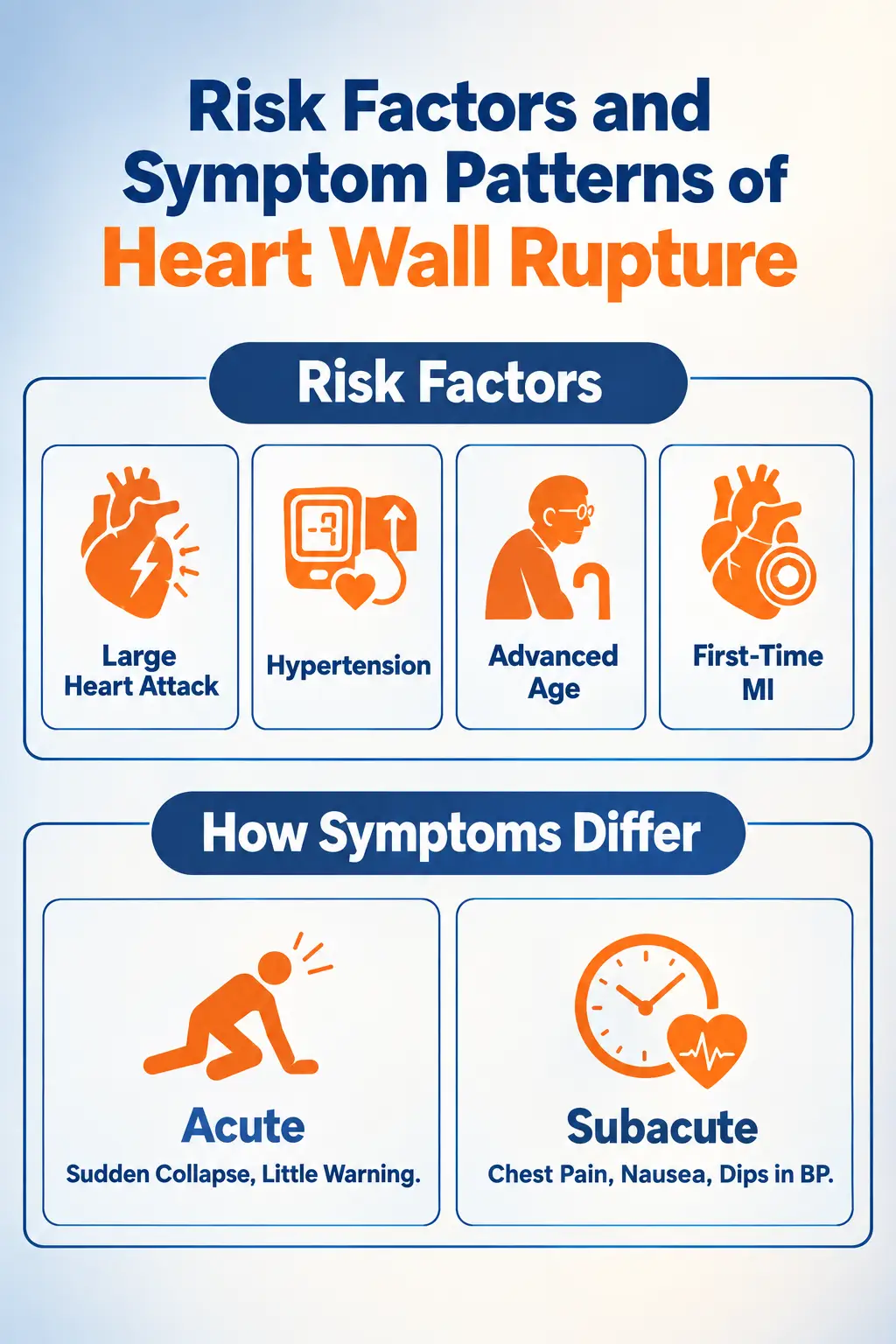
Left ventricular rupture causes mostly trace back to the same thing, a heart attack kills off a section of muscle, and dead tissue is simply weaker than what’s around it. Hypertension, older age, and a first heart attack with no prior warning all push the risk higher. The heart simply hasn’t built up the protective scar tissue that repeated smaller events sometimes leave behind. Symptoms vary by type too. Acute rupture means sudden collapse, often with pulseless electrical activity, barely any warning at all. Subacute is different, recurrent chest pain, nausea, brief dips in blood pressure, showing up days after the original heart attack. And that’s the tricky part. It gets mistaken for a second, smaller heart attack more often than it should.
Stabilizing someone in that window, before things give way completely, often comes down to the same emergency support used in ECMO therapy.
Sudden chest pain, dizziness, or breathlessness days after a heart attack? This calls for emergency evaluation right away, not a wait-and-see approach.
Treatment here depends almost entirely on how early it’s caught.
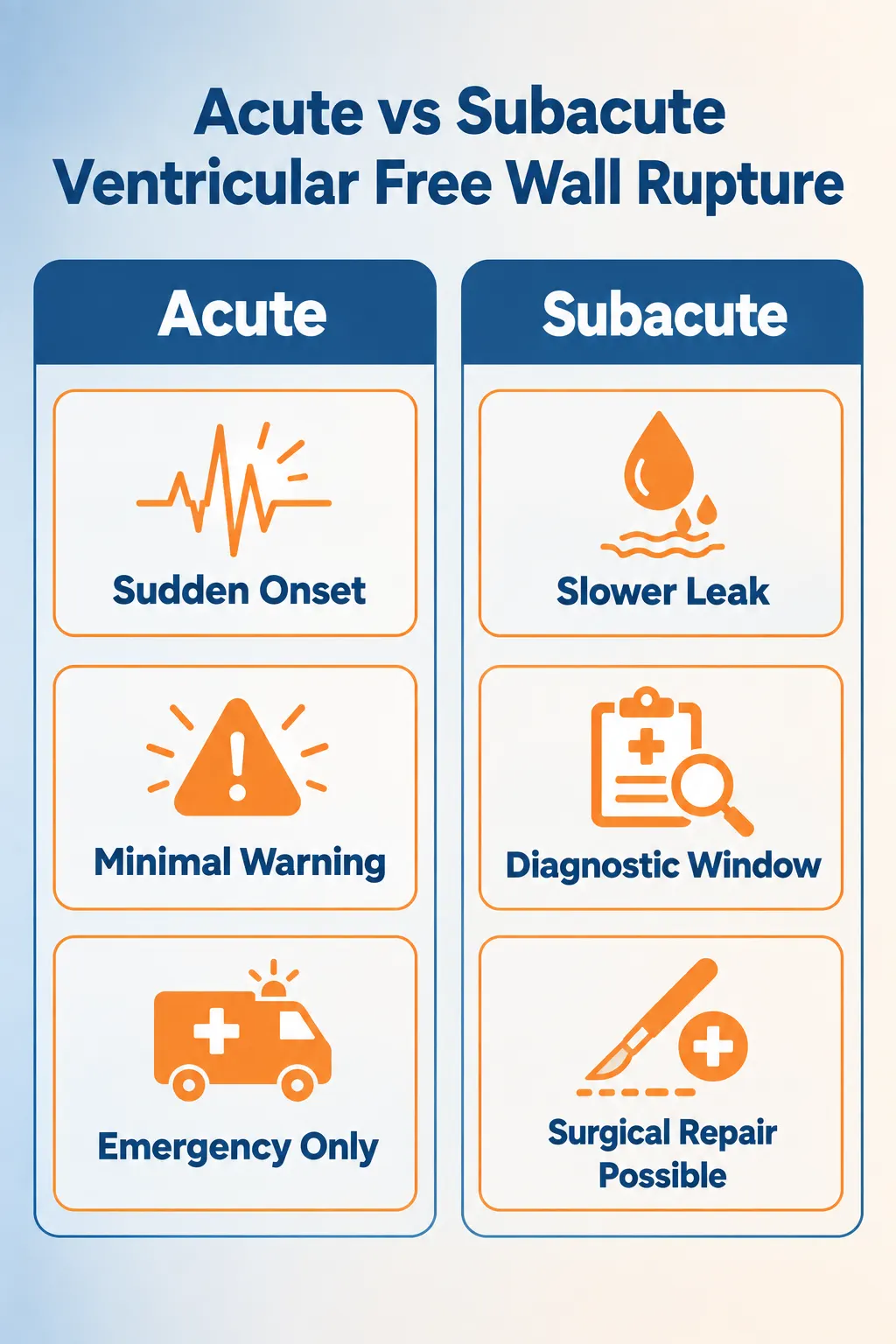
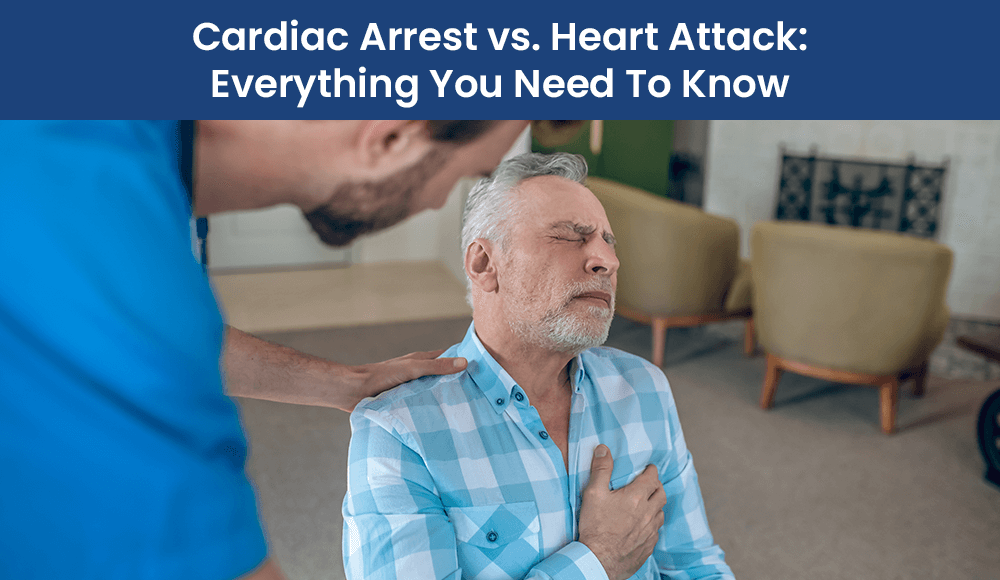
Knowing what you’re actually dealing with matters from the start. Our comparison of heart attack vs cardiac arrest breaks down that distinction in more detail.
Dr. Vishal Khullar is a Cardiovascular and Thoracic Surgeon with over 30 years of experience and more than 7,000 cardiac procedures, including emergency surgery for mechanical complications after a heart attack. His training includes Cleveland Clinic, then Mayo Clinic in the US as Senior Associate Consultant, where his published work covers managing post-infarction mechanical complications with ECMO as a bridge to surgery. His practice runs the full emergency pathway, diagnosis and stabilization through to definitive repair.
Disclaimer: This blog is for general informational purposes only and does not replace professional medical advice. If you suspect this condition, seek emergency medical care immediately.