Views: 424



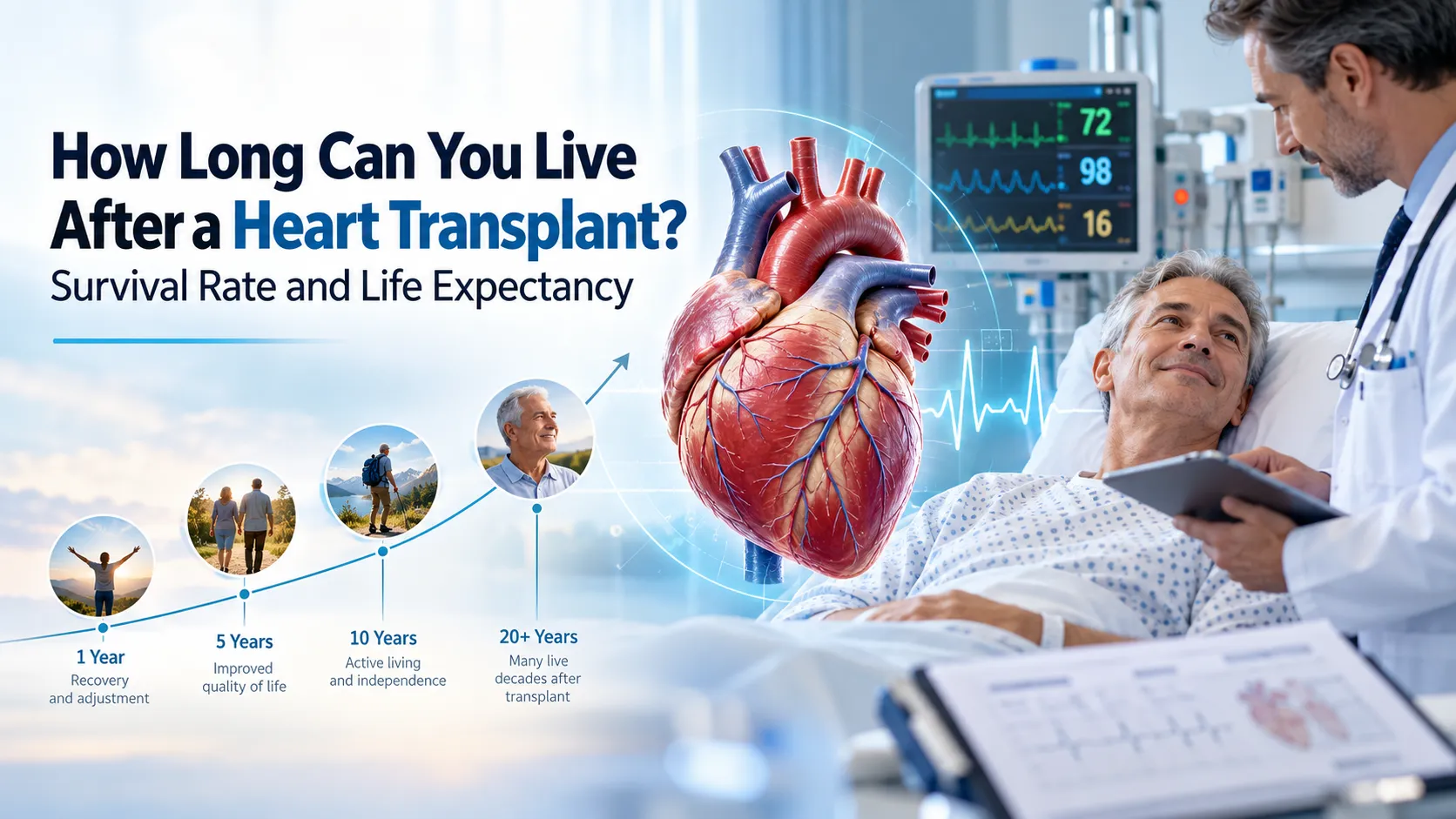
Transplant is still the best long-term answer for end-stage heart failure when the patient qualifies. Median survival crosses 12 years in well-selected cases. LVAD data is close for one-year outcomes, above 80 percent on current devices, but the long-term gap remains real. The choice between them isn’t a simple better-or-worse question. It comes down to who can actually get a transplant, how long the wait is, what the right ventricle is doing, and what the clinical team is trying to achieve with this particular patient.
According to Dr. Vishal Khullar, a Cardiac Surgeon in Mumbai, “Transplant takes the failing heart out. LVAD keeps it running with support. Both work for the right patient but they solve different problems and picking the wrong one causes real harm.”
Not every end-stage patient gets to the transplant list. Those who do still have clear reason to pursue it over device support.
Long-term survival: Median post-transplant survival tops 12 years. Some patients reach 20. No current LVAD destination therapy data matches that in equivalent populations, which is why transplant stays the first preference when the patient qualifies.
Complete replacement: The diseased heart comes out, a working donor heart goes in. The patient stops managing a structurally failed myocardium. That’s fundamentally different from mechanical support, which supplements a heart that’s still there and still damaged.
Quality of life: Most recipients are back to near-normal activity within 12 months. No driveline exit site to clean daily. No external controller to carry. The physical burden drops substantially compared to long-term LVAD.
Device risk avoided: Driveline infection, pump thrombosis, stroke, bleeding. Those risks accumulate throughout LVAD support. Transplant replaces them with immunosuppression management, which has better long-term predictability.
For patients who clear the eligibility bar, heart transplant remains the most durable option available.
Facing end-stage heart failure and not sure which path is right?
Two paths. Genuinely different clinical situations. Here is how they actually compare.
|
Feature |
Heart Transplant |
LVAD |
|
Survival (median) |
Over 12 years |
2 to 4 years as destination therapy |
|
Eligibility |
Strict: age, comorbidities, donor match |
Broader: includes transplant-ineligible patients |
|
Donor dependency |
Yes, waiting list required |
No donor needed |
|
Quality of life |
Near-normal within 12 months |
Good but driveline management ongoing |
|
Device risks |
None post-transplant |
Infection, thrombosis, stroke, bleeding |
|
Immunosuppression |
Lifelong required |
Not required |
|
Surgical risk |
High, one-time |
Moderate with ongoing device management |
Eligibility gap: Transplant criteria are strict by design. Age, organ function, psychosocial stability, no active infection or major contraindication. LVAD eligibility is broader so patients who can’t qualify for transplant still have a meaningful route.
Donor shortage: No donor, no transplant. Waiting times in India stretch months to years and some listed patients never receive an organ. LVAD implantation happens as soon as the decision is made. For a patient deteriorating fast on inotropes, that difference is significant.
Device burden: A driveline exits the body for as long as the patient is on LVAD support. With destination therapy that can run years. Exit site infection is the primary cause of LVAD mortality over time. Immunosuppression is a burden too but doesn’t involve hardware through the skin.
Bridge role
These options aren’t mutually exclusive. LVAD keeps deteriorating patients alive and stable on the transplant list. When a donor arrives, the LVAD comes out and the transplant happens. Sequential pathway, not a competing choice.
For what the donor shortage actually looks like in practice, read our blog on donor wait time.
Dr. Vishal Khullar is the Director of Cardiovascular and Thoracic Surgery, Heart and Lung Transplant at Fortis Hospital Mulund and Fortis S.L. Raheja Hospital, Mumbai. Over 30 years in the field. Training at Cleveland Clinic and Mayo Clinic in the USA. More than 300 heart and lung transplants completed alongside a high volume of LVAD implantations and mechanical circulatory support decisions.
His end-stage failure assessments cover both pathways. Patients get a straight answer on which option fits their clinical picture, and why. Call +91 99870 77880 to book your consultation.