Views: 403



Eisenmenger syndrome is irreversible pulmonary hypertension caused by an unrepaired congenital heart defect like a VSD, ASD or PDA. Over years, the defect raises pressure in the lung arteries until blood flow reverses across the hole. Once the lungs scar and the right ventricle starts to fail, the original defect cannot be safely closed. At that stage, a combined heart-lung transplant becomes the only definitive cure. India performs fewer than 30 heart-lung transplants each year.
Dr. Vishal Khullar is an experienced Cardiac Surgeon in Mumbai, India. He trained at Mayo Clinic and Cleveland Clinic. Today, he leads the heart and lung transplant program at Fortis Mulund. Moreover, he has been part of more than 300 heart and lung transplants. This guide explains how Eisenmenger develops, when transplant becomes the answer, and what the wait actually looks like in 2026.
In countries with paediatric cardiac screening, most VSDs and ASDs are picked up in the first year of life and closed before age five. In India, the defect often gets missed at birth. The child is labelled ‘weak’ or ‘slow to grow.’ Recurrent chest infections are blamed on the weather.
By the time someone takes a proper echocardiogram, the patient is fifteen, the lung pressure is irreversible, and the window for simple surgical closure has shut quietly. Dr. Khullar regularly sees adult Eisenmenger patients in their late twenties who were never told they had a heart defect as children.
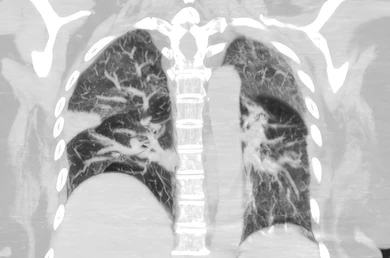
The most important decision in Eisenmenger care is timing. Technically, the hole can almost always be closed. The real question is whether closing it will help or kill the patient.
Pulmonary vascular resistance is the deciding number. Below 4 to 6 Wood units, surgical closure usually still works. Above 8 to 10 Wood units, closing the hole traps blood in the lungs and the patient dies on the operating table. Between those numbers is a grey zone where the surgeon and a pulmonary hypertension specialist decide together. Get this wrong, and the patient is dead within hours.
Patients describe it as breathing through a straw that gets narrower every year. Climbing one flight of stairs becomes climbing two, then pausing midway, then avoiding stairs altogether. Lips and fingertips turn blue. Fingers club. Dizziness, palpitations and chest pain become routine.
Two warning signs change everything. Coughing up blood is the first. Fainting on exertion is the second. Either symptom means the right heart is failing. Either symptom is a reason to be evaluated for transplant immediately.
By the time most Indian Eisenmenger patients reach a transplant surgeon, the right ventricle has been working against high lung pressure for fifteen to twenty years. Even if the surgeon transplants new lungs overnight, the exhausted right ventricle cannot adapt fast enough. It fails within days.
This is why combined heart transplant plus lung transplant is the preferred operation for most adult Eisenmenger patients. A small subset with an isolated repairable ASD and preserved right ventricular function may be considered for double lung transplant with cardiac repair. For criteria, see this guide on indications for lung transplant surgery: who needs it and when.
India performs under 30 heart-lung transplants a year. The bottleneck is donor availability, not surgical skill. Less than 5 percent of brain-dead donors yield usable lungs. Only a handful of centres in Mumbai, Chennai, Hyderabad and Delhi run active heart-lung programs. Listing at one of these centres is the most important early decision a family can make.
Published peer-reviewed data shows the following for Eisenmenger heart-lung transplant recipients:
Heart-lung transplant at a private Indian centre costs INR 30 to 50 lakhs, including surgery, ICU and the first year of immunosuppression. International packages range USD 60,000 to USD 1,00,000. The same operation in the US costs USD 8,00,000 to USD 1.5 million. The detailed Indian cost breakdown is in this guide on lung transplant cost in India. Lifetime immunosuppression adds INR 1.5 to 3 lakhs per year.
Maternal mortality in Eisenmenger pregnancy is 30 to 50 percent. Reliable, permanent contraception is the standard of care from the moment of diagnosis. Anyone who calls pregnancy ‘risky but manageable’ in Eisenmenger is not telling the truth.
Heart-lung transplant is one of the most complex operations in cardiac surgery. The difference between a centre that does five cases a year and one that does one case every two years shows up clearly in the survival data.
Dr. Vishal Khullar’s training at Mayo Clinic and Cleveland Clinic brings exactly the judgement that decides whether an Eisenmenger patient survives long enough to be transplanted. Patients who reach his OPD early can be evaluated, listed, and bridged with ECMO therapy or mechanical support if needed.
Eisenmenger syndrome is a slow-motion emergency. By the time symptoms arrive, options have narrowed. Medication helps. Lifestyle restrictions help. But the only definitive cure is a combined heart-lung transplant, and Indian access to that operation is far more limited than most families realise. Reach an experienced transplant team early. Late referral closes the window.