Views: 5,578



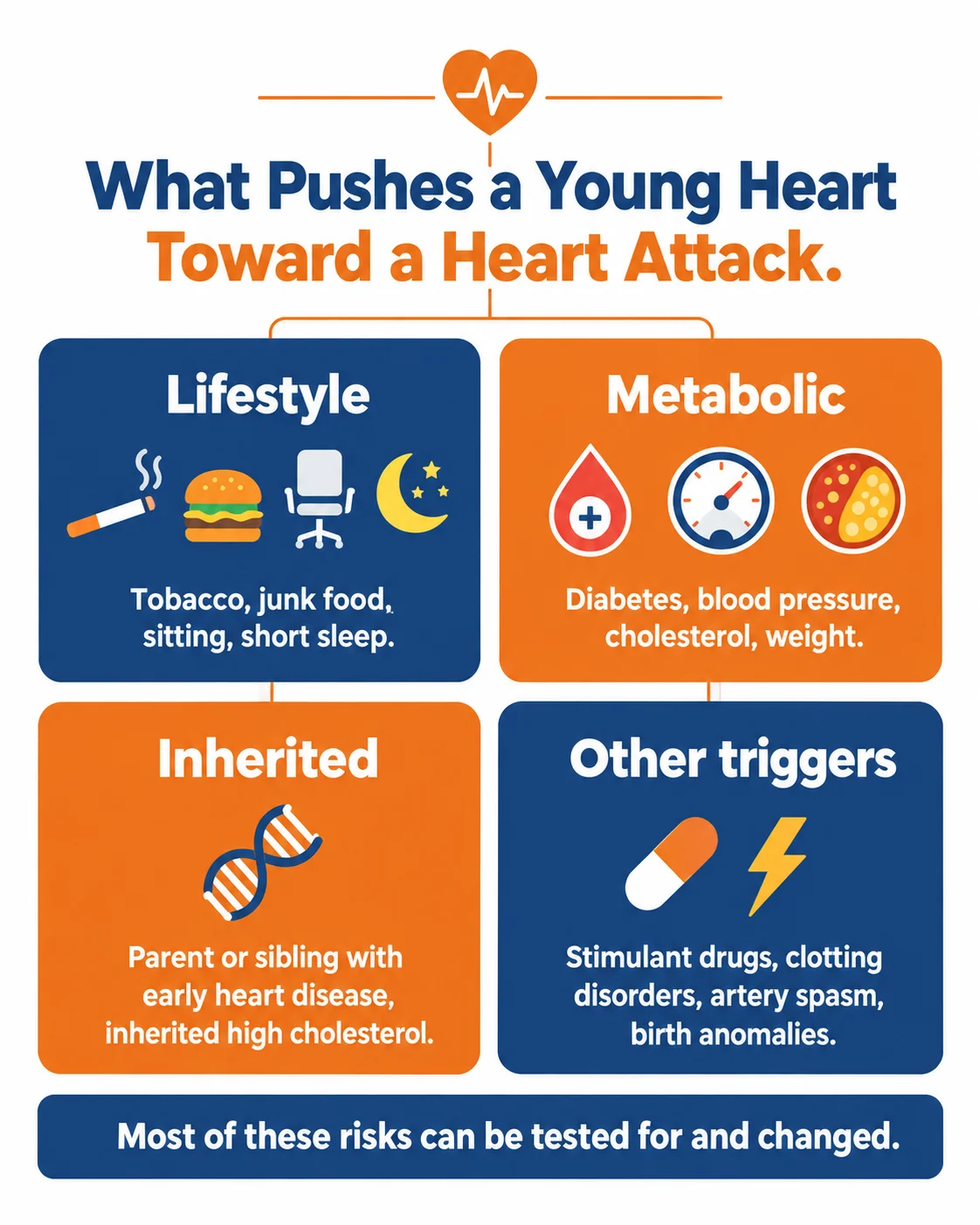
Meeting a 38 year old with a heart attack is no longer unusual in a cardiac ward. Check their history and the same pattern keeps showing up: smoking or poor sleep, blood sugar or cholesterol never tested, and a parent with early heart disease. No single habit does it. The mix does. Most of those risks can be measured and changed, which is why finding them early counts for more than any treatment later.
According to Dr. Vishal Khullar, a leading Cardiac Surgeon in Mumbai, “Patients in their thirties often tell me they were too fit for this. Arteries don’t read birth certificates. Smoke and sleep five hours a night for ten years and plaque builds quietly. You feel fine right up until you don’t, and for plenty of my patients the attack was the first sign.”
In research, “young” usually means under 45, and sometimes up to 55. The trend is moving the wrong way. In one large registry, adults aged 40 or below accounted for a bigger share of heart attacks each year from 2007 to 2016, rising about 1.7 percent annually.
Where several arteries are narrowed, bypass surgery often gives blood flow a more lasting fix.
Could you be at risk without knowing it?
Heart attacks don’t all look alike.
|
Type |
What happens |
How serious |
|
STEMI |
An artery is fully blocked |
Most urgent, it must be reopened fast |
|
NSTEMI (a “mini heart attack”) |
An artery is partly blocked |
Equally serious, muscle is still damaged |
|
Type 2 |
Oxygen demand outruns supply |
Serious, the cause needs treating |
|
Silent |
Few or no symptoms |
Often found later on an ECG, with the same damage |
Most of these risks come from routine, and our guide on daily heart habits walks through the fixes.
Dr. Vishal Khullar holds an MBBS from B.J. Medical College, Pune, and trained in general surgery at KEM Hospital and in cardiovascular and thoracic surgery at Bombay Hospital. He later completed clinical fellowships at Mayo Clinic and Cleveland Clinic in the US. With over 30 years in practice and more than 7,000 heart surgeries, he serves as Director of cardiovascular and thoracic surgery at Fortis Hospital Mulund and Fortis S L Raheja Hospital, Mahim. After a heart attack, his role is surgical: bypass when several arteries are blocked, and repair of valve or heart muscle damage.
Disclaimer: This blog is for general informational purposes only and is not a substitute for professional medical advice, diagnosis, or treatment; please consult a qualified doctor for any health concerns.
[…] Monounsaturated fat and polyunsaturated fat are considered to be healthy for your heart. So, you should incorporate healthy foods in your diet. Consider adding foods that contain these good fats, including nuts, vegetable oil, avocado, walnuts, flaxseed, salmon, herring, and sardines. These foods can be incorporated in the diet of family members so that a good health status is maintained and risks of heart attack in young age can be averted. […]
[…] the help of nicotine replacement patches or gums and can effectively decrease the drive to smoke. Heart attack instances in youngsters can be avoided by effective tips, one of which is engaging in exercise […]
[…] While consumption of alcohol in moderate amounts may have some benefits, smoking generally comes with more health risks. Excessive smoking, in particular, damages the blood vessels reducing the amount of oxygen in the blood and making the heart beat quicker. Younger generations have become more prone to this habit and are more likely to develop cardiac conditions. These youngsters can avoid cardiac episodes by using effective prevention tips. […]