Views: 9



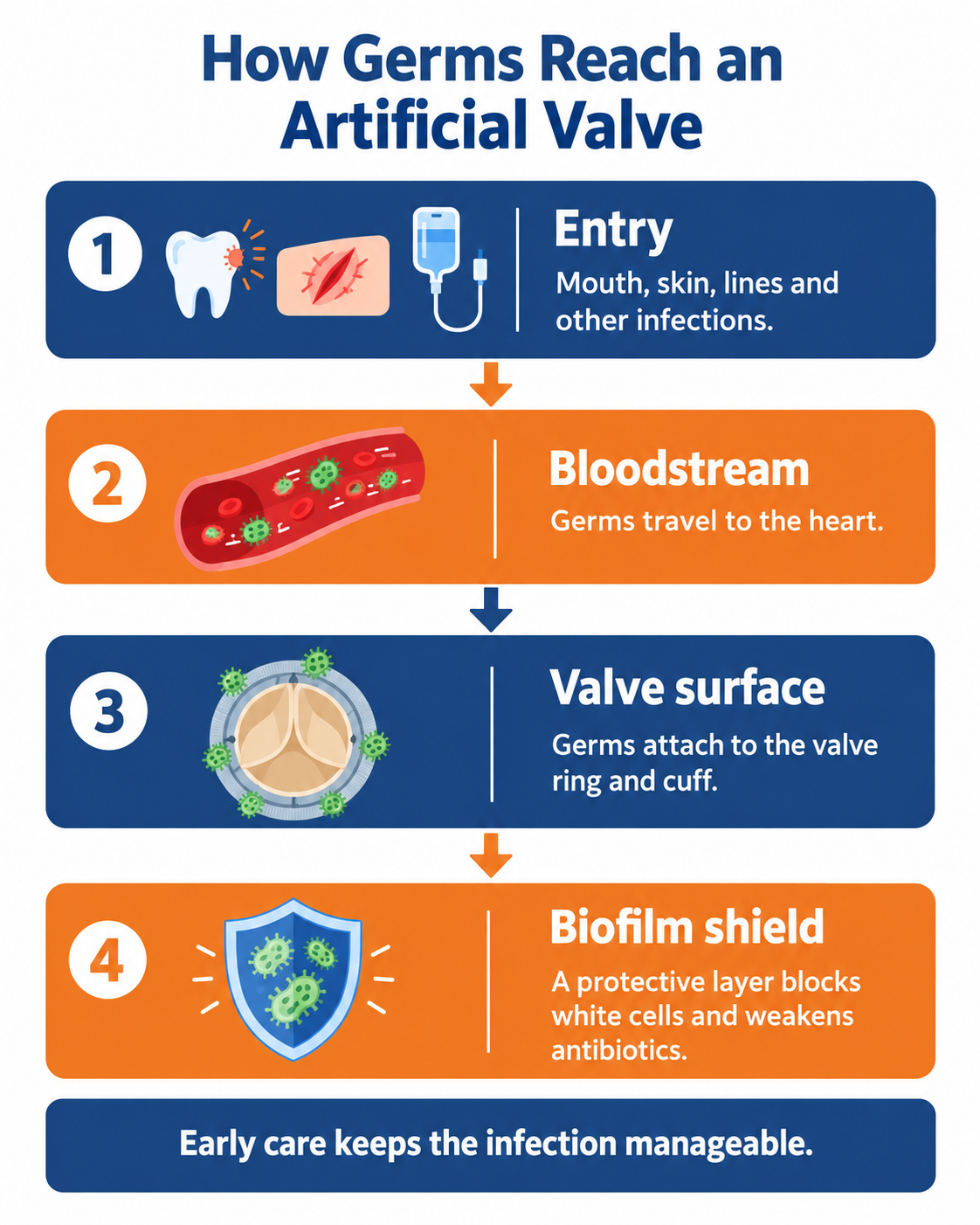
An artificial heart valve can’t defend itself against germs. If bacteria or fungi get into the blood, they can stick to the valve. There they form a slimy shield called a biofilm and multiply behind it. That is prosthetic valve endocarditis, an infection in an artificial heart valve, and the shield is why it’s so hard to shift. White blood cells can’t get at the germs inside it, antibiotics only partly can, and so tablets alone rarely settle the matter.
According to Dr. Vishal Khullar, a Cardiac Surgeon in Mumbai, “A replaced valve has no blood supply of its own, so white cells can’t patrol it the way they patrol living tissue. Germs that land there get a head start. If someone with a valve runs a fever for more than a few days, blood cultures should come before guesses.”
Up to 6 percent of patients with a prosthetic valve are affected at some stage. The bloodstream is the usual route.
Where the valve has been damaged, infective endocarditis surgery is used to remove infected tissue and fit a new valve.
Have questions about your artificial heart valve or the risk of infection?
The first question is when the infection started. That points to the likely germs, and so to the antibiotics. Early prosthetic valve endocarditis is usually the more aggressive type.
|
Early infection |
Late infection |
|
|
When it appears |
Within the first year, or 6 months by European guidance |
After the first year, sometimes many years later |
|
Usual source |
The operation, intravenous lines, hospital exposure |
Mouth, skin, other infections in the blood |
|
Common germs |
Mainly staphylococci. Less often, gram negative bacilli or Candida |
Streptococci, staphylococci and enterococci |
|
Usual course |
Often aggressive, with surgery frequently needed |
Variable, with antibiotics first and surgery only for complications |
Symptoms: Most people have a fever. Chills, night sweats and weight loss are common, and so are tiredness and breathlessness. A new murmur may turn up on examination. Fever after surgery is often blamed on a cold, and that delays the diagnosis.
Blood cultures: Blood is drawn three times from separate sites, preferably before any antibiotic is given. It is then sent to a lab to see whether a germ grows. Sometimes nothing grows, which makes diagnosis harder.
Echocardiography: An ordinary echo scan comes first. A transesophageal echo is used if the first scan is unclear. A slim probe passes down the food pipe and gives a sharper picture. CT or PET scans can fill any gaps.
Diagnostic rules: No single test settles the diagnosis. Doctors weigh cultures, scans and symptoms together against the modified Duke criteria, a standard checklist.
Valve choice also shapes long term risk, which the valve choice guide explains by age.
Treatment is mainly a long course of antibiotics, with surgery added if the valve or heart is damaged. Prevention depends largely on good dental care.
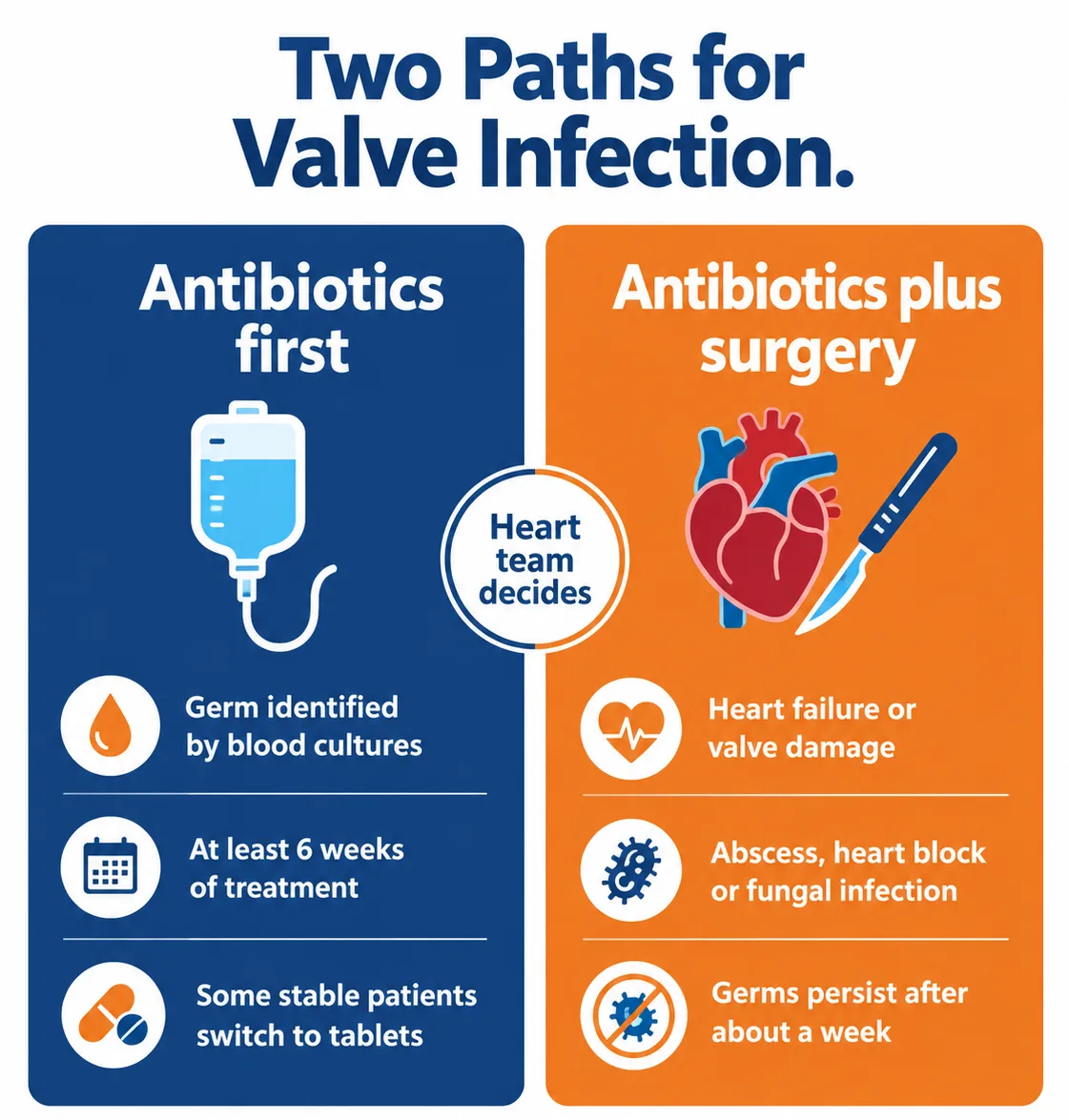
Antibiotic treatment: Treatment starts with intravenous antibiotics for six weeks or more. The culture results decide which drugs are used. That’s longer than for an infected natural valve. Some stable patients later switch to tablets.
Surgery: Surgery is needed if the valve is badly damaged and causes heart failure. It is also needed for an abscess, a fungal infection, or heart block, where the heart’s electrical signal is disturbed. It is needed too if germs stay in the blood after about a week of antibiotics. The infected valve is taken out and a new one is put in.
Endocarditis team: Care is shared between several specialists. A cardiologist, an infectious disease physician, a microbiologist and a surgeon plan it together. That teamwork shortens delays.
Prevention: Daily brushing and flossing and regular dental visits matter. Any infection, even a minor skin or urine one, should be treated early. Antibiotics before dental procedures should be taken if they have been prescribed. Tell every clinician you have a artificial heart valve.
Valves don’t last forever, and a repeat operation may be needed for wear or for infection. The page on redo heart surgery explains how second and third operations are approached.
Germs reach an artificial valve through the blood and hide in a biofilm. That makes prosthetic valve infection hard to clear. Early infections are often linked to surgery or hospital exposure. Late infections often begin in the mouth or on the skin. Cultures and echo scans confirm it. Treatment needs weeks of antibiotics, and surgery if the valve or heart is damaged.
Disclaimer: This blog is for educational and informational purposes only and should not be considered professional advice.

