Post Views: 21



A donor heart doesn’t come with a warning light. Doctors need a direct look at the tissue itself to know if the body’s turning on it, not just how the patient feels day to day. That’s the job of a thin device called a bioptome, threaded up through a vein in the neck to pull tiny samples of heart muscle. Minimally invasive, yes, but it gets repeated again and again in the months and years after surgery. Blood tests have improved a lot. This is still the one doctors trust most.
According to Dr. Vishal Khullar, a leading Heart Transplant Surgeon in Mumbai, “Patients often ask why we keep doing biopsies when they feel completely fine. Rejection frequently shows no symptoms early on. The biopsy tells us what the patient’s body can’t.”
The procedure follows a fairly standard sequence, whether it’s the first biopsy or the fiftieth.
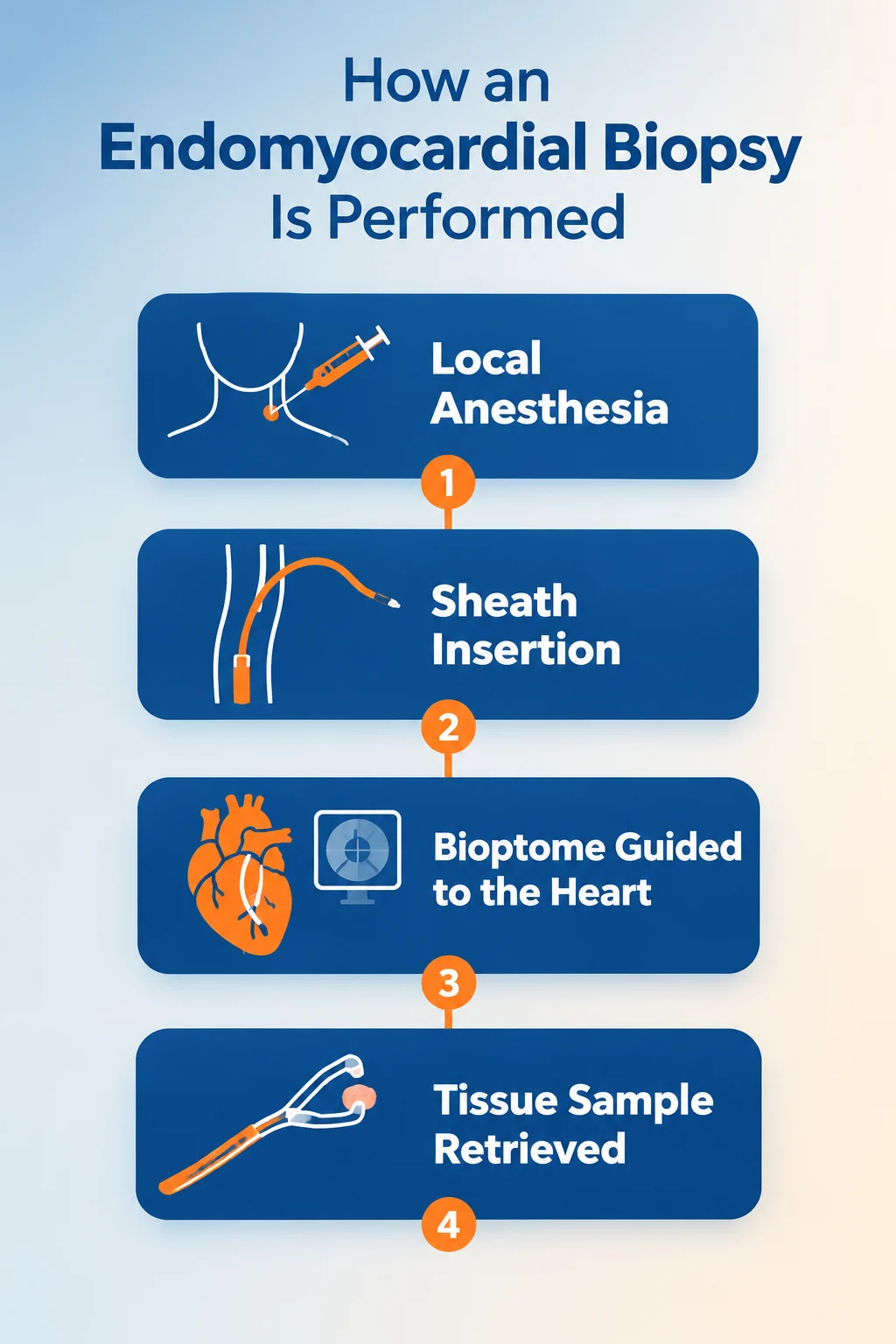
None of these steps needs general anesthesia. Local numbing at the neck is usually enough, and most patients are back home within a few hours. And the catheter itself is guided by imaging, either fluoroscopy or echocardiography, so the bioptome reaches the right chamber without guesswork. Because the risk of complications sits under 1% at an experienced center, the bigger discomfort for most patients is the frequency of the procedure, not the procedure itself.
This kind of ongoing monitoring is part of the broader care that follows heart transplant surgery.
Due for a biopsy, or not sure where you stand on the schedule?
The schedule isn’t arbitrary. It follows how rejection risk actually moves over time.
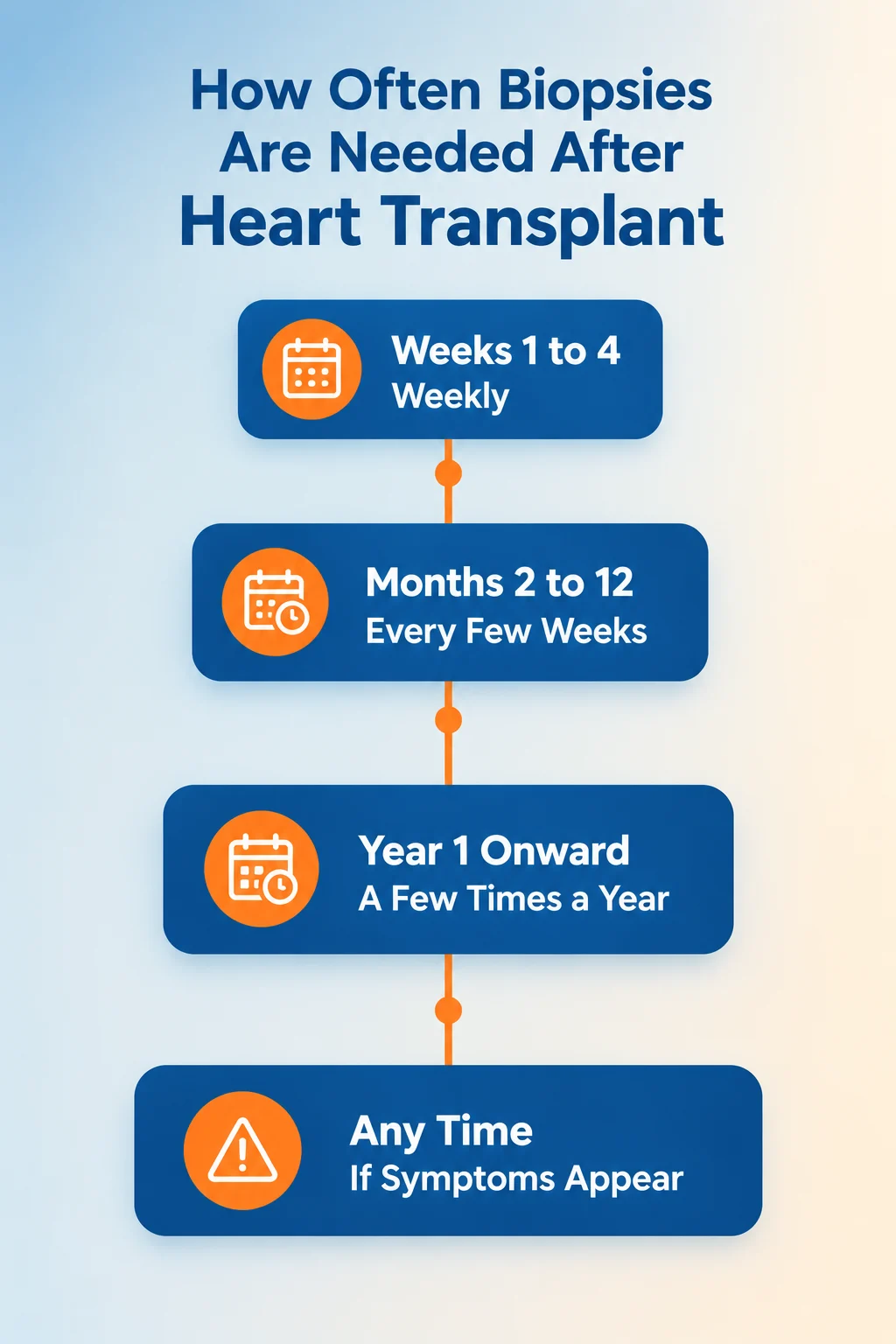
First few weeks, weekly biopsies: Rejection risk peaks early, so biopsies happen roughly once a week right after surgery. This tapers as the new heart settles in.
First year, gradually spaced out: Frequency drops to every few weeks, then monthly, as the risk curve flattens through the first twelve months.
Beyond year one, occasional checks: Biopsies become far less frequent, often just a few times a year, sometimes replaced by blood-based rejection tests in stable patients.
Symptom-triggered biopsies: Any sign of possible rejection, fatigue, breathlessness, irregular heartbeat, can prompt an unscheduled biopsy regardless of where a patient sits in the usual timeline.
How well rejection gets caught and managed shapes long-term outcomes more than most patients realize. Our piece on life expectancy after transplant covers what that actually means for survival.
Dr. Vishal Khullar is a Cardiovascular and Thoracic Surgeon with over 30 years of experience and more than 7,000 cardiac procedures, including heart transplantation and long-term post-transplant care. His training includes time at Cleveland Clinic and a role as Senior Associate Consultant at Mayo Clinic in the US. His practice covers the full transplant follow-up pathway, including endomyocardial biopsy surveillance and management of rejection when it’s detected.
Disclaimer: This blog is for general informational purposes only and is not a substitute for professional medical advice, diagnosis, or treatment; please consult a qualified doctor for any health concerns.