Views: 7


Pneumonia after heart surgery is largely preventable. Patients start breathing exercises with a physiotherapist and are usually walking within a day or two. Meanwhile the breastbone heals. The same steps continue at home. Patients and families need to know them.
According to Dr. Vishal Khullar, a Cardiac Surgeon in Mumbai, “After a chest incision, every deep breath hurts a little, so people breathe shallowly. Small areas of the lung then collapse and mucus collects. That is where infection starts. Deep breaths, a firm cough and early walking cost nothing, and they do more to prevent it than most patients expect.”
Mucus left behind by a weak cough is the root problem. Pain is what keeps the cough weak.
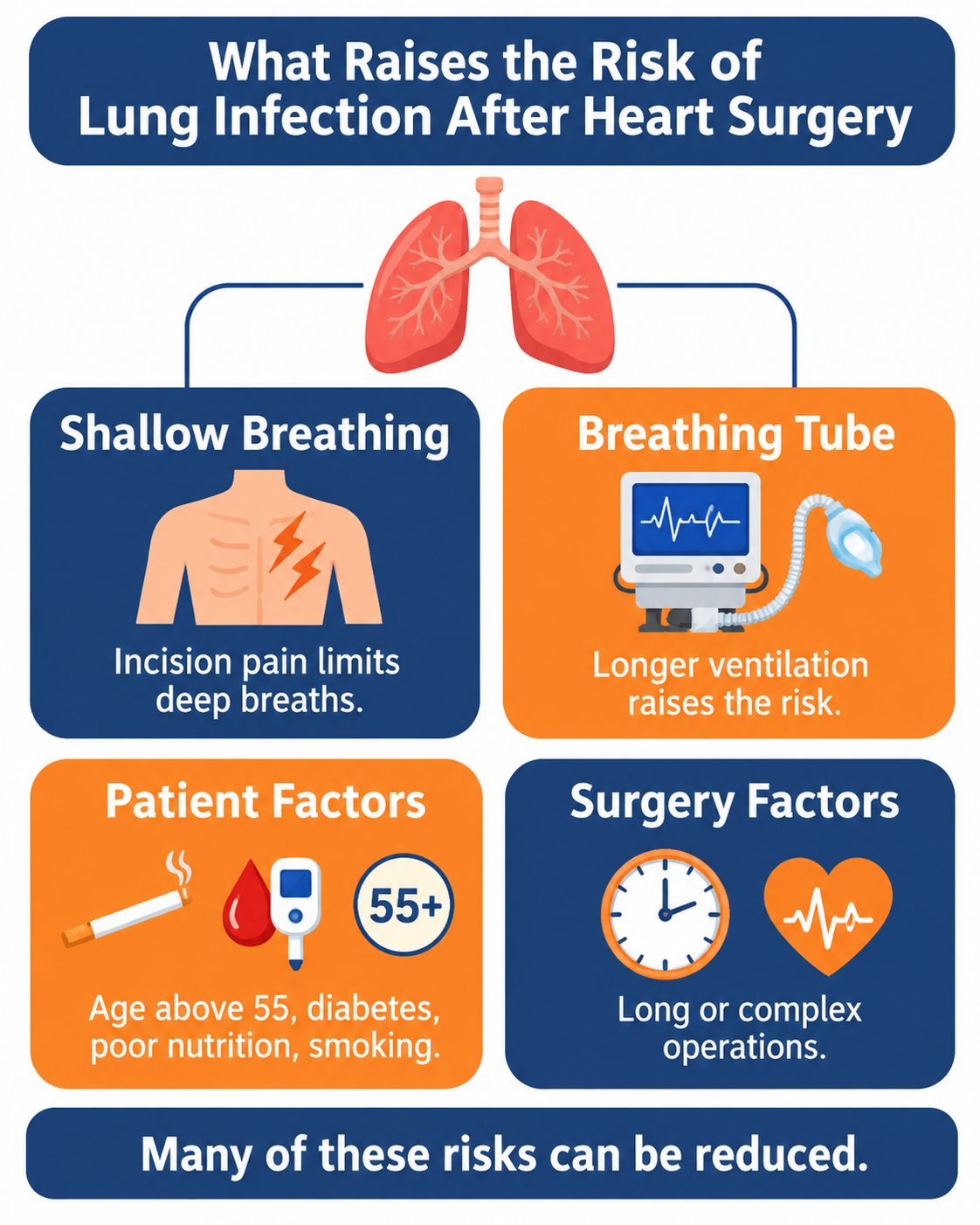
Operations through the breastbone, including heart bypass surgery, carry this lung risk.
Want to know how lung care is planned before and after heart surgery?
Preventing lung infection post cardiac surgery is a long job. It begins before the operation and runs for weeks.
|
Measure |
How it helps |
When |
|
Incentive spirometer |
Slow, deep breaths open the lungs |
In hospital and at home |
|
Deep breathing and cough |
Brings mucus up and out |
Several times a day |
|
Early movement |
Makes breathing deeper |
From day 1 or 2 after surgery |
|
Sitting upright |
Helps breathing |
Meals and rest periods |
|
Mouth care |
Lowers the germ count in the mouth |
Before and after surgery |
Breathing exercises: Let the physiotherapist show you the technique once. After that, it is on you. A round means 10 slow breaths, with a pause at the top of each. Do one round roughly every hour you are awake.
Coughing with support: Cough with a pillow hugged to the chest. That steadies the breastbone. Then cough properly. Check with the care team before you start.
Early movement: Expect the first walk on day one or two. Short distance, nurse alongside, drip stand rolling beside you. Sitting in a chair is part of it too. The head of the bed stays raised.
Before surgery: Smokers should stop the day the surgery date is fixed. Get any existing dental problems treated. Ask for breathing exercise training before the date. Both breathing physiotherapy and oral care have been linked to a lower risk of postoperative lung complications.
Daily habits during recovery are covered in this recovery guide.
Antibiotics clear most cases of pneumonia. Earlier is better. Families should watch for improvement in a few specific things. Knowing when to call the care team is part of it as well.
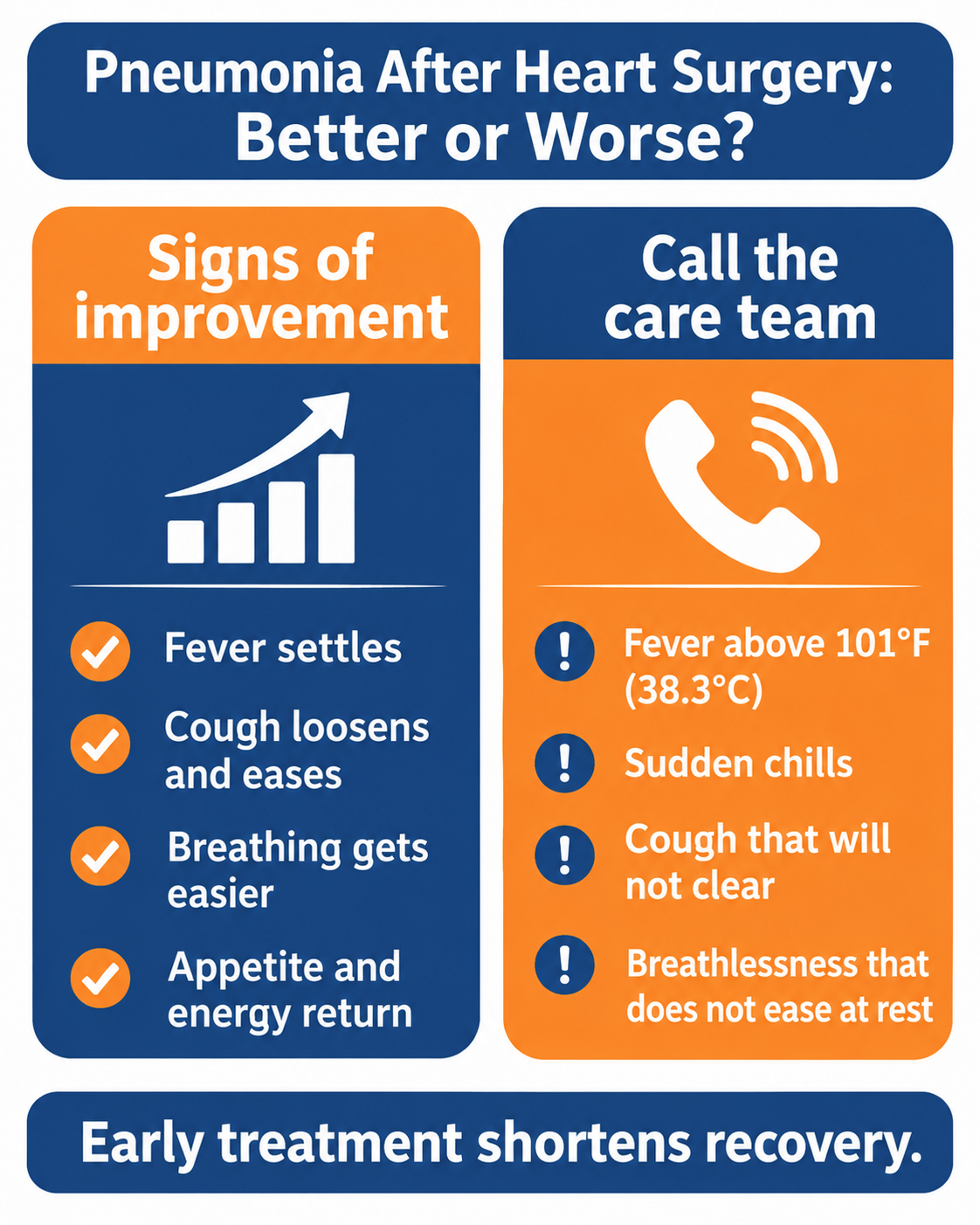
Treatment: Intravenous antibiotics come first. Test results guide which one. Oxygen is given if blood levels dip. Chest physiotherapy and fluids are common add-ons. The team also helps you cough.
Signs of improvement: Fever gradually subsides. Fewer coughing spells, each one looser. Each breath takes less effort. Your appetite returns. Oxygen support is reduced in steps.
Sleeping position: Raise the head and chest with a wedge or extra pillows. Flat on the back is the position to avoid early on. Sitting halfway up also spares the healing breastbone. Side sleeping comes back at 4 to 6 weeks for most.
Recovery time: The 4 to 6 week mark is when most people feel much better. Breastbone healing takes 8 to 12 weeks. If pneumonia develops, add 7 to 9 days in hospital.
Each week of recovery is mapped out in the weekly recovery guide.
Trapped mucus is the starting point for pneumonia after heart surgery. Use the spirometer, while supporting your chest with a pillow and walk early. Sitting upright also helps. Mouth care matters too. Report fever, a stubborn cough or breathlessness at rest to the care team promptly. Pneumonia is usually treated with antibiotics.
Disclaimer: This blog is for educational and informational purposes only and should not be considered professional advice.

