Trusted By
9,000+ Patients Globally
Experience of
30+ Years
7000+ Surgeries
Completed

Beating Heart Bypass for Triple Vessel Disease

Redo Mitral Valve Replacement with Coronary Artery Bypass Grafting

Surgeon: Dr. Vishal Khullar  |  Specialty: Cardiothoracic & Vascular Surgery, Heart and Lung Transplant

Hospital: Nanavati Max Super Speciality Hospital, Vile Parle West, Mumbai

Procedure: Redo Mitral Valve Replacement with Coronary Artery Bypass Grafting

Video Testimonial: youtu.be/kyfas1psgro

PATIENT PROFILE

Patient Profile

Age

61 years

Gender

Female

Occupation

Homemaker

City

[City]

Presenting complaint

Breathlessness on exertion and chest pain

Diagnosis

Degenerated mitral bioprosthesis (failed tissue valve) with coexisting coronary artery disease

Duration of issue

Symptoms developed roughly three to four years after the original valve replacement

Previous treatment

Prior mitral valve replacement using a tissue (bioprosthetic) valve

Date of procedure

May 2025

Outcome

Excellent — symptom-free since surgery

THE PROBLEM

The condition

The patient had previously undergone mitral valve replacement with a tissue (bioprosthetic) valve. Unlike mechanical valves, bioprosthetic valves do not require lifelong blood thinners, but they have a finite lifespan and are prone to structural wear over time. In this case the valve degenerated approximately three to four years after implantation. Its leaflets stiffened and could no longer open and close normally, a finding confirmed on 2D echocardiography. Further evaluation revealed a second, separate problem: significant blockages had developed in the coronary arteries supplying the heart muscle, confirmed on coronary angiography.

Emotional and psychological impact

Facing a second open-heart operation within a few years of the first is a daunting prospect for any patient. As the bioprosthesis failed, the patient developed breathlessness on exertion and episodes of chest pain — symptoms that limit everyday activity and can be distressing to live with. The return of a heart problem that had previously been corrected carries a real psychological burden, compounded by understandable anxiety about undergoing a more complex redo procedure combined with bypass surgery.


CONSULTATION AND TREATMENT PLAN

What was assessed during the consultation

  • Symptom evaluation: breathlessness on exertion and chest pain
  • 2D echocardiogram to assess the existing mitral bioprosthesis, which showed stiffened, degenerated leaflets
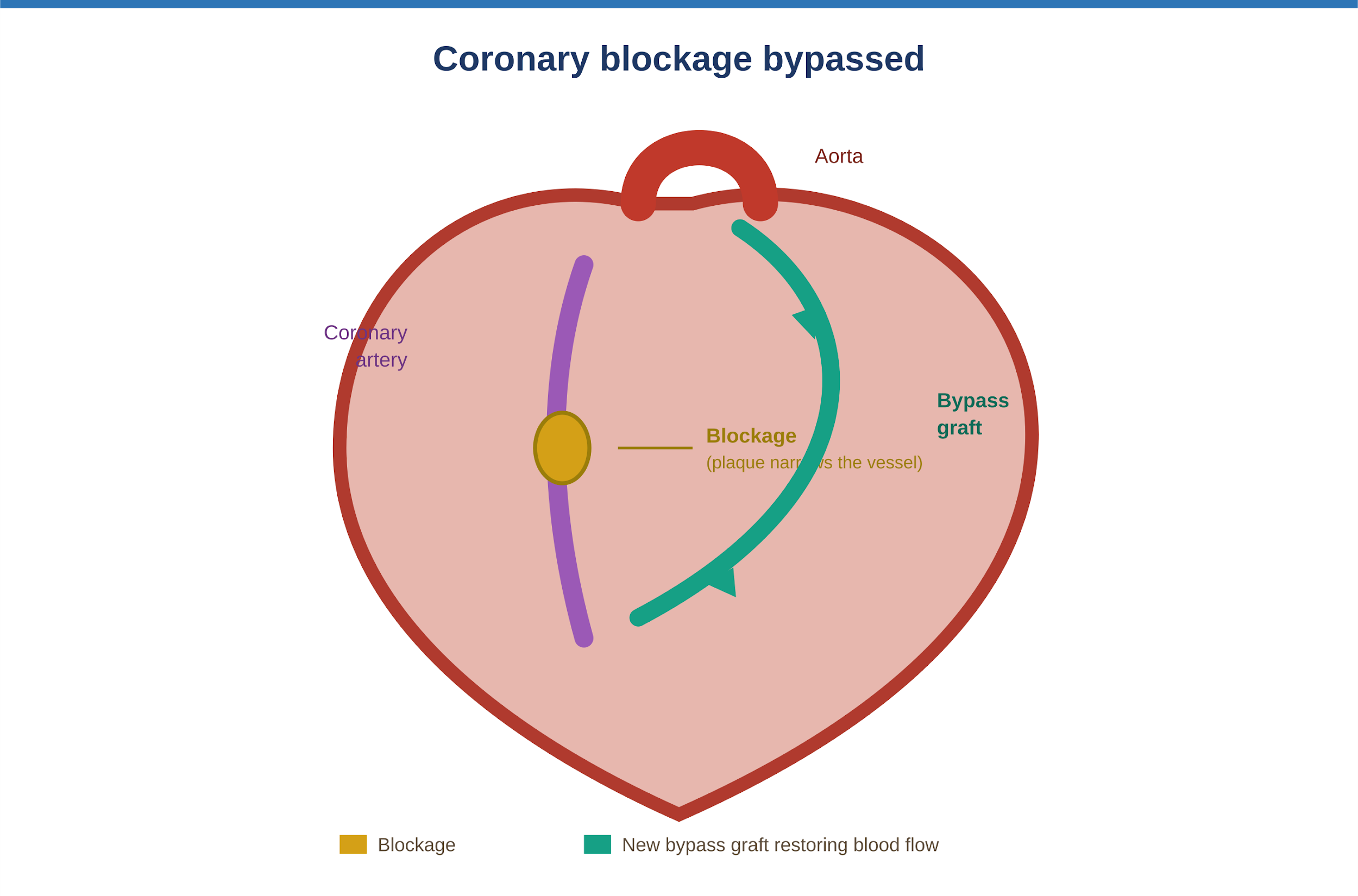
  • Coronary angiogram, which demonstrated blockages in the coronary vessels
  • Overall fitness for a redo (second) open-heart operation under general anaesthesia

Why this approach was chosen

Dr. Vishal Khullar counsels patients that there is no single “ideal” prosthetic valve. Tissue valves and mechanical valves each carry their own advantages and trade-offs. Here, two problems had to be resolved in a single operation:

  • The degenerated tissue valve could not be repaired and required re-replacement, so a redo mitral valve replacement was planned.
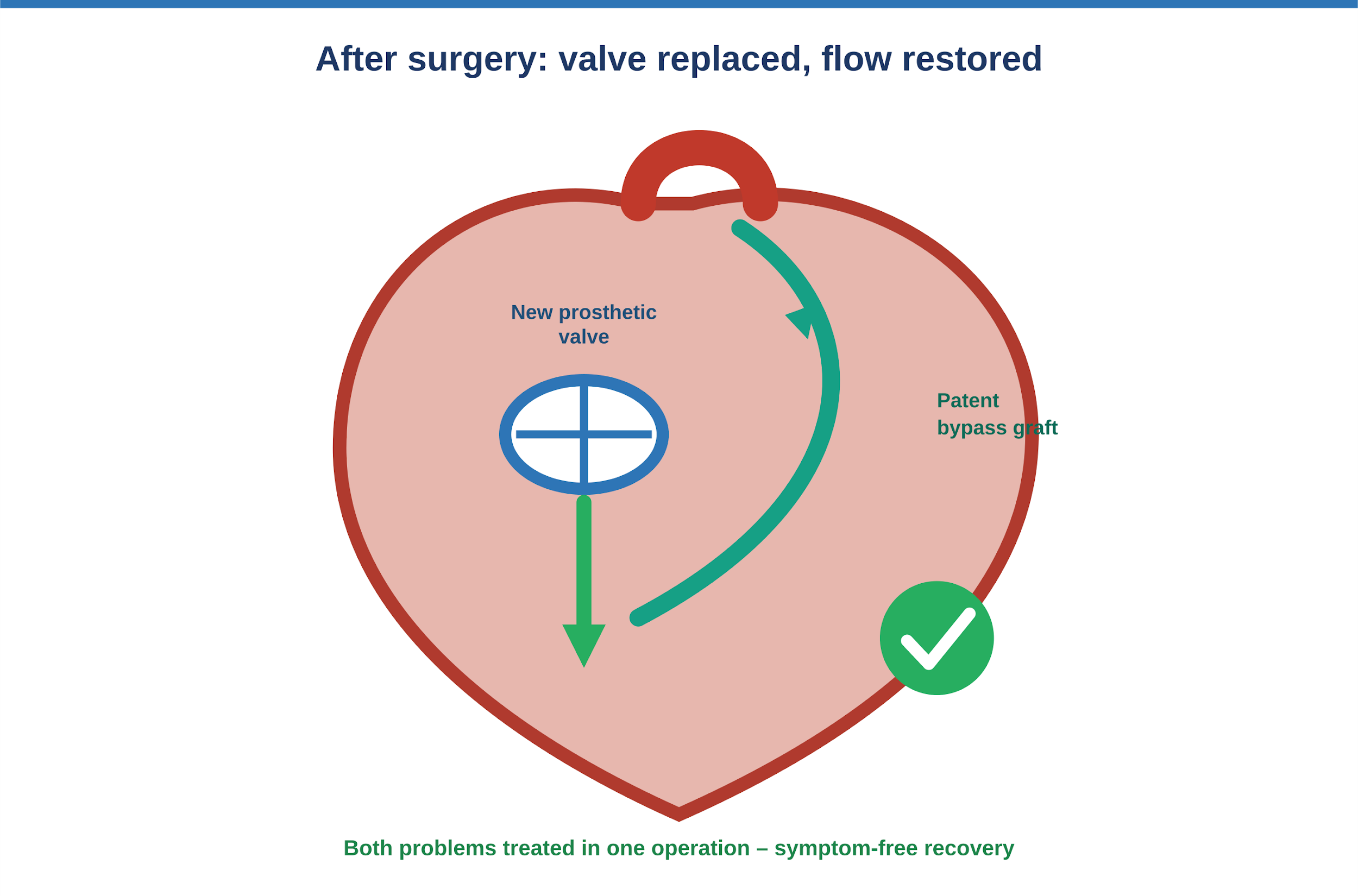
  • Because the angiogram confirmed coronary artery blockages, coronary artery bypass grafting (CABG) was planned in the same sitting, addressing both the valve and the heart’s blood supply together rather than across two separate operations.
  • Combining the procedures spares the patient the cumulative risk of two separate open-heart surgeries.

Pre-Operative Imaging & Documentation

For a case of this kind, the key baseline documentation is the 2D echocardiogram, showing the degenerated mitral bioprosthesis, and the coronary angiogram, showing the vessel blockages. Together these confirm the diagnosis and define the surgical plan.

P1]
P2

Procedure Details

Step-by-step overview

  1. Pre-operative assessment confirmed against the echo and angiogram findings.
  2. General anaesthesia administered.
  3. Chest re-opened via redo sternotomy, with careful dissection through scar tissue from the previous surgery.
  4. Patient placed on cardiopulmonary bypass (heart–lung machine).
  5. Degenerated mitral bioprosthesis explanted and a new prosthetic mitral valve implanted (redo mitral valve replacement).
  6. Coronary artery bypass grafting performed to bypass the blocked coronary vessels.
  7. Patient weaned off cardiopulmonary bypass; heart function and valve seating confirmed.
  8. Layered closure of the chest.

Procedure facts

Procedure

Redo mitral valve replacement + coronary artery bypass grafting (CABG)

Duration

[Operative duration]

Anaesthesia

General anaesthesia

Valve used

[Replacement valve type and size]

Approach / incision

Redo sternotomy (re-opening of previous midline chest incision)

Intraoperative complications

[None / describe]

Hospital stay

[Length of stay]

P3

Case Video

A related video from Dr. Vishal Khullar accompanies this case, walking through the entire process from consultation to recovery.

PATIENT FEEDBACK

Today I feel stronger and able to return to my daily routine at home. I’m deeply grateful to Dr. Vishal Khullar and his team for giving me a renewed sense of health and a second chance. I wouldn’t hesitate to recommend him to anyone facing complex heart surgery.”


Profile

Female · [61] years · [Homemaker] · [City]

Procedure

Redo mitral valve replacement + bypass surgery

Surgeon

Dr. Vishal Khullar

Post-Procedure Care & Recovery

Instructions typically given after this procedure

The points below reflect standard post-cardiac-surgery guidance. The exact instructions given to this patient should be confirmed against her discharge summary.

  • Medications taken exactly as prescribed (confirm the specific regimen for this patient)
  • Sternal (breastbone) precautions avoiding heavy lifting, pushing, or pulling while the breastbone heals, typically for around six to eight weeks
  • A gradual, supervised increase in activity, often supported by cardiac rehabilitation
  • Wound care and monitoring for any signs of infection
  • Heart-healthy diet and lifestyle measures to protect the bypass grafts
  • Scheduled follow-up visits, including echocardiography to assess the new valve

Procedure Facts

PROCEDURE

Beating heart (off pump) coronary artery bypass grafting

ANAESTHESIA

General anaesthesia

GRAFTS USED

Internal mammary (internal thoracic) arterial grafts

APPROACH

Off pump. Surgery performed on the beating heart without a heart lung machine

INTRAOPERATIVE COMPLICATIONS

None reported

HOSPITAL STAY

Discharged on post operative day 5

POST-OPERATIVE RESULTS

The post operative course was smooth and uneventful. The patient was mobilised early, walking in the ICU within two days of surgery, and was discharged on the fifth post operative day. By around the fifteenth day his sutures had been removed and he was walking comfortably and managing daily activities independently. For patients at this stage, the practical guidance on recovering from heart surgery covers what to expect and which warning signs to watch for. The surgical goal of restoring reliable blood supply to the heart with durable arterial grafts was fully achieved.

Recovery timeline

Timeframe

What the patient can expect

Day 1–3

Initial recovery, often beginning in intensive care; close monitoring and gradual mobilisation.

Week 1–2

Discharge home for most patients; wound and suture checks; light activity around the house.

Week 4–6

Continued healing of the sternum; everyday activities gradually resumed within sternal precautions.

Month 3

Most patients feel substantially better; cardiac rehabilitation progressing; lighter exercise reintroduced.

Month 6

Recovery generally well established; valve and graft function reviewed at follow-up.

FAQs

Q1. Why does a tissue heart valve need replacing again after a few years?

Tissue (bioprosthetic) valves are made from biological material and do not last indefinitely. Over time the leaflets can stiffen and degenerate, as occurred in this case roughly three to four years after the first surgery. Once the valve no longer opens and closes properly, a re-replacement (redo) operation is required.

Q2. What is a redo mitral valve replacement, and is it riskier than the first operation?

A redo procedure means operating on the heart a second time, re-opening the chest through scar tissue from the previous surgery to replace the worn-out valve. It is technically more demanding than a first-time operation, which is why it is best performed by an experienced cardiac surgeon such as Dr. Vishal Khullar.

Q3. Why were the valve replacement and bypass surgery done together?

This patient had two problems at once: a degenerated valve and blockages in the coronary arteries. Combining the redo valve replacement with coronary artery bypass grafting in a single operation treats both issues together and avoids putting the patient through two separate open-heart surgeries.

Q4. What is the difference between a tissue valve and a mechanical valve?

As Dr. Vishal Khullar explains, there is no single ideal prosthetic valve. Tissue valves avoid the need for lifelong blood thinners but can wear out over time, while mechanical valves are more durable but require lifelong anticoagulation. The right choice depends on each patient’s age, lifestyle, and overall health.

Q5. How long is recovery after redo valve and bypass surgery?

Recovery is gradual. Many patients are discharged within one to two weeks and observe sternal precautions for roughly six to eight weeks while the breastbone heals, with cardiac rehabilitation supporting a return to normal activity over the following months. The exact course varies from patient to patient.

Book Online Consultation Book An Appointment