Mitral Valve Repair for Severe Regurgitation
Mitral Valve Repair in Mr. Sandeep Bahirwani, a 51-Year-Old Patient with Severe Regurgitation Due to a Myxomatous Valve
Surgeon: Dr. Vishal Khullar, Director, Cardiothoracic & Vascular Surgery, Heart and Lung Transplant
Hospital: Nanavati Max Super Speciality Hospital, Vile Parle West, Mumbai
Procedure: Mitral Valve Repair for Severe Mitral Regurgitation
Video Testimonial: Four-part patient journey, linked in the Patient Testimonial Videos section
Patient details below have been recorded in line with confidentiality conventions for written case studies. Mr. Bahirwani and his family have separately provided consent for the on-camera testimonials referenced in this document.
|
|
|
|
Name |
Mr. Sandeep Bahirwani (name shared with consent) |
|
Age |
51 years |
|
Gender |
Male |
|
Presenting Complaint |
Leg swelling, followed by shortness of breath |
|
Diagnosis |
Severe mitral regurgitation due to a myxomatous mitral valve |
|
Duration of Issue |
Diagnosed with mitral valve prolapse in 2019, with progressive symptoms since |
|
Previous History |
Reviewed by multiple cardiologists and cardiac surgeons in Mumbai and abroad |
|
Treatment Options Considered |
MitraClip (transcatheter repair) or surgical mitral valve replacement |
|
Outcome |
Successful mitral valve repair, patient recovering well |
Condition
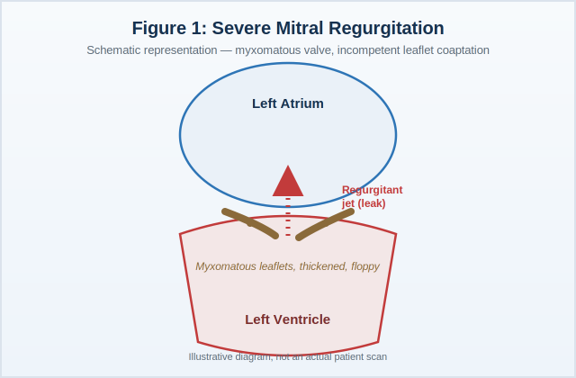
Mr. Bahirwani was diagnosed with mitral valve prolapse in 2019 and, over the following years, developed severe mitral regurgitation, meaning the valve was leaking significantly and no longer closing properly with each heartbeat. Symptoms began with leg swelling and progressed to shortness of breath, both signs that the leaking valve was placing a growing strain on the heart. Every specialist he consulted, in Mumbai and abroad, reached the same conclusion, that the valve needed valve repair or replacement.
Impact on the Patient
At 51, Mr. Bahirwani was younger than the typical age for a tissue valve, generally recommended above 65 due to its limited lifespan, while a mechanical valve would have meant lifelong blood-thinning medication, a commitment he was reluctant to accept. He had also been offered the MitraClip procedure, but this was not considered the right choice for him. Despite consistent advice that surgery was necessary, he had not found a surgeon he felt confident proceeding with, until he consulted Dr. Vishal Khullar, a leading cardiac surgeon in Mumbai. His hesitation reflects a common concern around surgery timing for mitral valve prolapse.
What Was Assessed During the Consultation
Why This Surgical Approach Was Chosen
Pre-operative documentation included transthoracic echocardiography to characterise the leaflet pathology and the severity of regurgitation, review of prior reports obtained during earlier consultations, and the standard cardiac surgical workup. Imaging confirmed the valve was suitable for a repair-first strategy rather than replacement.
Step-by-Step Surgical Overview
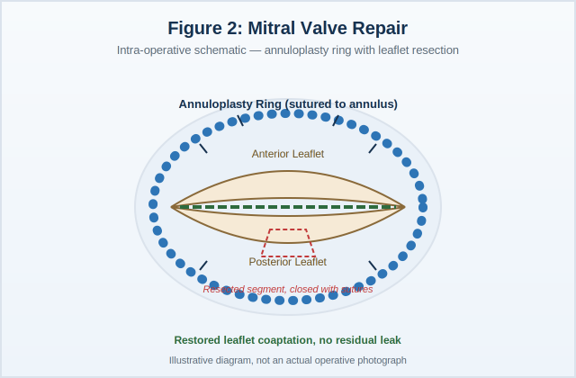
Whether a mitral valve can be repaired depends on the underlying pathology, whether myxomatous, degenerative, or rheumatic, and on the anatomy of the leaflets and their scallops. In Mr. Bahirwani’s case, the anatomy allowed a full repair, avoiding the need for a prosthetic valve altogether. This repair-first approach reflects Dr. Khullar’s experience across a wide range of cardiac treatments, built over years of surgical training.
Procedure Facts
|
|
|
|
Procedure |
Mitral valve repair (myxomatous valve, severe regurgitation) |
|
Anaesthesia |
General anaesthesia with cardiac-specific protocol |
|
Approach |
Median sternotomy with cardiopulmonary bypass |
|
Special Considerations |
Age 51, MitraClip and replacement both ruled out in favour of repair |
|
Intra-operative Course |
Stable, no adverse events recorded |
|
Outcome |
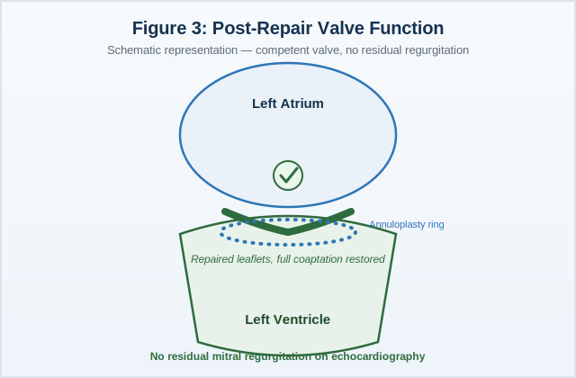
Successful repair with confirmed competent valve function |
Recovery progressed in line with the surgical plan. Mr. Bahirwani did well after surgery, with no complications recorded, and both he and his family describe the recovery as steady and complete.
Outcomes at a Glance
|
Outcome Metric |
Result |
|
Valve Repair |
Successful mitral valve repair, native valve preserved |
|
Replacement Avoided |
No prosthetic valve required |
|
Complications |
None recorded during admission |
|
Symptom Relief |
Improvement in breathlessness and leg swelling |
|
Recovery Course |
Smooth, patient recovering well per follow-up |
Mr. Bahirwani, his mother, and Dr. Vishal Khullar each shared their perspective on the diagnosis, decision, and outcome across a four-part video series published on the surgeon’s official YouTube channel.
Recorded across a four-part video series. Quotations reflect Mr. Bahirwani’s and his mother’s own words.
“I have been diagnosed with mitral valve prolapse in 2019, and it has been a tough journey. I had shown my reports to various doctors in Mumbai and abroad, but the only solution was repair or replacement. I was not confident in any of the doctors until I met Dr. Vishal, and he explained the treatment to me very well. I am recovering quite well now.”
Patient: Mr. Sandeep Bahirwani · Male · 51 years
Procedure: Mitral Valve Repair · Nanavati Max Super Speciality Hospital, Mumbai
Surgeon: Dr. Vishal Khullar · Director, Cardiothoracic & Vascular Surgery, Heart and Lung Transplant
“I think he is one of the best cardiac surgeons in Bombay. My son was not ready to go through the surgery at first, but when we met Dr. Khullar, he explained everything meaningfully, and then the decision was taken. The operation was a success. I would advise anyone with the same problem to at least go for a second opinion with him.”
Relation: Mr. Bahirwani’s mother

Recovery after mitral valve repair follows the same general principles as recovery from any open-heart procedure. A broader overview of what to expect is available in the guide on heart surgery recovery.
Instructions Provided to the Patient
Recovery Timeline
|
Timeframe |
Clinical Expectation |
|
Day 1 to 3 |
Initial recovery, monitored closely, early mobilisation begins |
|
Week 1 to 2 |
Discharge home, wound checks, return to light activity around the house |
|
Week 6 |
Sternal healing assessed, gradual return to routine activity |
|
Month 3 |
Cardiac rehabilitation review, symptom improvement reassessed |
|
Month 6 |
Long-term follow-up, valve function confirmed on echocardiography |