Emergency Aortic Dissection Surgery

Emergency Redo Aortic Root and Arch Surgery for an Extensive Aortic Dissection

Redo Aortic Root Replacement, Valve Removal, and Arch Reconstruction in a 62-Year-Old with a History of Bicuspid Aortic Valve Replacement

Surgeon: Dr. Vishal Khullar, Director, Cardiothoracic & Vascular Surgery, Heart and Lung Transplant
Procedure: Redo Sternotomy with Aortic Root Replacement, Removal of Previous Aortic Valve, and Aortic Arch Reconstruction for Acute Aortic Dissection

PATIENT PROFILE

Patient details below are recorded in line with confidentiality conventions for written case studies. Patient identity has been withheld.


Age

62 years

Presenting Complaint

Acute abdominal pain with absent distal pulses

Relevant History

Aortic valve replacement at another hospital three years earlier, for a bicuspid aortic valve

Diagnosis

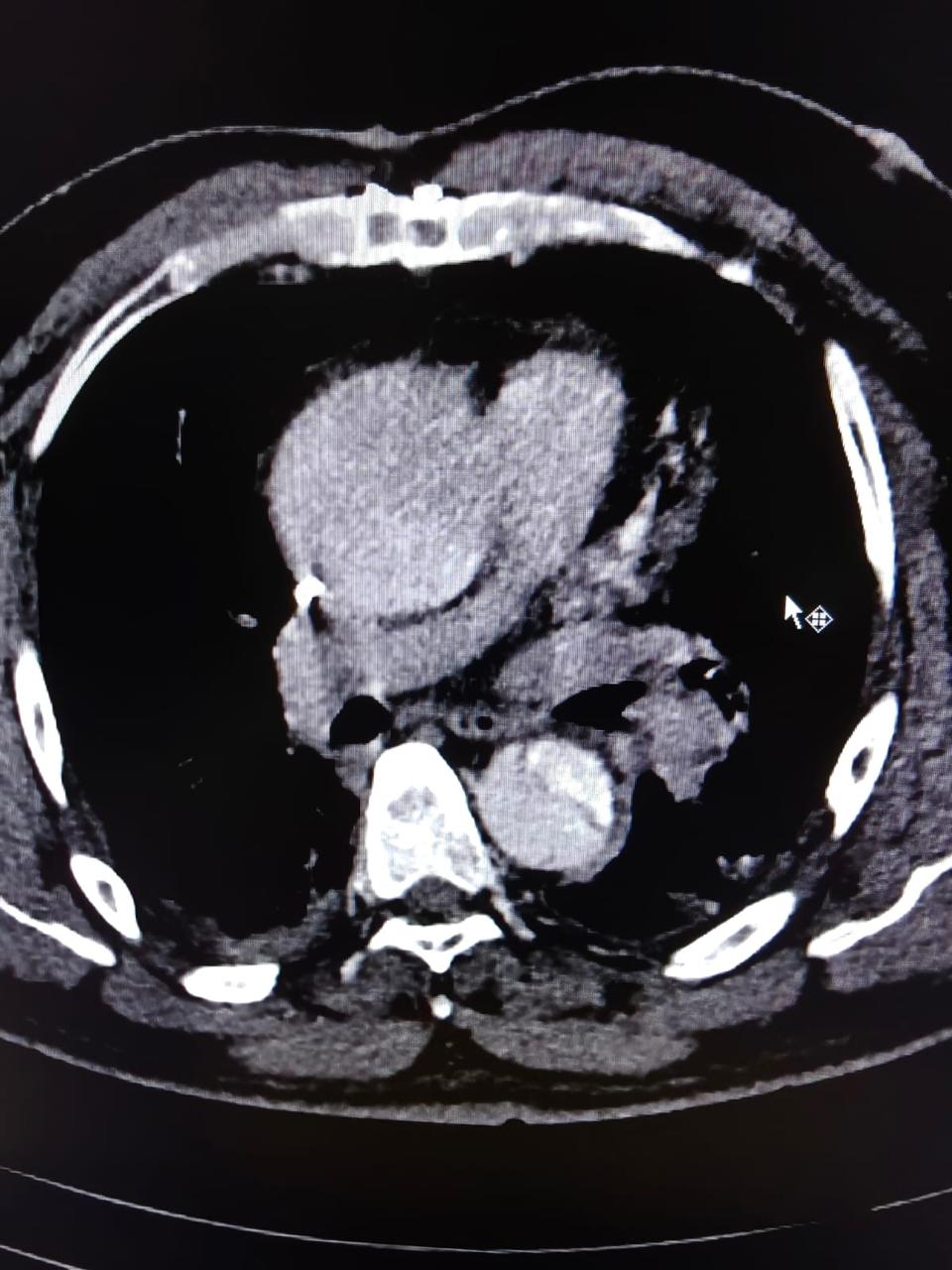
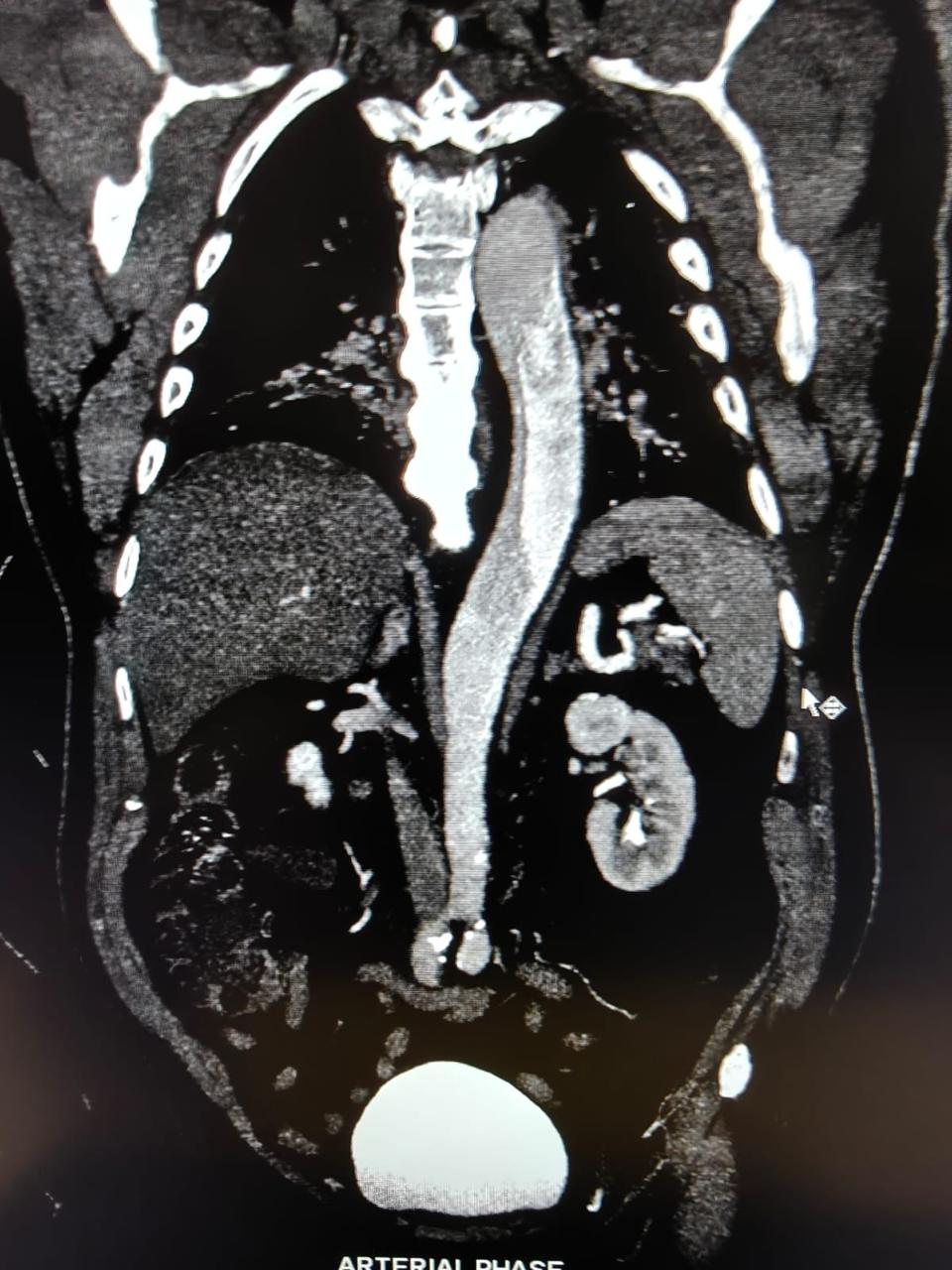
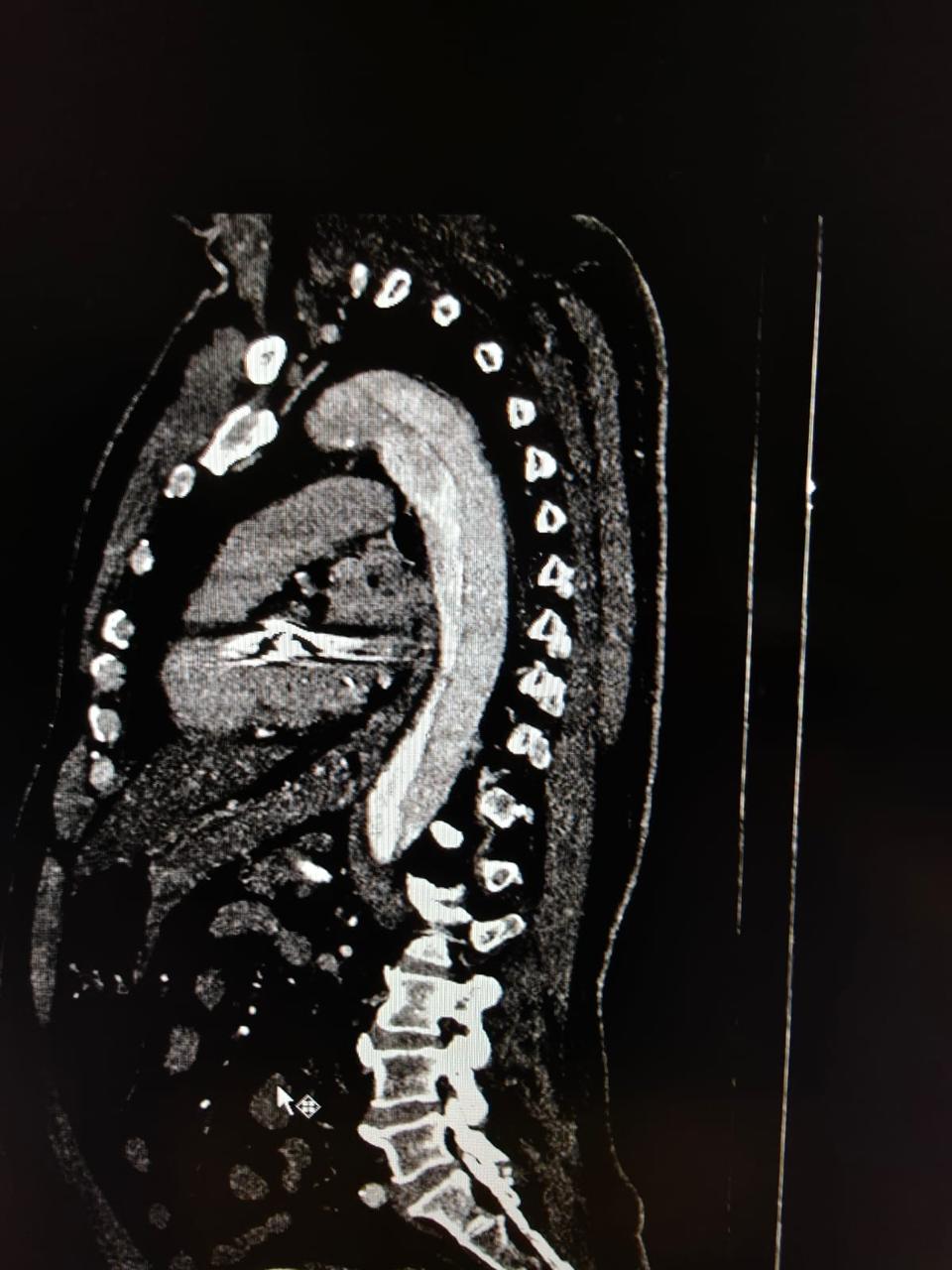
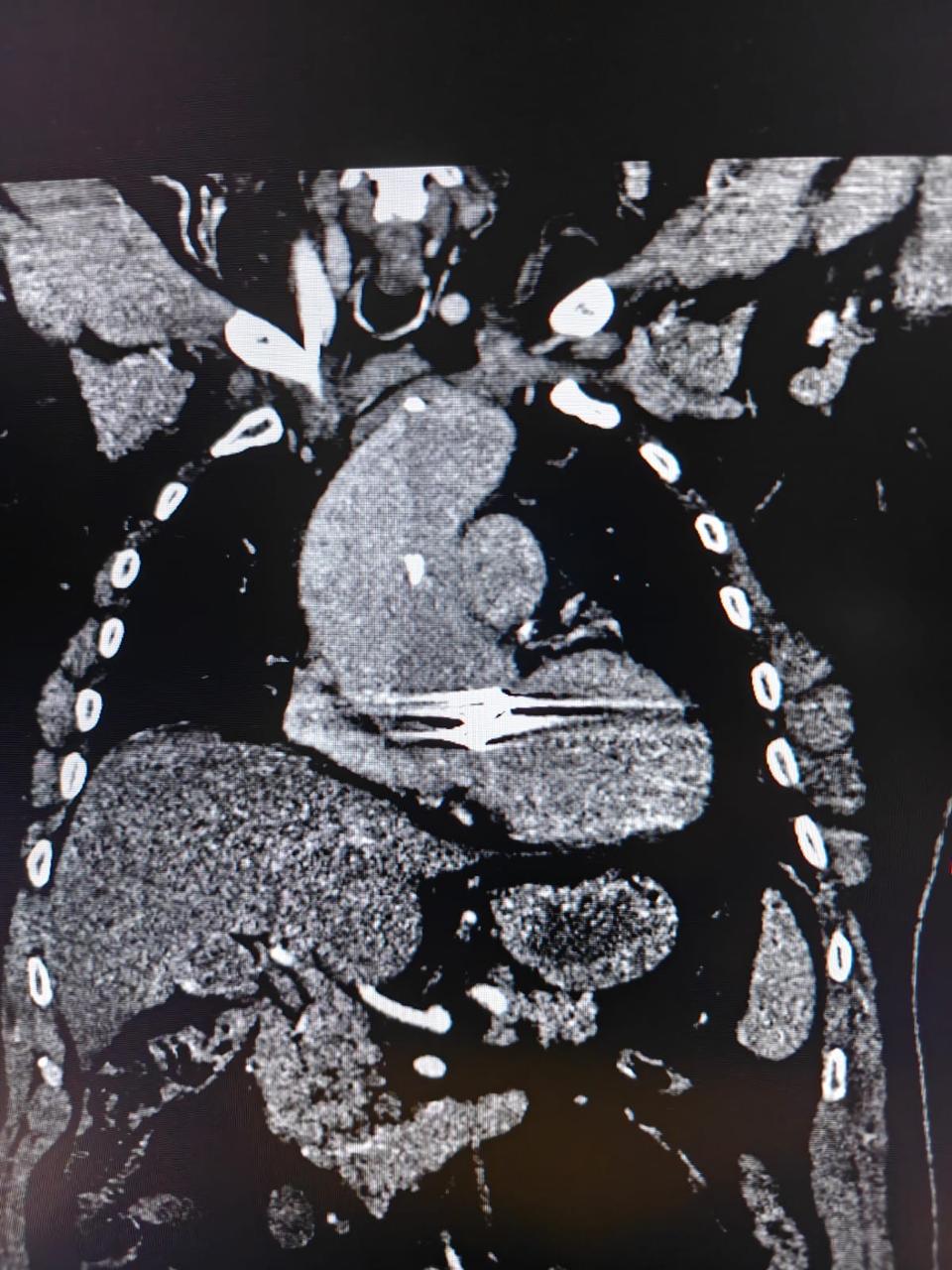
Extensive acute aortic dissection extending from the aortic root to the iliac bifurcation and into the legs

Diagnostic Trigger

CT scan of the chest, abdomen, and pelvis

On Arrival in OR

Left leg pulseless, cold, and numb

Procedure Performed

Redo sternotomy, aortic root replacement, removal of previous aortic valve, aortic arch reconstruction

Outcome

Left leg pulse returned; normal biventricular function on intraoperative TEE, LVEF 60–65%

THE CLINICAL PROBLEM

Condition

The patient presented to the emergency department with acute abdominal pain and absent distal pulses. Three years earlier, the patient had undergone aortic valve replacement at another hospital for a bicuspid aortic valve. Given that history and the absent pulses on examination, a CT scan of the chest, abdomen, and pelvis was performed. It revealed an extensive acute aortic dissection extending all the way from the aortic root down to the iliac bifurcation and into the legs. The patient was taken to the operating room emergently.

Impact on the Patient

By the time the patient reached the operating room, the left leg had no pulse and was cold and numb, a sign that the dissection had already cut off meaningful blood flow to the limb. A dissection extending from the aortic root to the legs is about as extensive as this condition gets, and the fact that it had developed in a patient with a prior bicuspid valve replacement added real complexity to the surgical planning. Cases at this level of urgency and complexity are exactly why a patient’s best chance rests with an experienced cardiac surgeon in Mumbai who can move from diagnosis to the operating table without delay.

CONSULTATION AND TREATMENT PLAN

What the CT Scan Showed Was Needed

  • A redo sternotomy, given the patient’s prior open-heart surgery
  • Removal of the previously implanted aortic valve
  • Aortic root replacement
  • Aortic arch reconstruction

Why Circulatory Arrest and Specific Cannulation Were Required

  • Aortic arch reconstruction typically requires circulatory arrest under deep hypothermia to allow the surgical team to work on the arch safely
  • Because the brain is highly sensitive to anoxia, the right axillary artery and right femoral vein were cannulated to perfuse the brain during circulatory arrest
  • A redo operation of this kind carries added risk at the very first step: with the heart and major vessels adherent to the breastbone from the previous surgery, there was no room for error during the redo sternotomy itself

PROCEDURE DETAILS


Step-by-Step Surgical Overview

  1. Right axillary artery and right femoral vein cannulated to allow brain perfusion during circulatory arrest
  2. Redo sternotomy performed with extreme care, as the heart and major vessels were adherent to the breastbone from the prior surgery
  3. Aortic root dissection undertaken; Bioglue from the previous operation was found to have seeped around the origins of the coronary arteries, leaving the aortic root frozen and making dissection of the coronary buttons extremely difficult
  4. Previous aortic valve removed
  5. Aortic root replaced
  6. Deep hypothermic circulatory arrest instituted to allow safe aortic arch reconstruction
  7. Aortic arch reconstructed
  8. Patient rewarmed and weaned off bypass
  9. Left leg pulse confirmed to have returned
  10. Intraoperative transesophageal echocardiography performed, confirming normal left and right ventricular function

Procedure Facts


Procedure

Redo sternotomy, aortic root replacement, valve removal, aortic arch reconstruction

Cannulation Strategy

Right axillary artery and right femoral vein, for antegrade cerebral perfusion

Circulatory Support

Deep hypothermic circulatory arrest (DHCA) at 18°C

Key Surgical Challenge

Aortic root frozen by Bioglue from the prior surgery, complicating coronary button dissection

Duration

Almost 12 hours

Intraoperative Finding

Left leg pulse returned; normal biventricular function on TEE, LVEF 60–65%


PRE-OPERATIVE IMAGING

Image1
Image2
Image4
Image5

These CT images formed the basis for the diagnosis of an extensive acute aortic dissection and the surgical plan that followed, alt text suggestion: “CT angiogram acute aortic dissection Dr Vishal Khullar Mumbai.”

PROCEDURE VIDEO

Image3

The footage shows two of the most critical moments of the operation: the dissection plane itself, with blood tracking longitudinally through the aortic media, and the circulatory arrest phase, with NIRS holding steady to confirm the brain was safely protected at depth, cardiopulmonary bypass running solely for antegrade cerebral perfusion, and a flat arterial trace confirming the circulatory arrest under deep hypothermia at 18°C.

POST-OPERATIVE RESULTS

The surgery took almost 12 hours. By its conclusion, the pulse in the left leg had returned, a direct sign that limb perfusion had been restored along with repair of the dissection. Intraoperative transesophageal echocardiography showed normal left and right ventricular function, with an LVEF of 60–65%.

Outcomes at a Glance

Outcome Metric

Result

Left Leg Perfusion

Pulse returned by the conclusion of surgery

LV Function

Normal, LVEF 60–65% on intraoperative TEE

RV Function

Normal on intraoperative TEE

Surgical Duration

Almost 12 hours


PATIENT TESTIMONIAL

“I came to the hospital with severe abdominal pain and was found to have an extensive aortic dissection involving the aorta from the root to the iliac bifurcation and into the legs. I was taken for emergency surgery, which involved a redo sternotomy, aortic root replacement, removal of my previous aortic valve, and aortic arch reconstruction. The surgery was complex and lasted almost 12 hours, but by the end, the pulse in my left leg had returned and my heart was functioning well.”

Profile: 62 years · Patient identity withheld
Procedure: Redo Aortic Root Replacement and Arch Reconstruction for Acute Aortic Dissection
Surgeon: Dr. Vishal Khullar · Director, Cardiothoracic & Vascular Surgery, Heart and Lung Transplant

POST-PROCEDURE CARE AND RECOVERY

This case underscores the importance of regular checkups for patients with a bicuspid aortic valve. A bicuspid aortic valve is a congenital condition present from birth and can run in families. It is associated with aortopathy and a tendency to develop aortic aneurysms, which can enlarge over time and rupture once the aorta reaches a particular threshold, an event known as an aortic dissection and a medical emergency. Regular monitoring of the aorta is therefore important, as is screening family members for a bicuspid aortic valve. Our guide on lifestyle after aortic dissection surgery covers what the recovery period and long-term monitoring generally involve.


FAQs

Q1. Why did this aortic dissection require such an extensive, emergency operation?

The dissection extended from the aortic root all the way to the iliac bifurcation and into the legs, which is why the patient presented with abdominal pain and absent distal pulses. Repairing a dissection this extensive required a redo sternotomy, removal of the previous aortic valve, aortic root replacement, and aortic arch reconstruction, all performed emergently given the risk to the leg and the aorta itself.

Q2. What is deep hypothermic circulatory arrest, and why was it needed?

Aortic arch reconstruction typically requires briefly stopping circulation under deep hypothermia to allow the surgical team to work safely on the arch. Because the brain is highly sensitive to a lack of oxygen, the right axillary artery and right femoral vein were cannulated beforehand to maintain brain perfusion during this period.


Q3. Why was the redo sternotomy particularly risky in this case?

 Since the patient had undergone open-heart surgery three years earlier, the heart and major vessels were adherent to the breastbone, leaving no room for error when reopening the chest.

Q4. What made the aortic root dissection especially difficult in this case?

Bioglue used during the patient’s previous aortic valve surgery had seeped around the origins of the coronary arteries, leaving the aortic root frozen and making dissection of the coronary buttons extremely difficult.

Q5. Why does a bicuspid aortic valve increase the risk of aortic dissection?

A bicuspid aortic valve is a congenital condition that is associated with aortopathy, a tendency for the aorta to weaken and enlarge into an aneurysm over time. If the aorta continues to enlarge past a certain threshold, it can tear, resulting in an aortic dissection, which is why regular monitoring and family screening are recommended for patients with this condition.

Have a bicuspid aortic valve, or a family history of one?

If you or a family member has a bicuspid aortic valve, or has had prior aortic valve surgery, regular monitoring of the aorta is essential. Dr. Vishal Khullar and his team are happy to review your imaging and talk through a monitoring plan with you.

Dr. Vishal Khullar
Director, Cardiothoracic & Vascular Surgery, Heart and Lung Transplant
Fortis Hospital Mulund / Fortis S.L. Raheja Hospital, Mumbai | +91-99870 77880 | appointments@drvishalkhullar.com

Book Online Consultation Book An Appointment Call Now Button