Coronary Endarterectomy During Bypass

Coronary Endarterectomy During Bypass Surgery for Severe Triple Vessel Disease

Multiple Coronary Endarterectomies During Bypass Surgery in a 60-Year-Old Diabetic Woman with an Exceptionally High SYNTAX Score and Severe LV Dysfunction

Surgeon: Dr. Vishal Khullar, Director, Cardiothoracic & Vascular Surgery, Heart and Lung Transplant
Procedure: Coronary Artery Bypass Grafting with Multiple Coronary Endarterectomies (LAD, OM, PDA)

PATIENT PROFILE

Patient details below are recorded in line with confidentiality conventions for written case studies. Patient identity has been withheld.


Age

60 years

Gender

Female

Relevant History

Longstanding diabetes mellitus

Diagnosis

Severe triple vessel coronary artery disease with an exceptionally high SYNTAX score

Preoperative LV Function

Severe LV dysfunction, LVEF 25–30%

Procedure Performed

Coronary artery bypass grafting with multiple coronary endarterectomies

Postoperative LV Function

Improved to LVEF 35%

Outcome

Extubated POD1, IABP removed POD3, discharged POD7 in stable condition

THE CLINICAL PROBLEM

Condition

The patient, a 60-year-old woman with a longstanding history of diabetes mellitus, was found to have severe triple vessel disease with an exceptionally high SYNTAX score, the angiographic scoring system used to quantify how complex and extensive coronary artery disease is. A preoperative 2D echocardiogram added another layer of concern, showing severe LV dysfunction with an ejection fraction of just 25 to 30%. With disease this advanced and diffuse, bypass surgery was the recommended path forward, given her high SYNTAX score.

Impact on the Patient

A high SYNTAX score combined with severely reduced LV function places a patient firmly in high-risk territory: the coronary disease is not just present in multiple vessels but is extensive enough within each of them to make even the bypass itself technically demanding. Long-standing diabetes, in particular, is well known to accelerate exactly this kind of diffuse, densely calcified disease pattern rather than isolated blockages that are straightforward to graft around. Cases like this are why patients with this risk profile are best managed by an experienced cardiac surgeon in Mumbai, where the surgical plan can be adapted in real time to what is actually found once the chest is open.


CONSULTATION AND TREATMENT PLAN

What Was Assessed Before and During Surgery

  • Coronary angiography to confirm triple vessel disease and calculate the SYNTAX score
  • 2D echocardiography to assess LV function, revealing an LVEF of 25–30%
  • Overall risk stratification given the combination of diabetes, diffuse triple vessel disease, and severe LV dysfunction
  • Intraoperative assessment of all three major coronary arteries once the chest was opened

Why Multiple Coronary Endarterectomies Were Necessary

  • On direct intraoperative inspection, all three major coronary arteries were found to be densely calcified and diffusely diseased, with distal targets unsuitable for a standard anastomosis
  • Grafting onto a densely calcified, diseased vessel without first addressing the diseased lining would not have created a durable pathway for blood flow
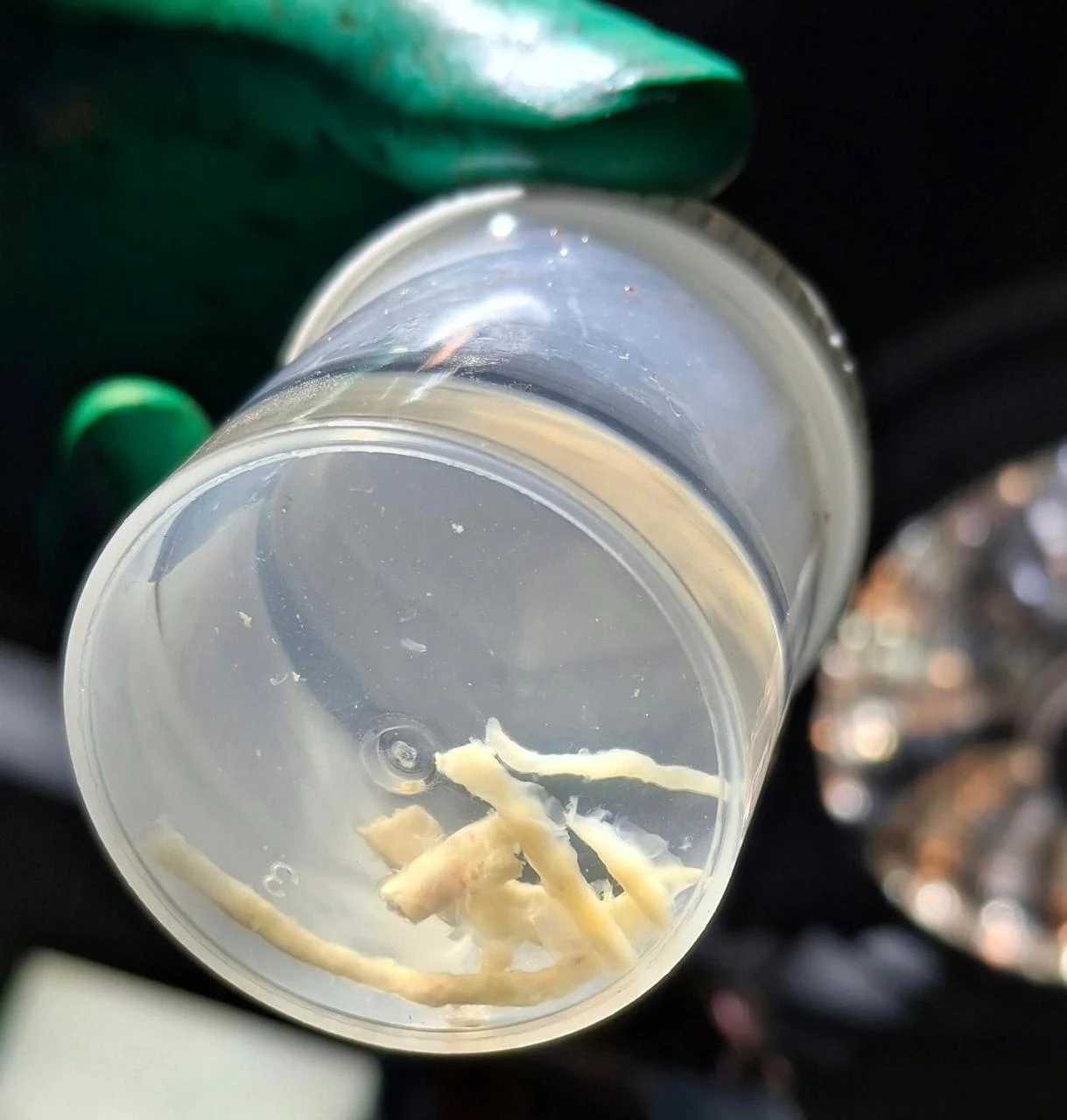
  • A plane was carefully dissected around the plaques, removing the intima and media from the adventitia, to open up a viable lumen for grafting
  • Long segment endarterectomies were carried out on the LAD, the obtuse marginal, and the posterior descending artery, reflecting how extensively the disease had spread along each vessel

PROCEDURE DETAILS

Step-by-Step Surgical Overview

  1. Patient prepared and anaesthesia induced; standard cardiac monitoring established
  2. Sternotomy performed and cardiopulmonary bypass instituted
  3. All three major coronary arteries inspected and found densely calcified and diffusely diseased, with distal targets unsuitable for anastomosis
  4. Long segment coronary endarterectomy performed on the LAD, carefully dissecting a plane around the plaque and removing the intima and media from the adventitia
  5. The LAD was reconstructed with a saphenous vein patch
  6. Long segment coronary endarterectomy performed on the obtuse marginal artery
  7. Long segment coronary endarterectomy performed on the posterior descending artery
  8. The LIMA was anastomosed to the SVG vein patch on the LAD
  9. Saphenous vein grafts were attached to the obtuse marginal and posterior descending arteries
  10. An intra-aortic balloon pump (IABP) was inserted to support the high-risk postoperative period
  11. Patient weaned off bypass and transferred to the ICU in stable condition


Procedure Facts

   
Procedure CABG with multiple coronary endarterectomies (LAD, OM, PDA)
Vessels Treated LAD, obtuse marginal, posterior descending artery
LAD Reconstruction Saphenous vein patch, with LIMA anastomosed to the SVG patch
Other Grafts SVG to obtuse marginal and posterior descending artery
Mechanical Support Intra-aortic balloon pump (IABP)
Outcome Stable transfer to ICU

POST-OPERATIVE RESULTS

The postoperative course reflected the high-risk nature of the case but progressed favourably. The patient was extubated on postoperative day 1, and the IABP was removed on postoperative day 3. A postoperative echocardiogram showed improved LV function, with the ejection fraction rising to 35% from the preoperative 25–30%. She was started on anticoagulation and antiplatelet therapy and discharged on postoperative day 7 in stable condition.


Outcomes at a Glance

Outcome Metric

Result

Revascularization

Complete, achieved via endarterectomy on all three diseased vessels

LV Function

Improved from LVEF 25–30% preoperatively to 35% postoperatively

Extubation

Postoperative day 1

IABP Removal

Postoperative day 3

Discharge

Postoperative day 7, in stable condition

In carefully selected high-risk patients with densely calcified and diffuse coronary disease, coronary endarterectomy can be essential to achieve complete revascularization and should not be withheld, though surgery of this complexity is best performed exclusively at tertiary healthcare centres by highly experienced surgical teams.

PATIENT TESTIMONIAL

“When I was told that I had severe blockages in all three of my heart arteries and that my heart function was quite low, I was very worried about undergoing surgery. Dr. Vishal Khullar and his team explained my condition and the need for a complex bypass procedure clearly, which gave me confidence to move forward. The surgery went well, my heart function improved, and I was able to leave the hospital in stable condition. I am grateful to the entire team for their care and support throughout my treatment and recovery.”

Profile: 60 years · Female · Patient identity withheld
Procedure: CABG with Multiple Coronary Endarterectomies
Surgeon: Dr. Vishal Khullar · Director, Cardiothoracic & Vascular Surgery, Heart and Lung Transplant

POST-PROCEDURE CARE AND RECOVERY

Following surgery, the patient was started on anticoagulation and antiplatelet therapy, standard practice after bypass grafting to protect graft patency, and was monitored closely through the ICU stay before being weaned off IABP support and extubated. She was discharged on postoperative day 7 in stable condition. A broader overview of what recovery generally looks like after bypass surgery, including activity pacing and follow-up scheduling, is available in the guide on bypass surgery recovery.


Instructions Provided to the Patient

  • Anticoagulation and antiplatelet therapy continued exactly as prescribed
  • Diabetes management continued alongside cardiac medications
  • Structured follow-up appointments to monitor graft function and LV recovery
  • Wound care and monitoring for signs of infection

Recovery Timeline

Timeframe

Clinical Milestone

Day 1

Extubated

Day 3

IABP removed

Day 7

Discharged in stable condition

FAQs

Q1. What is coronary endarterectomy, and why was it needed in this case?

Coronary endarterectomy involves carefully removing the diseased inner lining (intima and media) of a coronary artery to create a usable lumen for grafting. In this case, all three major coronary arteries were so densely calcified and diffusely diseased that the distal targets weren’t suitable for a standard bypass anastomosis, making endarterectomy necessary to achieve complete revascularization.

Q2. What is a SYNTAX score, and why does a high score matter?

The SYNTAX score is an angiographic scoring system used to quantify how complex coronary artery disease is. An exceptionally high score, as in this case, reflects extensive, diffuse disease across multiple vessels, which influences both the choice of bypass surgery over less invasive options and the technical difficulty of the operation itself.

Q3. Why was an intra-aortic balloon pump (IABP) used after this surgery?

Given the severity of LV dysfunction and the complexity of the revascularization performed, an IABP was inserted to provide mechanical circulatory support during the early, most vulnerable postoperative period. It was removed on postoperative day 3 once the patient stabilised.

Q4. Can diabetes make coronary artery disease harder to treat surgically?

Yes. Longstanding diabetes is associated with more diffuse and densely calcified coronary disease, which can make standard bypass grafting technically difficult and sometimes necessitates additional techniques like endarterectomy to achieve a viable graft target.

Q5. Is coronary endarterectomy safe, and should it be avoided in high-risk patients?

 In carefully selected high-risk patients with densely calcified, diffuse coronary disease, endarterectomy can be essential to achieving complete revascularization and should not be denied on the basis of risk alone. That said, surgery of this complexity should be performed exclusively at tertiary healthcare centres by highly experienced surgical teams.

Been told your coronary disease is too complex for a standard bypass?

If you or a family member has a high-risk coronary disease profile and have been told standard bypass surgery may not be straightforward, Dr. Vishal Khullar and his team are happy to review your angiogram and talk through the options with you.

Dr. Vishal Khullar
Director, Cardiothoracic & Vascular Surgery, Heart and Lung Transplant
Fortis Hospital Mulund / Fortis S.L. Raheja Hospital, Mumbai | +91-99870 77880 | appointments@drvishalkhullar.com

Book Online Consultation Book An Appointment Call Now Button