Trusted By
9,000+ Patients Globally
Experience of
30+ Years
7000+ Surgeries
Completed

Beating Heart Bypass for Triple Vessel Disease

Beating Heart Coronary Artery Bypass Grafting for Critical Triple Vessel Disease

Surgeon: Dr. Vishal Khullar  |  Specialty: Cardiothoracic & Vascular Surgery, Heart and Lung Transplant

Hospital: Nanavati Max Super Speciality Hospital, Vile Parle West, Mumbai

Procedure: Coronary Artery Bypass Grafting using Bilateral Internal Thoracic Arteries and Left Radial Artery Conduit

Video Testimonial: youtu.be/kyfas1psgro

PATIENT PROFILE

PATIENT PROFILE

AGE

[To confirm. Patient referred to as a young male]

GENDER

Male

OCCUPATION

Working professional (returned to office duties after recovery)

CITY

Mumbai

PRESENTING COMPLAINT

Difficulty breathing, followed by chest pain radiating to the left arm

DIAGNOSIS

Critical triple vessel coronary artery disease

DURATION OF ISSUE

Symptoms began early February; diagnosed and operated within roughly one month

PREVIOUS TREATMENTS

None. Condition newly diagnosed; angioplasty assessed but not feasible

DATE OF PROCEDURE

February 2026

OUTCOME

Excellent

THE PROBLEM

Condition

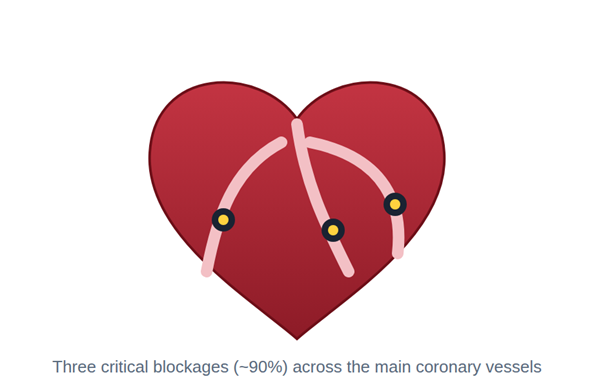
The patient first noticed difficulty breathing in early February, which he initially dismissed. On evaluation by a cardiologist, an echocardiogram and supporting tests were performed, followed by a coronary angiography. The angiogram revealed six blockages across the coronary arteries, three of them critical at around 90 percent narrowing. The clinical diagnosis was critical triple vessel coronary artery disease, meaning the three main vessels supplying blood to the heart muscle were all significantly obstructed. This is the kind of severe blockage that heart bypass surgery is designed to treat. In plain terms, the heart was being starved of blood, and the situation was severe and immediately life threatening if left untreated.

P1

Emotional & Psychological Impact

The diagnosis came as a profound shock. The patient described how his entire world changed within the space of a month, going from a vague, easily ignored breathing problem to learning he needed major heart surgery. There was no long history of illness to prepare him; the disease was discovered suddenly and unexpectedly, which made the emotional weight of it especially heavy for him and his family. Facing open heart surgery as a working professional who had felt essentially well raised real fears about recovery, returning to work, and resuming normal life. It was against this backdrop of sudden, frightening uncertainty that he came under the care of Dr. Vishal Khullar.

CONSULTATION & TREATMENT PLAN

The evaluation followed Dr. Khullar’s standard pathway across his cardiac surgery treatments, moving from symptoms to imaging to a definitive surgical plan.

What Was Assessed During the Consultation

  • Symptom pattern: classic angina with chest pain radiating to the left arm
  • Echocardiogram and supporting cardiac tests to assess heart function
  • Coronary angiography to map the number, location and severity of blockages
  • Suitability for angioplasty (stenting) versus surgical bypass
  • Overall medical fitness for major cardiac surgery

Why This Procedure Was Chosen

  • With six blockages and three critical lesions at around 90 percent across all three main vessels, angioplasty was not a viable option. The disease burden was too extensive for stenting.
  • Coronary artery bypass grafting was selected to restore reliable blood flow to all affected territories of the heart in a single, definitive operation.
  • A beating heart, or off pump, approach was chosen, allowing the bypass to be performed without stopping the heart on a heart lung machine.
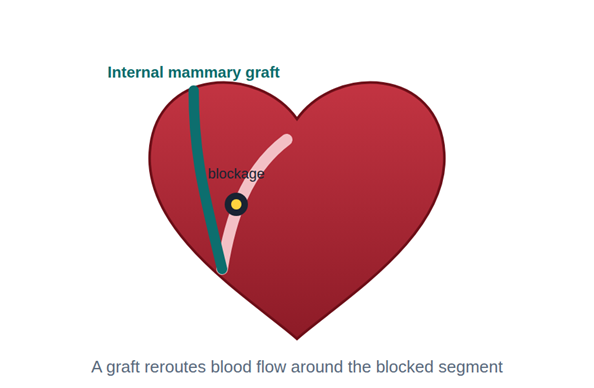
  • Internal mammary arteries from inside the chest wall were used as grafts. These arterial grafts have an excellent long term track record and are expected to stay open for the rest of the patient’s life.
P2

PRE-OPERATIVE IMAGING & PLANNING

In a cardiac bypass case the key pre operative documentation is the coronary angiogram, which maps the blockages and guides the surgical plan, alongside baseline imaging and ECG. Standardised photographs are less central than in aesthetic surgery, but baseline records should be retained.

P3

Coronary angiogram showing the three critical blockages

P4

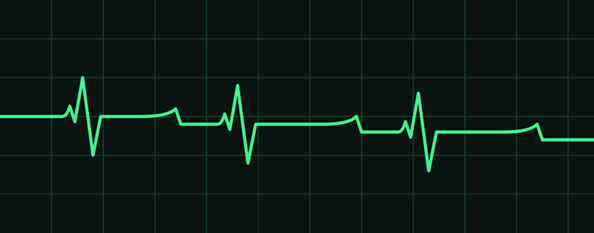
Baseline pre operative imaging or ECG

PROCEDURE DETAILS

Step by Step Overview

  • Pre operative formalities and surgical planning completed under the guidance of Dr. Vishal Khullar
  • Patient anaesthetised and prepared for off pump (beating heart) surgery
  • Chest opened to access the heart
  • Internal mammary arteries harvested from inside the chest wall for use as grafts
  • Beating heart coronary artery bypass grafting performed. Grafts placed to bypass the blocked segments while the heart continued to beat
  • Graft flow and stability confirmed
  • Chest closed in layers

Procedure Facts

PROCEDURE

Beating heart (off pump) coronary artery bypass grafting

ANAESTHESIA

General anaesthesia

GRAFTS USED

Internal mammary (internal thoracic) arterial grafts

APPROACH

Off pump. Surgery performed on the beating heart without a heart lung machine

INTRAOPERATIVE COMPLICATIONS

None reported

HOSPITAL STAY

Discharged on post operative day 5

POST-OPERATIVE RESULTS

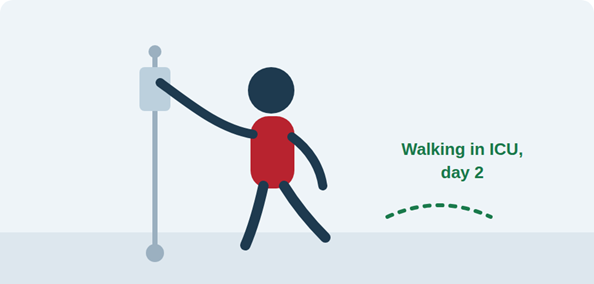
The post operative course was smooth and uneventful. The patient was mobilised early, walking in the ICU within two days of surgery, and was discharged on the fifth post operative day. By around the fifteenth day his sutures had been removed and he was walking comfortably and managing daily activities independently. For patients at this stage, the practical guidance on recovering from heart surgery covers what to expect and which warning signs to watch for. The surgical goal of restoring reliable blood supply to the heart with durable arterial grafts was fully achieved.

P5

Post operative recovery. Patient mobile and recovering

Outcomes at a Glance

✔ Revascularisation

Successful. Blood flow restored using arterial grafts

✔ Surgical Outcome

Excellent. Beating heart bypass completed without complications

✔ Recovery

Smooth. Walking in ICU within 2 days, discharged day 5

✔ Patient Satisfaction

Very high. Renewed confidence and gratitude expressed

✔ Complications

None

PATIENT FEEDBACK

“The surgery happened, and within two days I started walking in the ICU. Today it is the fifteenth day and I am fit. All the stitches have been removed, and I am able to walk and do everything. I can even drive after a month, and I can attend office. I am sincerely grateful to Dr. Vishal Khullar and his team, and to the Nanavati ICU team and the entire team of Nanavati Hospital. Thank you very much.”

Profile: Male · working professional · Mumbai

Procedure: Beating heart coronary artery bypass grafting · Nanavati Hospital, Mumbai · February 2026

Surgeon: Dr. Vishal Khullar · Nanavati Hospital

Feedback recorded from the patient’s clinical follow up and attributed by profile only. Patient name withheld.

PATIENT TESTIMONIAL VIDEO

In this video, the patient speaks about his experience undergoing beating heart coronary artery bypass grafting under Dr. Vishal Khullar at Nanavati Max Super Speciality Hospital, Mumbai. He describes the suddenness of his diagnosis, the surgery itself, and his smooth recovery, including walking in the ICU within two days and returning to normal activities within a month.

Video title: Beating Heart Coronary Artery Bypass Grafting | Patient Testimonial ft. Dr. Vishal Khullar

Channel: Vishal Khullar (Official)

Featured voices: The patient, Deepak Sonar, and Dr. Vishal Khullar, Director of CTVS and Heart & Lung Transplant, Nanavati Max Super Speciality Hospital, Mumbai

POST-PROCEDURE CARE & RECOVERY

Recovery Timeline (as observed in this case)

WITHIN 2 DAYS

Mobilised and walking in the ICU

DAY 5

Discharged from hospital; post operative course uneventful

AROUND DAY 15

Sutures removed; walking comfortably and independent in daily activities

BY 1 MONTH

Able to drive and return to office duties

General guidance for this procedure typically includes prescribed cardiac medications, a gradual increase in activity, sternal precautions while the breastbone heals, and scheduled cardiology follow up. Add the exact instructions issued by the clinical team.

FAQs

Q1. What is triple vessel disease and is it serious?

It means all three major heart arteries are significantly blocked, starving the heart of blood. It’s serious and life-threatening, usually needing urgent bypass surgery or stents.

Q2. What is beating heart (off-pump) bypass surgery?

A bypass performed while the heart keeps beating, without a heart-lung machine. Grafts reroute blood around the blocked arteries to restore flow.

Q3. Why is bypass done instead of stents (angioplasty)?

When blockages are too many or too severe, like the six blockages and three critical 90% lesions in this case, stenting isn’t viable. Bypass fixes all blocked vessels in one operation.

Q4. How long is recovery after heart bypass surgery?

In this case the patient walked in the ICU within 2 days, was discharged on day 5, had sutures removed by day 15, and returned to driving and office work by about 1 month.

Q5. Who is the best heart bypass surgeon in Mumbai?

Dr. Vishal Khullar is a leading cardiovascular surgeon in Mumbai with over 30 years of experience and 7,000+ successful surgeries, including complex beating heart bypass procedures.

Book Online Consultation Book An Appointment