Aortic Root Replacement for a Ruptured Sinus of Valsalva

Aortic Root Replacement for a Ruptured Sinus of Valsalva

Aortic Root Replacement (Bentall’s Procedure) in a 64-Year-Old Patient with an Intraoperatively Diagnosed Sinus of Valsalva Rupture

Surgeon: Dr. Vishal Khullar, Director, Cardiothoracic & Vascular Surgery, Heart and Lung Transplant
 Hospital: Fortis S.L. Raheja Hospital, Mahim West, Mumbai
 Procedure: Aortic Root Replacement (Bentall’s Procedure) for Impending Sinus of Valsalva Rupture

PATIENT PROFILE

Patient details below are recorded in line with confidentiality conventions for written case studies. Patient identity has been withheld.


Age

64 years

Gender

Withheld per confidentiality guidelines

Presenting Complaint

Referred for elective aortic valve replacement

Diagnosis

Aortic valve disease with an intraoperatively identified impending rupture of the sinus of Valsalva

Relevant History

A brief febrile illness some time prior, treated with a short course of antibiotics

Diagnostic Trigger

Intraoperative transesophageal echocardiogram (TEE) after induction of anaesthesia

Procedure Performed

Aortic root replacement (Bentall’s procedure)

Outcome

Uncomplicated postoperative course

THE CLINICAL PROBLEM

Condition

The patient was referred to Dr. Vishal Khullar for a planned aortic valve replacement, on the basis of standard pre-admission workup and echocardiographic findings. What made this case unusual only became apparent once the patient was already on the operating table. There was one detail in the history that, in retrospect, mattered a great deal: a fever some time earlier that had been treated briefly with antibiotics and never fully investigated. Episodes like this can sometimes leave the aortic wall subtly weakened at the sinus level long before any dramatic symptom appears, a vulnerability that falls within the broader spectrum of aortic aneurysm disease, which can affect the sinus of Valsalva just as it affects other segments of the aorta.

Impact on the Patient

Going into surgery, neither the patient nor the referring team had any indication that anything beyond valve disease was in play. The plan was a standard aortic valve replacement. It was only on the intraoperative TEE, performed routinely after the patient was anaesthetised, that Dr. Khullar’s team picked up signs of an impending rupture of the sinus of Valsalva, a structural weak point at the base of the aorta immediately adjacent to the valve. Left undetected, a ruptured sinus of Valsalva can cause a sudden abnormal connection between the aorta and an adjacent heart chamber, triggering acute heart failure. Identifying it before it fully ruptured, while the patient was already under the care of an experienced cardiac surgeon in Mumbai, made a controlled surgical correction possible instead of an emergency one.


CONSULTATION AND TREATMENT PLAN

What Was Assessed Before and During Surgery

  • Pre-admission evaluation for aortic valve disease, including standard cardiac workup
  • History review, including the earlier febrile episode treated with a short antibiotic course
  • Intraoperative transesophageal echocardiogram performed immediately after induction of anaesthesia
  • Direct surgical inspection of the aortic root once the chest was opened, to confirm the TEE findings
  • Assessment of whether the sinus involvement could be managed with valve repair alone, or whether the root itself needed replacement

Why Aortic Root Replacement Was Chosen Over a Standard Valve Procedure

  • The intraoperative TEE finding of an impending sinus rupture was confirmed on direct inspection, changing the scope of surgery in real time
  • A sinus wall that is about to rupture cannot be safely left in place; isolated valve replacement would not address the structural weakness in the root
  • Aortic root replacement using the Bentall’s procedure — replacing the aortic root, the valve, and the adjoining segment of the ascending aorta with a single composite graft — was judged the most definitive way to eliminate the risk of rupture while correcting the valve disease in the same operation
  • Performing the root replacement in the same sitting, under controlled surgical conditions, avoided the far higher risk of returning to theatre later for an emergency repair after an actual rupture

The decision to convert from a planned valve replacement to a full aortic root replacement reflects the kind of intraoperative judgement that comes from decades of complex aortic surgery experience.

INTRAOPERATIVE IMAGING

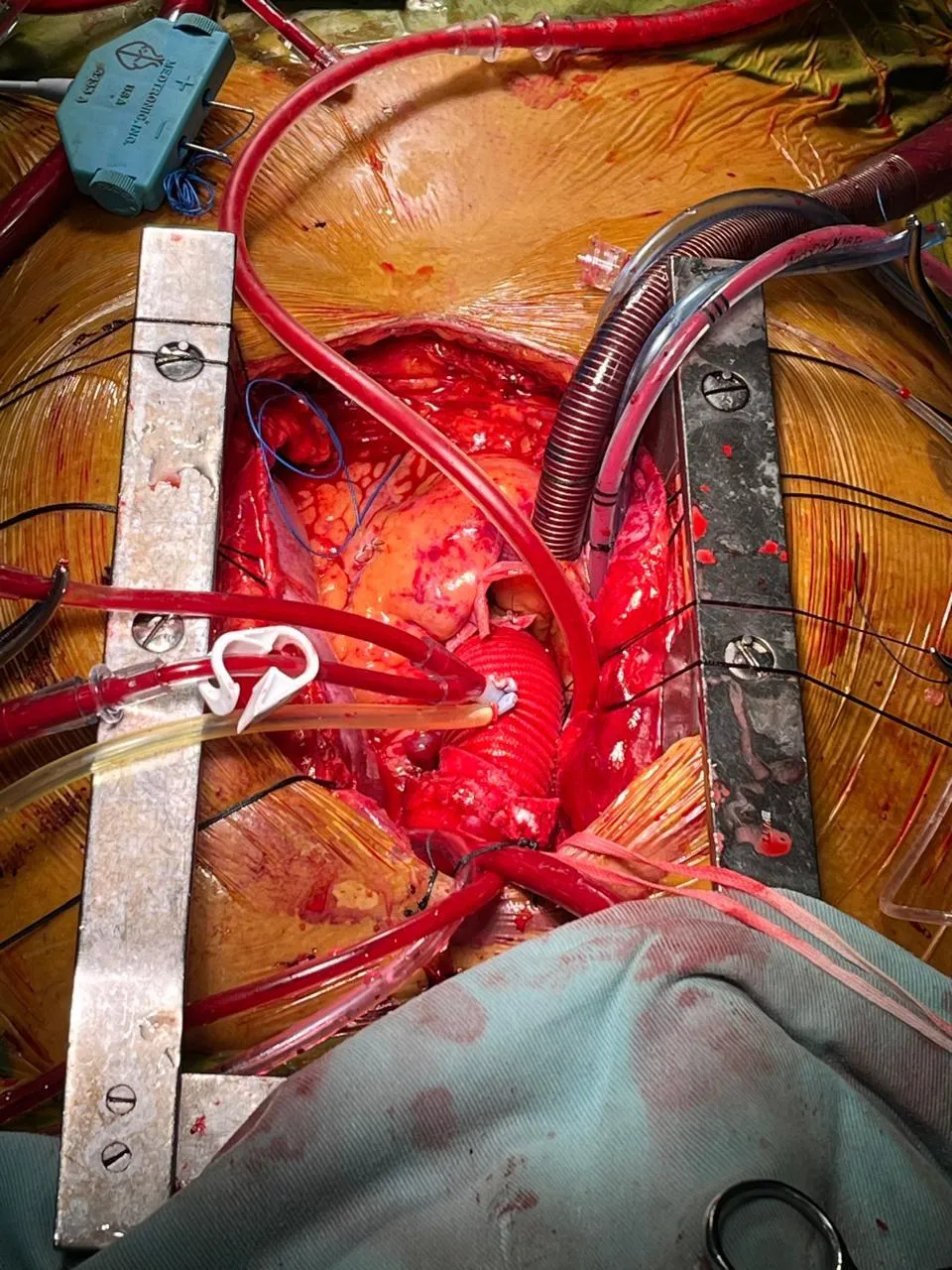
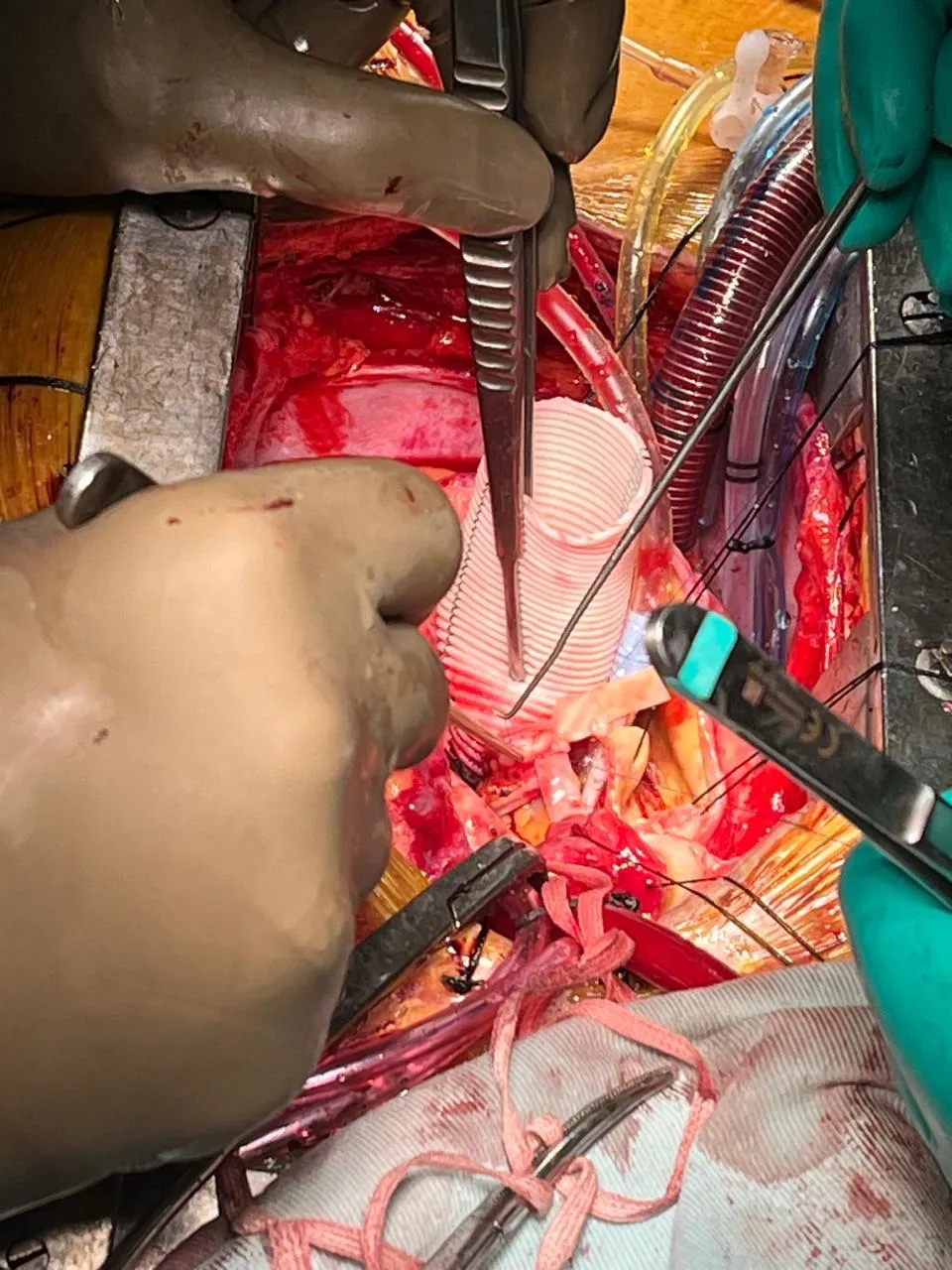
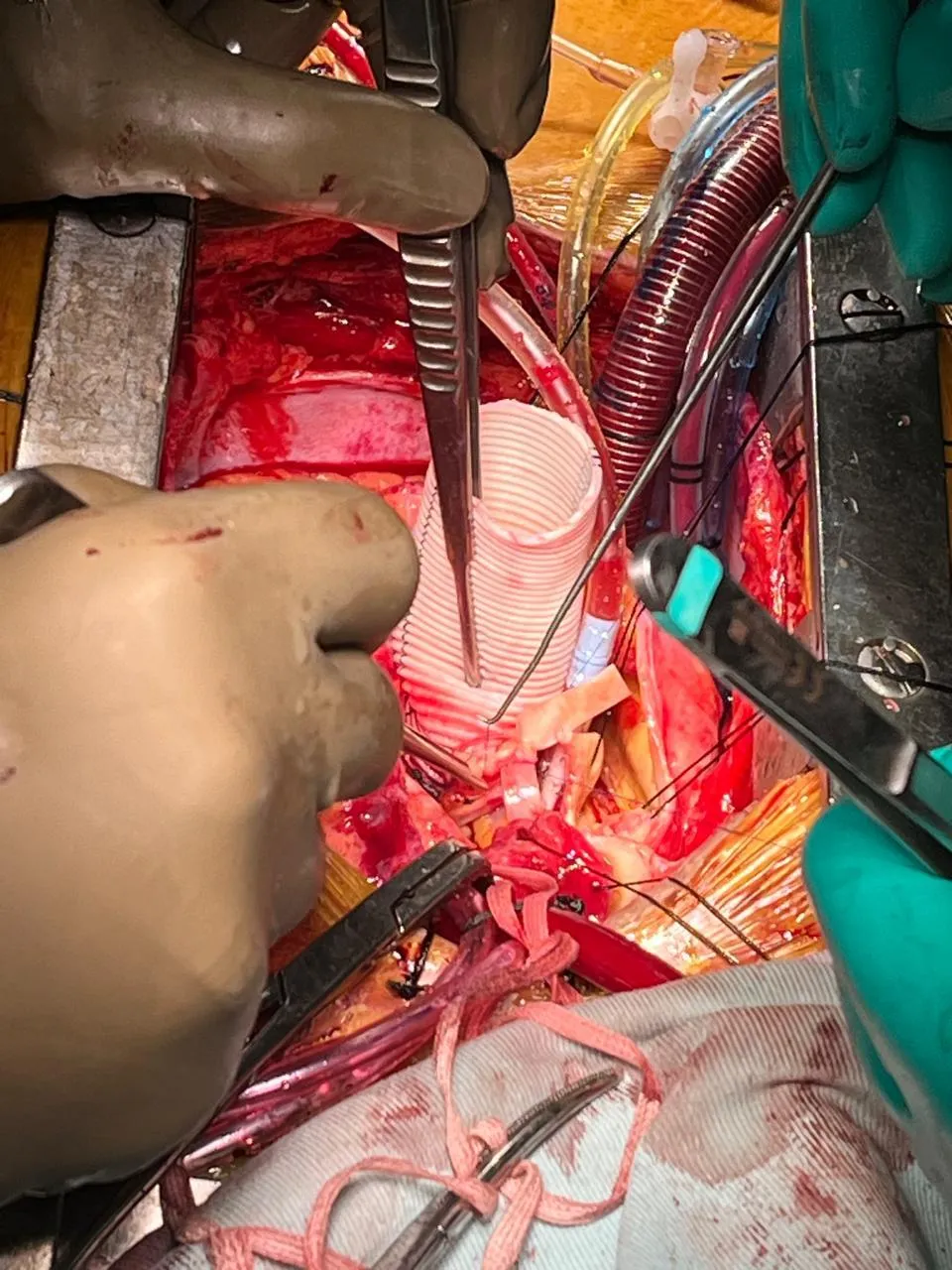
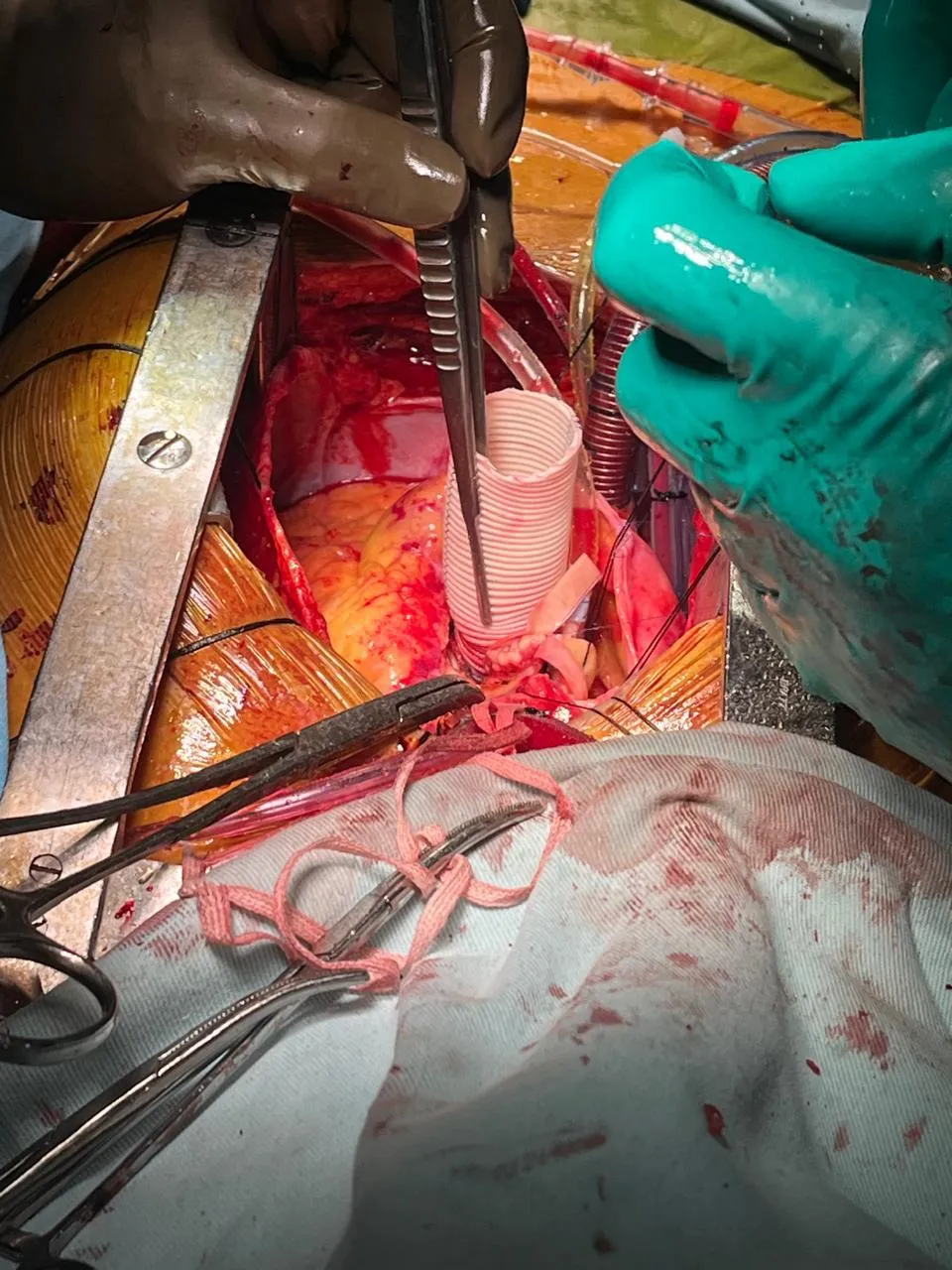
Standard pre-admission workup for the planned valve replacement included transthoracic echocardiography, coronary evaluation, and routine cardiac surgical fitness assessment. The finding that changed the course of surgery came from the intraoperative TEE, performed after anaesthesia induction, which picked up early signs of sinus wall thinning and impending rupture. This was cross-checked against direct visual inspection of the aortic root after sternotomy, which confirmed the TEE findings before any incision was made into the aorta itself.

Whatsapp Image 2026 08 04 At 40341 Pm 2
Whatsapp Image 2026 08 04 At 40341 Pm 1
Whatsapp Image 2026 08 04 At 40341 Pm
Whatsapp Image 2026 08 04 At 40342 Pm

PROCEDURE DETAILS

Step-by-Step Surgical Overview

  1. Patient prepared and anaesthesia induced; standard cardiac monitoring established
  2. Transesophageal echocardiogram performed, identifying signs of impending sinus of Valsalva rupture
  3. Median sternotomy performed to access the heart and aortic root
  4. Direct inspection of the aortic root confirmed the TEE finding of a weakened, at-risk sinus wall
  5. Cardiopulmonary bypass instituted; surgical plan converted from isolated valve replacement to aortic root replacement
  6. Aortic root replacement (Bentall’s procedure) carried out — the diseased aortic root, valve, and adjoining ascending aorta segment excised and replaced with a composite valve-graft conduit
  7. Coronary arteries reimplanted onto the new graft
  8. On-table assessment confirmed a secure repair with no residual leak at the sinus
  9. Patient weaned off bypass; chest closed in layered fashion

Procedure Facts


Procedure

Aortic root replacement (Bentall’s procedure) for impending sinus of Valsalva rupture

Original Plan

Isolated aortic valve replacement

Anaesthesia

General anaesthesia with cardiac-specific protocol

Approach

Median sternotomy with cardiopulmonary bypass

Intraoperative Finding

Impending sinus of Valsalva rupture, confirmed by TEE and direct inspection

Intraoperative Course

Stable; plan converted to root replacement without incident

Outcome

Successful aortic root replacement with secure repair confirmed on-table

POST-OPERATIVE RESULTS

The postoperative course was uncomplicated. The patient’s recovery followed the expected trajectory for a root replacement of this complexity, with no bleeding, infection, or rhythm complications recorded during the admission.

Outcomes at a Glance

Outcome Metric

Result

Sinus Rupture

Averted — repaired before actual rupture occurred

Root Replacement

Successful aortic root replacement with composite graft

Valve Function

Restored, addressing the original indication for surgery

Complications

None recorded

Recovery Course

Uncomplicated, within expected timeline

Families evaluating a procedure of this scope often want a sense of what it involves practically  our detailed breakdown of aortic root surgery cost in India covers how the type of graft, hospital tier, and elective versus emergency setting affect the total.

PATIENT TESTIMONIAL

“I was admitted expecting a routine aortic valve replacement, but during surgery Dr. Vishal Khullar identified a serious problem that had not been detected earlier. He immediately changed the surgical plan and performed the procedure that was needed to prevent a potentially life-threatening complication. Thanks to his expertise and the excellent care from the entire team, my recovery was smooth, and today I feel grateful to have been in such experienced hands.”

Profile: 64 years · Patient identity withheld
 Procedure: Aortic Root Replacement (Bentall’s Procedure) · Fortis S.L. Raheja Hospital, Mumbai
 Surgeon: Dr. Vishal Khullar · Director, Cardiothoracic & Vascular Surgery, Heart and Lung Transplant

POST-PROCEDURE CARE AND RECOVERY

Recovery after aortic root replacement follows the general principles of open aortic surgery, with closer monitoring in the early days given the composite graft and coronary reimplantation involved. A broader overview of what to expect after any open-heart procedure is available in the guide on heart surgery recovery.

Instructions Provided to the Patient

  • Cardiac medications continued exactly as prescribed
  • Sternal precautions, avoiding heavy lifting or strain for six to eight weeks
  • Graded activity protocol with gradual return to routine
  • Wound care and monitoring for signs of infection
  • Structured follow-up appointments with echocardiography to confirm graft and valve function

Recovery Timeline

Timeframe

Clinical Expectation

Day 1–3

ICU monitoring, early mobilisation begins

Week 1–2

Ward recovery, wound checks, discharge planning

Week 6–8

Sternal healing assessed, gradual return to routine activity

Month 3

Cardiac rehabilitation review, symptom reassessment

Month 6

Long-term follow-up, graft and valve function confirmed on echocardiography

The standard hospital stay for a root replacement of this scope runs longer than for a straightforward valve procedure, given the added complexity of the composite graft and coronary reimplantation.

Considering aortic valve or root surgery, or want a second opinion on a complex case?

If you or a family member has been advised aortic valve or root surgery, Dr. Vishal Khullar and his team are happy to review your reports and talk through the options with you.

FAQs

Q1. What is a sinus of Valsalva rupture, and why is it dangerous?

The sinus of Valsalva is a small pouch-like structure at the base of the aorta, next to the aortic valve. If its wall weakens and ruptures, it can create an abnormal connection to an adjacent heart chamber, causing sudden volume overload and heart failure. Detecting it before full rupture, as happened in this case, allows for a planned surgical correction.

Q2. Why did the surgical plan change from aortic valve replacement to aortic root replacement during surgery?

The patient was originally referred for a valve replacement, but an intraoperative TEE picked up signs of an impending sinus rupture. Once this was confirmed on direct inspection, isolated valve replacement was no longer sufficient, and a full aortic root replacement was needed to address the structural weakness in the root along with the valve disease.

Q3. What is Bentall's procedure?

Bentall’s procedure replaces the aortic root, the aortic valve, and the adjoining segment of the ascending aorta with a single composite graft. It is typically used when the aortic root and valve are both diseased or, as in this case, when the root is structurally compromised.

Q4. Can a past fever or infection lead to a sinus of Valsalva aneurysm?

A prior infection, even one treated briefly, can sometimes affect the aortic wall or valve tissue in ways that only become apparent later. This history is one of several factors a cardiac surgeon reviews carefully during pre-operative assessment.

Q5. What is the recovery time after aortic root replacement surgery?

Most patients are in hospital for around a week to ten days, with sternal precautions continuing for six to eight weeks and a gradual return to normal activity over two to three months, confirmed with follow-up echocardiography.

Book Online Consultation Book An Appointment Call Now Button